

Best Wood for Painted Trim: Choosing Hardwood for Paint-Grade Millwork
Painted millwork is where a room’s architecture shows itself. Under paint, the wood’s job is to hold a sharp profile, sand to a smooth surface, and stay put once it is on the wall. Real American hardwood does all three, and this guide shows homeowners, designers, and trim carpenters which species to ask for and why.
What Is the Best Wood for Painted Trim?
For most projects, yellow poplar is the best wood for painted trim. The Wood Database describes poplar as “very easy to work in almost all regards,” and the American Hardwood Export Council (AHEC), which markets the species as American tulipwood, lists mouldings, doors, paneling, architectural interior joinery, and kitchen cabinets among its main uses. AHEC also notes that tulipwood is readily available as sawn lumber in a wide range of grades and thicknesses, from 4/4 through 16/4.
Poplar is a species matched to its job. It rates 540 lbf on the Janka hardness scale, according to the Wood Database, a moderate density that is part of why it cuts so cleanly through detailed profiles. That makes it an ideal choice for casing, crown, and wall paneling, where crisp, deep detail is what people notice.
Soft maple steps in where a room calls for a firmer surface. Red maple, one of the main soft maple species, rates 950 lbf on the Janka scale per the Wood Database, the same as cherry. AHEC lists turning and mouldings, doors, joinery, and kitchen cabinets among soft maple’s main uses and describes it as “excellent to machine, bore, plane and finish.”
How Do the Common Paint-Grade Hardwoods Compare?
The leading paint-grade hardwoods share one trait: a fine, even, closed texture that gives paint a smooth base. Each one brings something a little different to the job.
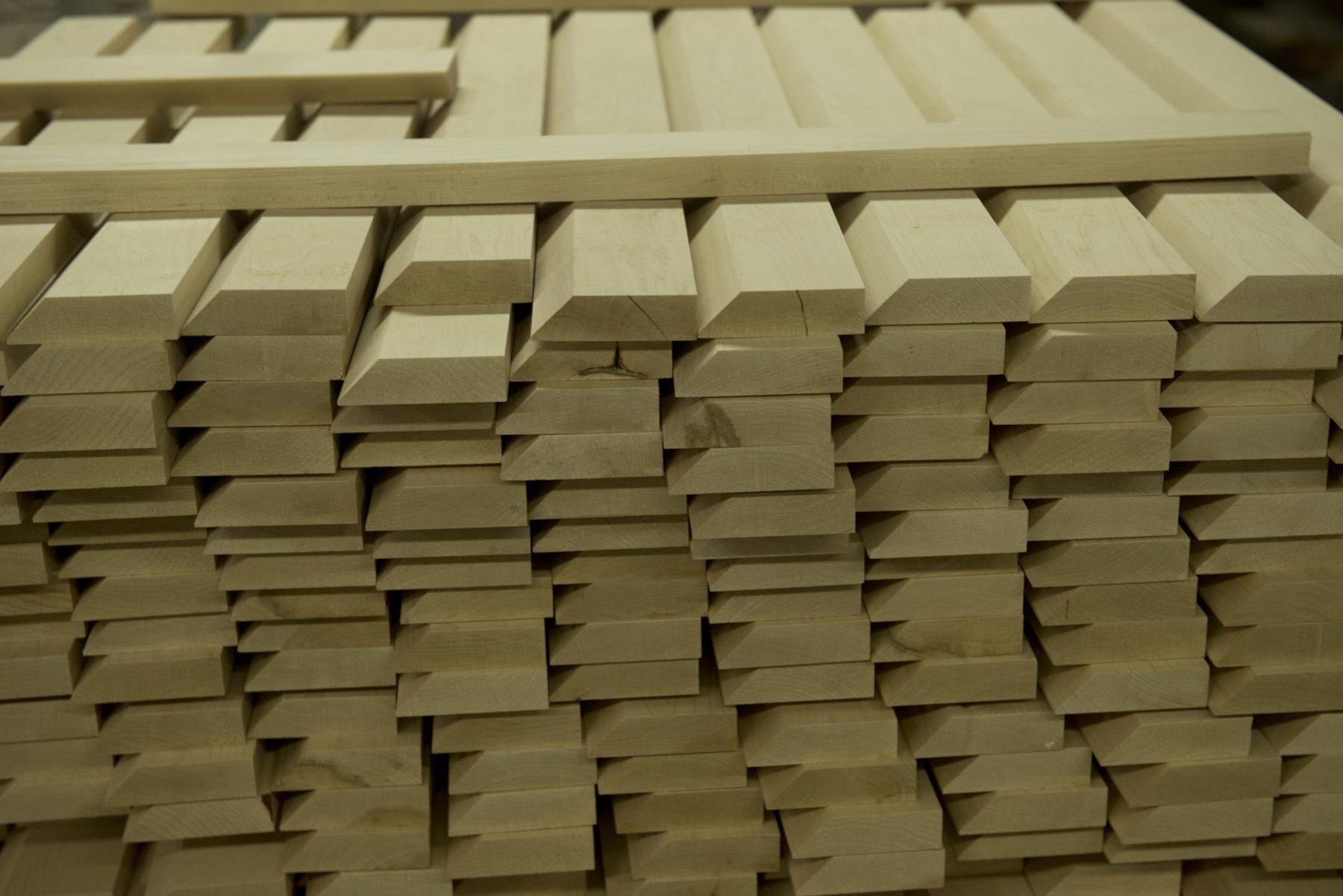
Yellow poplar (540 lbf, per the Wood Database) is the easiest of the group to machine and the most common default for running trim. Its heartwood ranges widely in color, and under primer and paint that variety simply disappears. Soft maple (red maple, 950 lbf, per the Wood Database) brings a firmer surface for base, chair rail, and stair parts while still machining well. Hard maple, at 1,450 lbf, is among the hardest common domestic species and gives a very smooth, dense surface for handrails and other parts people touch every day.
Red alder (590 lbf, per the Wood Database) is a fine-textured species that the Wood Database notes “sands especially easy,” and it lists millwork and cabinetry among its common uses. It grows mainly in the Pacific Northwest. Basswood (410 lbf, per the Wood Database) is the carver’s species, prized for carved details and applied ornament.
Open-grained species such as red oak (1,290 lbf) and ash (1,320 lbf) are at their best under clear and stained finishes, where their bold grain is the feature. When a design calls for stained trim, they move to the top of the list.
Why Does Fine Grain Matter Under Paint?
Fine grain matters because paint is a thin film that follows the surface underneath it. A fine, even texture gives that film a smooth, uniform base, which is what makes a semi-gloss casing or a satin cabinet door look crisp in raking light.
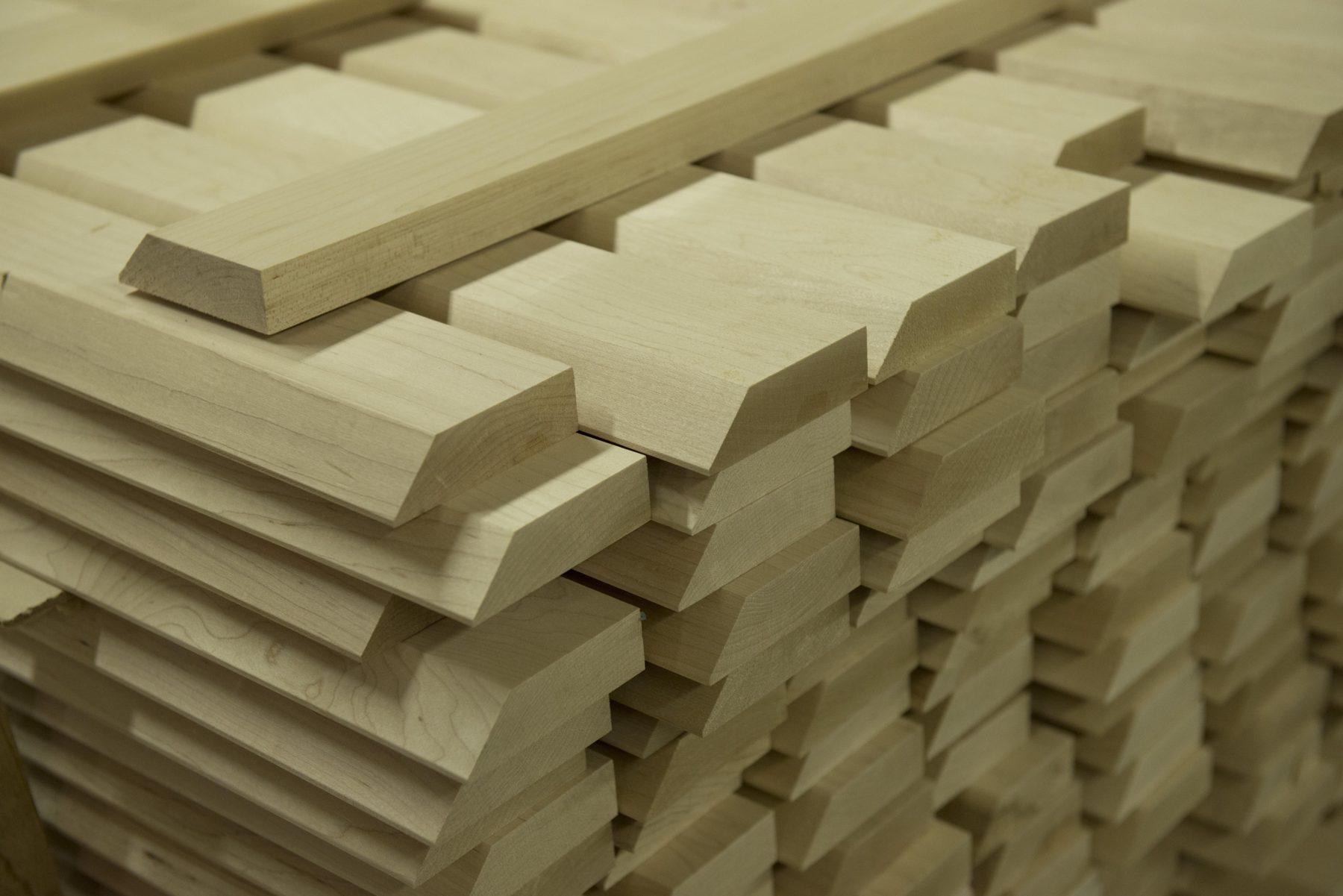
Poplar, soft maple, hard maple, alder, and basswood all have that fine, even texture, which is why they are the classic paint-grade candidates. Poplar has a bonus here. AHEC notes that tulipwood heartwood can range from pale yellow or brown to green, and even purple in extreme cases. Under a clear finish that range is a design consideration. Under paint it does not matter at all, which makes poplar one of the most practical and efficient paint-grade species in the American forest.
Open-grained species carry their character in their pores. The Wood Database describes red oak’s pores as so open that “a person can blow into one end of the wood, and air will come out the other end.” That structure is what lets stain soak in and grain come alive, which is exactly why red oak and ash shine in stained millwork, while fine-grained species carry the painted work.
Which Hardwood Works Best for Each Type of Painted Millwork?
Match the species to the part and how it will be used. Here is how the main paint-grade applications usually sort out.
- Casing and crown. Yellow poplar. These pieces sit at eye level or above and show off poplar’s clean machining on detailed profiles.
- Baseboard and shoe moulding. Poplar suits most rooms. In entries, mudrooms, and busy hallways, soft maple’s 950 lbf rating gives the paint film a firmer surface underneath.
- Chair rail, stair parts, and railings. Soft maple or hard maple. Handrails, balusters, and newels are handled every day, and hard maple at 1,450 lbf brings a dense, smooth surface. The Wood Database notes hard maple is “slightly more difficult” to work than soft maple because of its density, so it rewards a well-tooled shop.
- Painted cabinet doors and wall paneling. Poplar or soft maple for frames and rails. AHEC lists both species for doors, paneling, and kitchen cabinets, and wide, flat panels are where fine texture pays off most.
- Carved details and applied ornament. Basswood. The Wood Database calls it “perhaps one of the most suitable wood species for hand carving.” Use it for appliqués, rosettes, and carved elements that are glued in place.
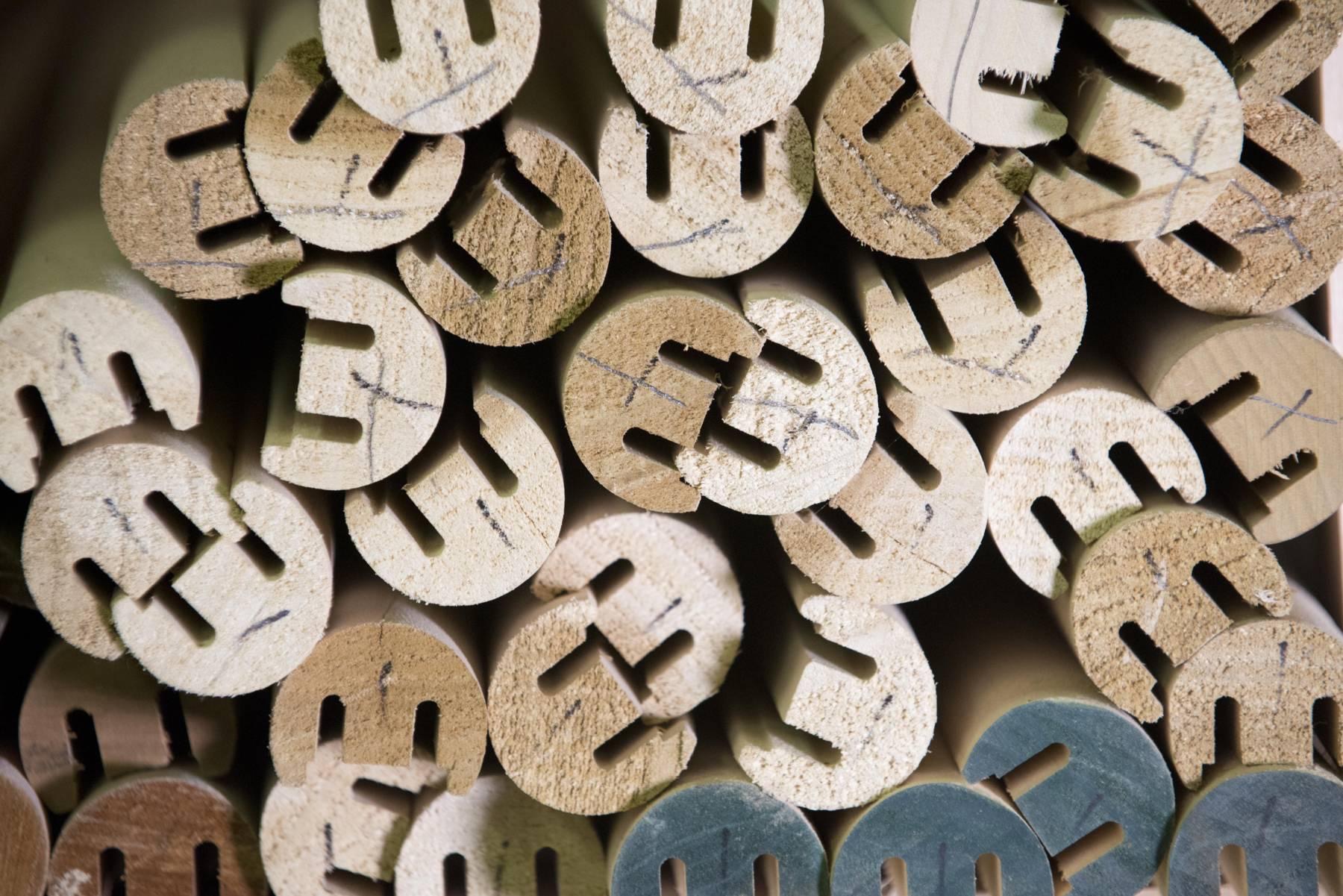
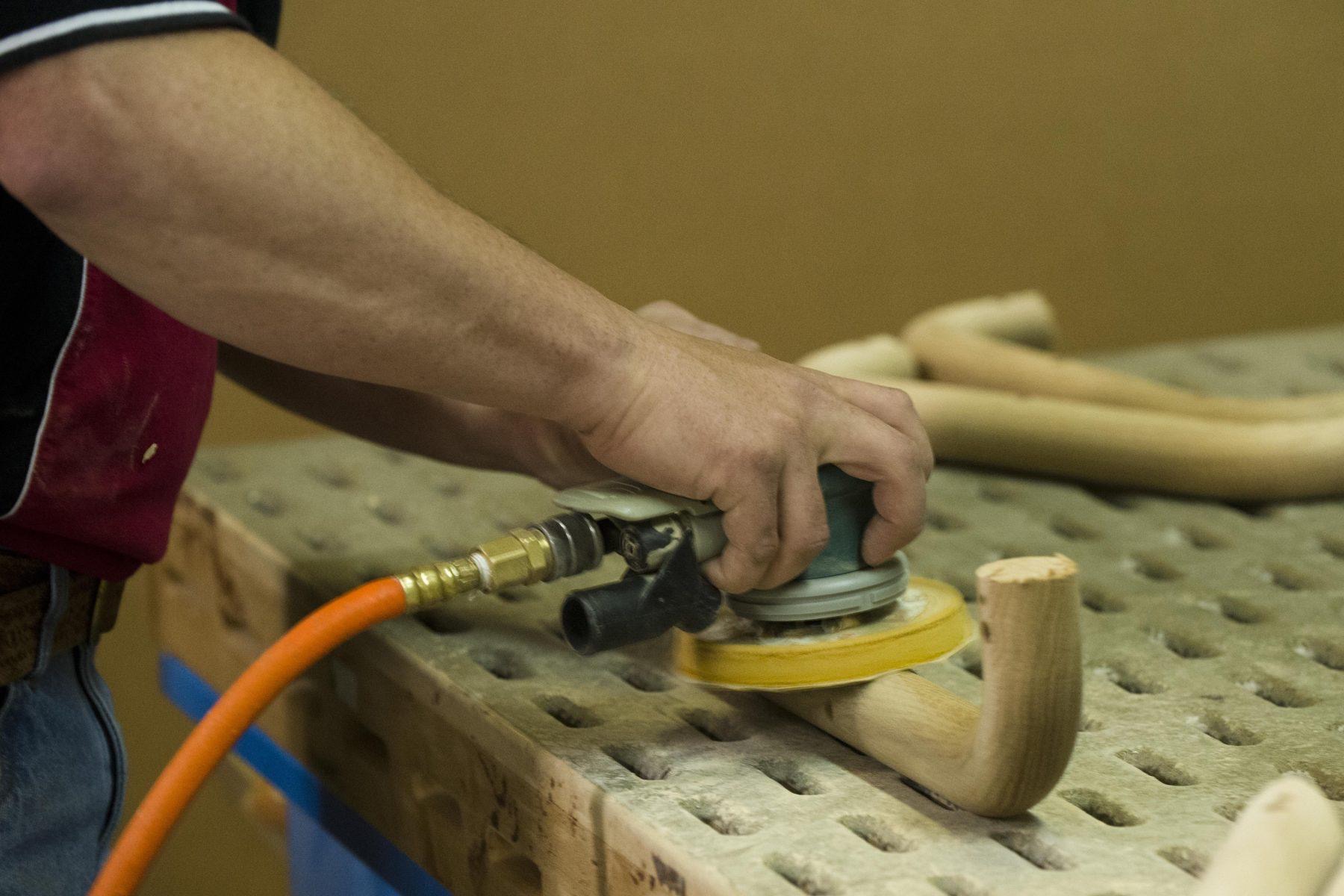
In the “Echoes of the Woods” exhibition created by AHEC and featured on realamericanhardwood.pro, artist Zhang Min “assembles maple, red oak, and cherry into stair- and doorway-inspired forms,” a reminder of how naturally these species carry architectural shapes.
How Do You Keep Painted Trim Crisp and Stable?
Painted trim stays crisp when the wood goes in at the moisture content it will live at. All wood exchanges moisture with the air around it, and lumber that is already in balance with its room keeps its miters tight and its caulk lines clean.
The USDA Forest Products Laboratory’s Wood Handbook recommends installing interior woodwork at about the moisture content it will reach in service: an average of 8% for most areas of the United States, 6% in the dry Southwest, and 11% in damp, warm coastal regions. The Handbook’s principle is simple: install wood at the moisture level it will experience in service to minimize dimensional change afterward.
That is why kiln-dried hardwood matched to its environment is the standard for millwork. When you order trim, ask the supplier for kiln-dried stock and the moisture content it was dried to. Letting trim acclimate in the room where it will be installed, with the HVAC running, is a sound habit on any job.
What Lumber Grade Should You Buy for Paint-Grade Trim?
For most painted trim, buy by the length and width of the parts you need. National Hardwood Lumber Association (NHLA) rules define FAS (Firsts and Seconds) as at least 83.3% clear-cutting yield and No. 1 Common as at least 66.7% clear yield.
Long, continuous runs of casing, base, and crown benefit from the long clear cuttings that FAS delivers. Shorter parts such as door rails, stiles, panel frames, and blocking can often come out of No. 1 Common efficiently, because its clear cuttings are the same quality wood in shorter pieces. Mixing grades by part size keeps cost in line.
Is Poplar a Sustainable Choice for Painted Millwork?
Yes. The leading paint-grade species are among the most abundant in the American forest. According to AHEC, tulipwood makes up 7.7% of total U.S. hardwood growing stock, with annual growth of about 34.6 million cubic meters against a harvest of about 12.8 million. Soft maple accounts for 11.1% of U.S. hardwood growing stock, growing about 36.4 million cubic meters a year against a harvest of about 16.0 million.
Across all American hardwoods, U.S. forests regrow about 1.66 cubic feet of hardwood for every cubic foot harvested (AHEC), and U.S. hardwood growing stock is up roughly 90% since the 1950s (USDA Forest Service FIA).
Why Ask for Real Hardwood Trim by Name?
Asking for trim by species is the simplest way to get the profile, finish, and longevity you are paying for. With a builder, designer, or millwork shop, name the species (poplar, soft maple, hard maple, alder, or basswood for carved work) and ask for solid American hardwood.
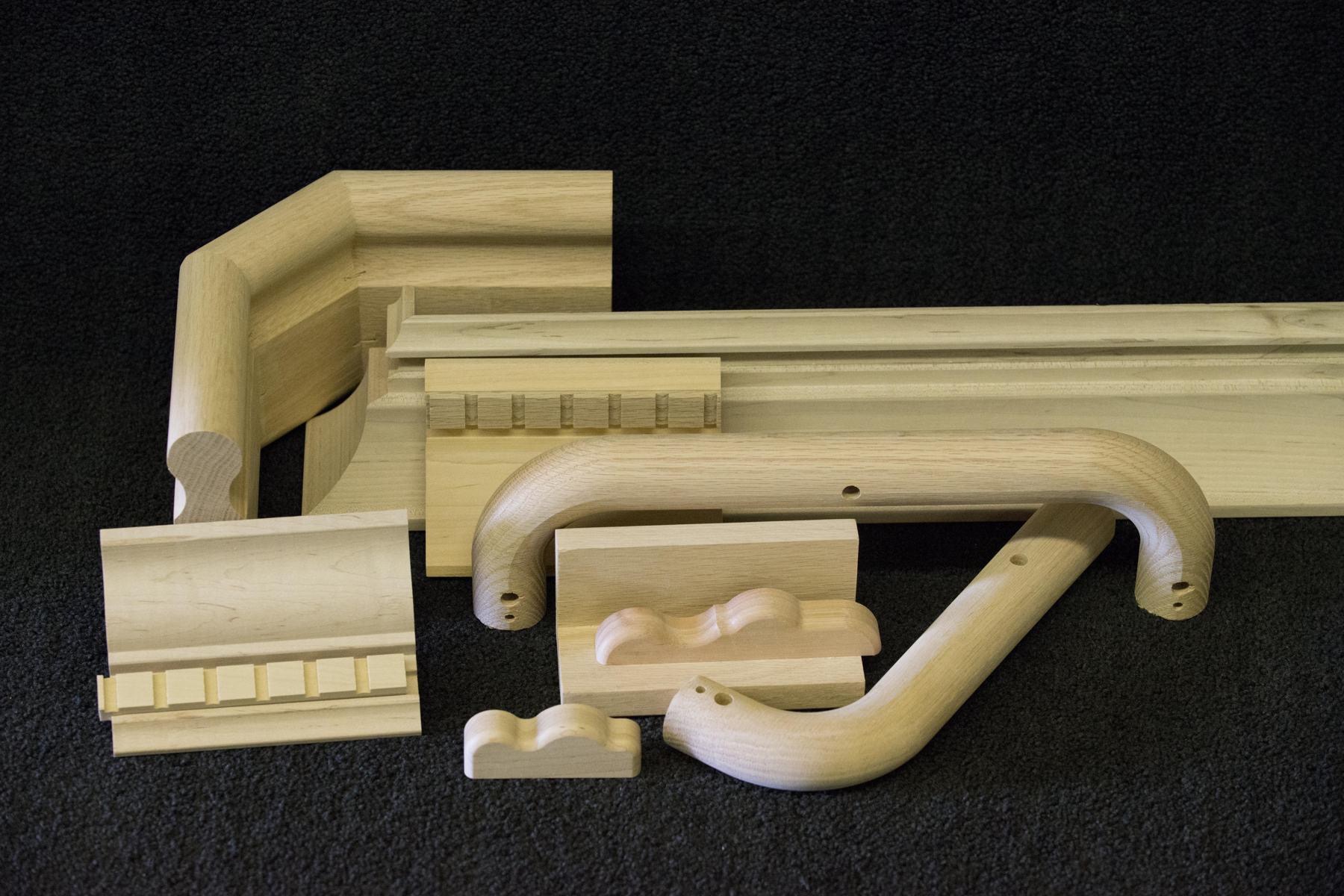
Real hardwood mills into crisp, deep profiles that hold their edges for the life of the house, and for most painted millwork the conversation comes back to poplar, with soft maple wherever a firmer surface earns the upgrade.
What species do you reach for when the trim is going to be painted? Whether you run a millwork shop or just finished trimming out a room, tell us what you chose and how it turned out.
Frequently Asked Questions
Is poplar good for painted trim? Yes. Yellow poplar is one of the most widely used hardwoods for paint-grade trim because it machines easily, has a fine and even texture, and its color variation disappears under paint. At 540 lbf on the Janka scale per the Wood Database, it is ideal for casing, crown, and paneling, with soft maple a good match for high-contact parts.
Is soft maple better than poplar for trim? Soft maple offers a firmer surface, which suits baseboards, chair rail, and stair parts. Red maple rates 950 lbf on the Janka scale versus 540 lbf for poplar, per the Wood Database. Poplar is typically easier to work and is the common default for casing and crown.
Can you paint oak trim? Yes, though oak is usually chosen for stained millwork, where its open grain and bold figure are part of the look. For a smooth painted finish, fine-grained species such as poplar and maple are the more natural match.
What moisture content should hardwood trim be? The USDA Forest Products Laboratory’s Wood Handbook recommends an average of 8% for interior woodwork in most of the United States, 6% in the dry Southwest, and 11% in damp, warm coastal areas. Installing trim at the moisture content it will see in service helps keep joints tight.