

How Forest Products Capture Carbon Better Than High-Tech Gadgets
The Science of Natural Sequestration across Global Biomes
To understand how carbon capturing forest products work, we first have to look at the "engine" that creates them: the global forest. Forests are the ultimate high-tech gadgets, using a 3.5-billion-year-old technology called photosynthesis to pull CO2 out of the thin air and turn it into solid wood.
Globally, these ecosystems are a massive powerhouse, absorbing nearly 16 billion metric tonnes of CO2 every single year. Currently, our planet's forests hold a staggering 861 gigatonnes of carbon within their branches, leaves, and roots. But not all forests store this carbon the same way.
- Tropical Forests: These are the fast-movers. Because of the heat and humidity, trees grow incredibly quickly, but they also decay quickly. Most of the carbon here is stored aboveground in the living biomass. Tropical forests are so efficient that they are responsible for holding back more than 1 degree Celsius of global warming.
- Boreal Forests: Found in the far north, these forests are the "deep freezers" of the planet. While the trees grow slowly, the cold prevents dead needles and leaves from breaking down. As a result, 80% to 90% of boreal carbon is stored belowground in the soil and permafrost.
- Temperate Forests: This is where we find our beloved North American hardwoods. These forests offer a perfect balance. They store massive amounts of carbon in both the standing live trees and the rich forest floor. In regions like the U.S. Southeast, the forest sector carbon sink offsets about 12% of total CO2 emissions economy-wide.
Carbon Capturing Forest Products in the Wild
In the wild, a tree is a living carbon straw. Through photosynthesis, it takes in CO2, keeps the carbon to build its trunk, and breathes out the oxygen we need. This carbon isn't just in the wood you see; it’s distributed into the root systems (which can account for a third of a tree's biomass) and the surrounding soil.
When we practice Sustainability, we manage these forests so they stay healthy and productive. In the U.S., hardwood forests are growing 2.5 times faster than they are being harvested. This means even as we harvest timber to create products, the total volume of carbon stored in the forest continues to rise. It’s like a bank account where the interest is growing faster than the withdrawals.
The "Second Life" of Wood: Carbon Storage in the Built Environment
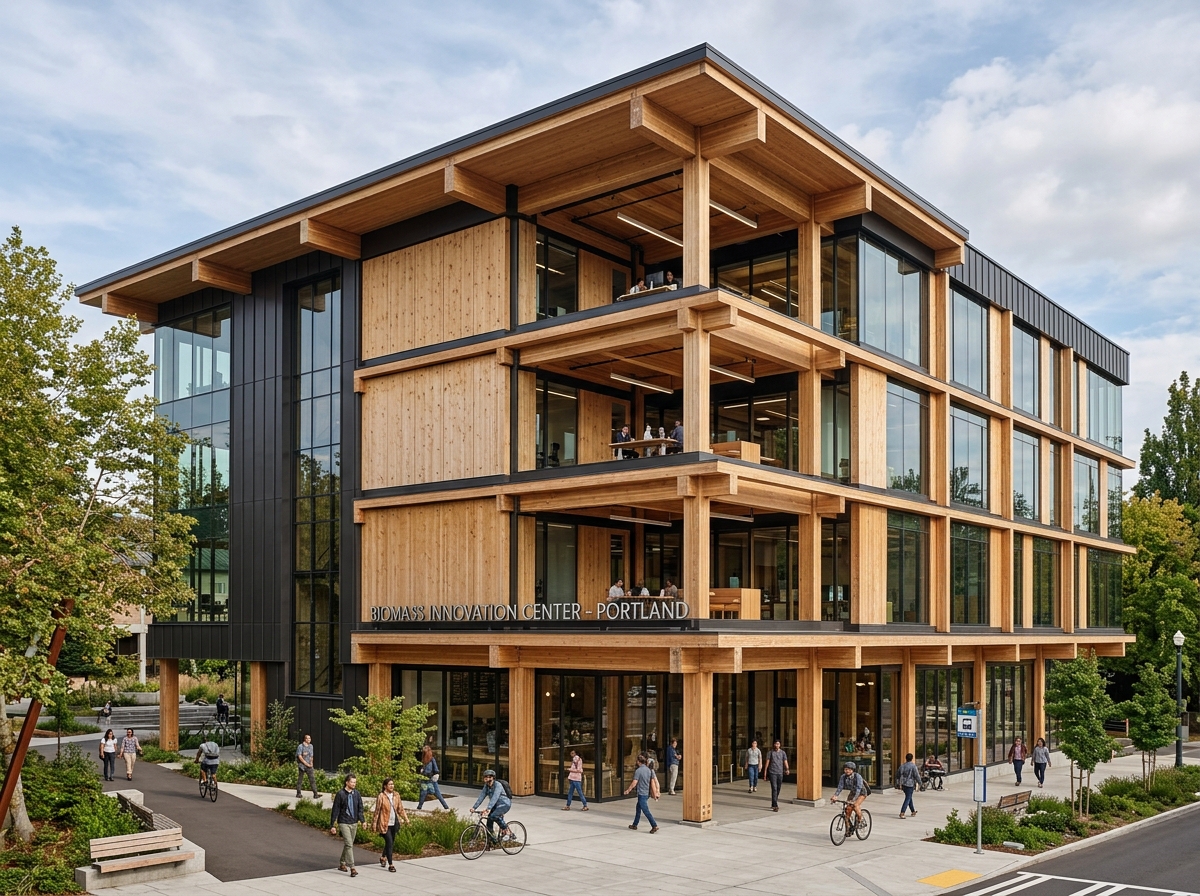
Many people think that when a tree is cut down, the carbon capture story ends. In reality, that is just the beginning of the tree's "second life." When a tree is harvested and processed into lumber, CLT (Cross-Laminated Timber), or glulam, the carbon it absorbed during its life doesn't just vanish. It stays locked inside the wood.
Finished wood products are roughly 50 percent stored carbon by weight. If you have a hardwood floor that weighs 1,000 pounds, you essentially have 500 pounds of solid carbon sitting under your feet rather than floating in the atmosphere. This storage is incredibly durable; wood products in buildings can store this carbon for about 80 years on average, and often much longer in the case of high-quality hardwood furniture or historic homes.
Reduced Embodied Carbon with Wood Products
The real magic happens when we compare wood to other materials. This is known as the "substitution effect." When a builder chooses a hardwood beam over a steel one, they aren't just storing carbon in the wood; they are avoiding the massive emissions required to manufacture steel or concrete.
Producing steel and concrete is an energy-intensive process that releases huge amounts of CO2. In fact, steel production creates about 1.83 metric tons of CO2 for every ton produced. In contrast, wood requires significantly less energy to manufacture. By choosing Hardwood vs. Lookalikes, such as plastic-based vinyl flooring, you are opting for a material that has a much lower carbon footprint and actually helps the planet by acting as a "carbon bank."
The Role of Carbon Capturing Forest Products in Global Climate Strategy
Sustainably managed forests and the products they provide are now recognized at the highest levels of government as essential climate tools. For example, in Washington State, legislation like HB 2528 has officially recognized that the forest products sector is a key part of the state's carbon solution. Private forestry in that state alone sequesters 12% of the state's annual carbon emissions.
Strong markets for wood products actually lead to more trees, not fewer. When landowners have a financial incentive to grow trees for timber, they are less likely to sell their land for strip malls or housing developments. This market demand has helped the U.S. Southeast increase its forest carbon storage by nearly 30% over the last several decades, even while timber production doubled.
Maximizing the Potential of Carbon Capturing Forest Products
To get the most out of our forests, we need a mix of strategies:
- Protecting Old-Growth: Older forests are like "carbon capital." They hold massive amounts of irrecoverable carbon that has built up over centuries. Protecting these areas is critical for keeping that carbon out of the atmosphere.
- Managing Young Forests: While old forests are great at storing carbon, young, middle-aged forests are the champions of sequestration (the rate of capture). They are like high-growth stocks, pulling in CO2 at a rapid pace as they reach for the sky.
- Wildfire Mitigation: In fire-prone areas, managed forestry—including thinning and removing dead biomass—is essential. By reducing the fuel load, we can prevent catastrophic wildfires that would otherwise release decades of stored carbon in a single afternoon.
- Indigenous Leadership: Indigenous communities have managed forests for millennia. Their leadership is essential for maintaining biodiversity and long-term carbon sinks, particularly in sensitive areas like the Canadian boreal or the Amazon.
Circularity and Innovation: From Lignin Foam to Recycling
The future of carbon capturing forest products goes far beyond traditional lumber. Scientists are finding ways to use every single part of the tree, including the "glue" that holds wood fibers together: lignin.
Traditionally, lignin was a byproduct of the paper-making process that was often burned for energy. Today, researchers have developed a Revolutionary carbon foam made from 100% wood lignin. This foam is lightweight, non-flammable, and can be used for aircraft insulation or stealth technology, all while keeping carbon locked in a solid form. Other innovations include CO2-functionalized composites that chemically bond captured CO2 into wood-plastic materials, creating building products that are literally made of greenhouse gas.
Life Cycle Assessments of Carbon Capturing Forest Products
When we look at the full Life Cycle Assessment (LCA) of wood, the results are impressive. Even at the end of a product's life, the carbon story isn't necessarily over.
- Recycling: About 70% of paper and cardboard is recycled in some regions, extending the carbon storage time significantly.
- Landfills: When wood eventually ends up in a landfill, it doesn't just disappear. Because of the lack of oxygen, wood decomposes very slowly. It can continue to store carbon for decades, and the methane produced can often be captured and used as renewable energy.
- Regenerative Forestry: New models of "short-cycle" forestry allow for harvesting from the same stump multiple times without disturbing the soil, capturing up to three times more CO2 per hectare than traditional reforestation.
Frequently Asked Questions about Forest Carbon
Are young forests better at capturing carbon than old-growth forests?
It’s a bit of a trade-off! Think of an old-growth forest as a massive savings account—it has a huge amount of "carbon capital" stored in big trees and deep soil. A young forest is more like a high-interest checking account; it doesn't have as much total money yet, but it’s adding new carbon at a much faster rate. We need both: old forests to keep carbon locked away and young forests to aggressively pull more CO2 out of the air.
How does using wood products help reduce wildfire risks?
When we manage forests for wood products, we often perform "thinning." This involves removing smaller, diseased, or dead trees that act as kindling for wildfires. By creating healthier, more spaced-out forests, we reduce the chance of "crown fires" that destroy entire ecosystems. This keeps the remaining trees healthy and ensures the carbon stays in the forest or in the products we build.
What happens to the carbon when a wood product is thrown away?
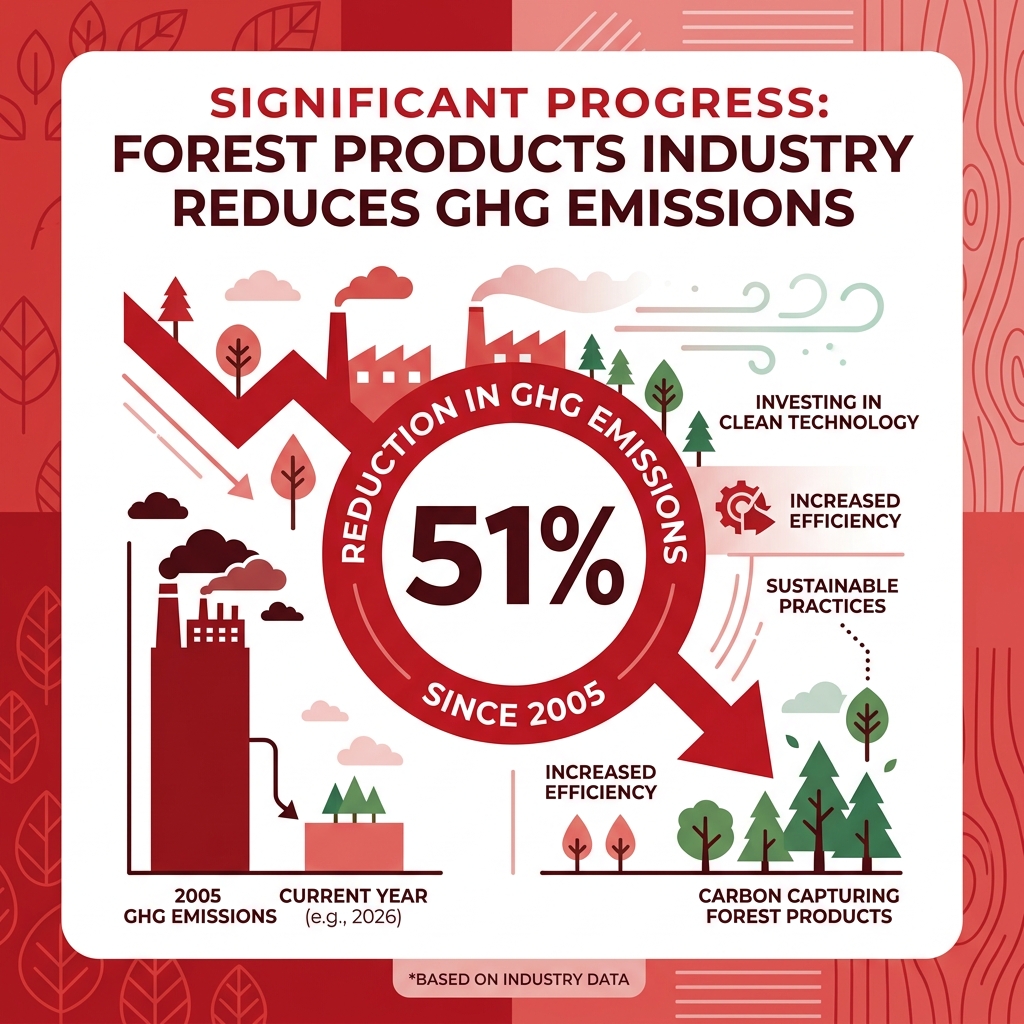
If a wood product is recycled, the carbon stays locked in. If it goes to a landfill, the decomposition is surprisingly slow. Studies show that wood in the anaerobic (oxygen-free) environment of a landfill can retain its carbon for a very long time. Furthermore, the forest products industry has reduced its own GHG emissions by 51% since 2005 by using wood residues for energy instead of fossil fuels.
Conclusion
At Real American Hardwood, we believe that the best solutions to our modern climate challenges are often the ones nature perfected millions of years ago. Carbon capturing forest products represent a bridge between our need for beautiful, durable building materials and our responsibility to protect the planet.
By choosing real hardwood, you are supporting a cycle of growth that sees 2.4 seedlings planted for every tree harvested. You are choosing a material that is naturally antimicrobial, refinishable for a lifetime of use, and—most importantly—a material that acts as a permanent carbon bank in your home.
As we look toward a carbon-negative future, we don't need to wait for a "silver bullet" technology to be invented. We just need to look to our forests and the incredible products they provide. To learn more about how you can make a sustainable choice for your next project, visit our page on Sustainability and see how American hardwood is building a greener world, one board at a time.