

Branching Out into Carbon Sequestration with North American Hardwoods
How Working Forest Capture Carbon and Why Choosing Hardwood Matters for Climate and Home Design

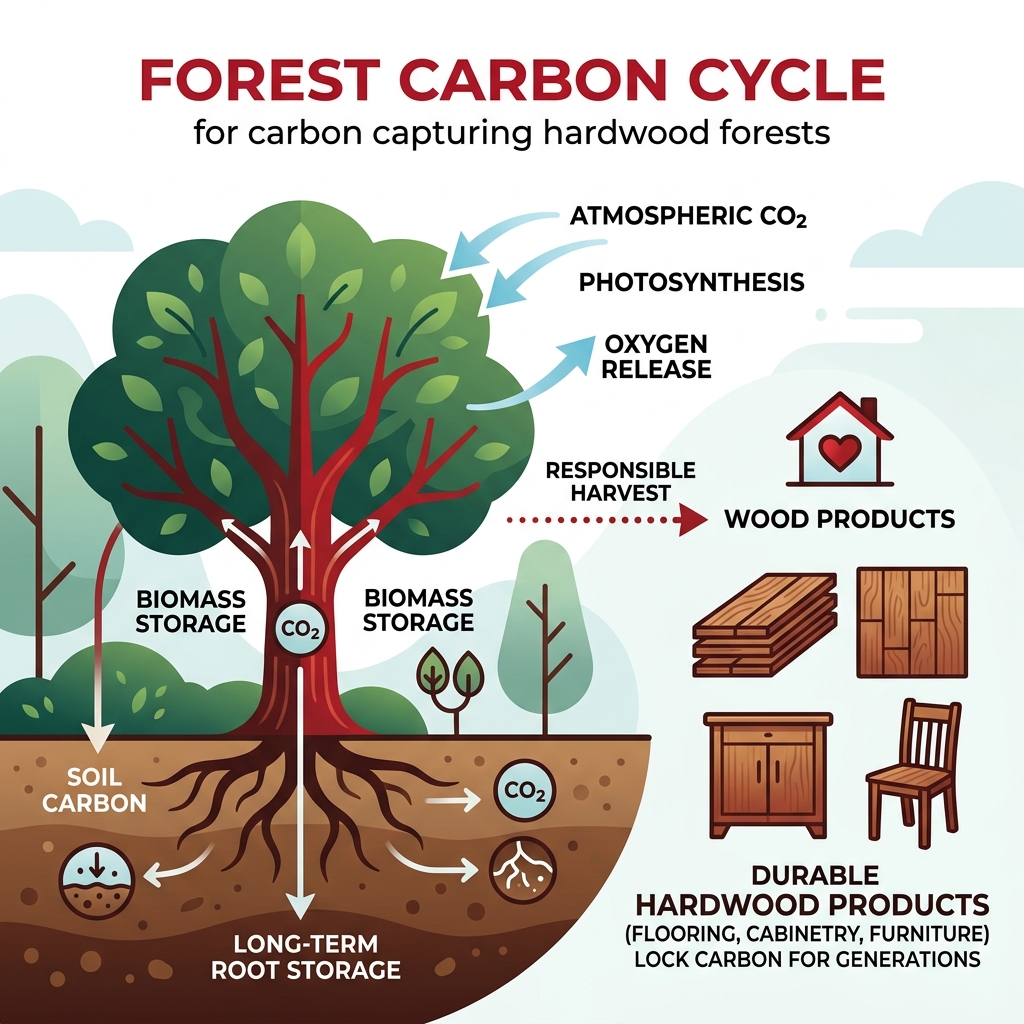
Working forests are among the most effective natural systems for removing CO2 from the air and storing it in trees, roots, and soil over long periods of time. And the story does not end at harvest. That carbon also stays stored in durable wood products, while responsibly managed hardwood forests regrow and begin capturing more carbon again.
Here's a quick snapshot of the carbon stats:
Hardwood forests don't just store carbon while they grow— when responsibly harvested and turned into durable products like flooring or cabinetry, that carbon stays locked away for generations.
For eco-conscious homeowners and designers, this means choosing American hardwood isn't just an aesthetic decision. It's a climate decision.
I'm Jonathan Geyer of Real American Hardwood Company, and my experience sourcing and distributing premium American hardwoods — from oak and maple to hickory and walnut — has given me a front-row seat to how carbon capturing hardwood forests drive both environmental and economic value. In this guide, I'll walk you through everything you need to know, from the science of how hardwoods store carbon to how your next flooring choice can be part of the solution.
The Science of Carbon Capturing Hardwood Forests
To understand how our forests fight climate change, we first need to look at the mechanics of the trees themselves. It all starts with photosynthesis. Trees act like giant vacuum cleaners for the atmosphere, pulling in carbon dioxide (CO2), keeping the carbon to build their "bodies" (wood, leaves, and roots), and releasing the oxygen back for us to breathe.
In carbon capturing hardwood forests, this process creates two distinct phenomena: carbon sequestration and carbon storage. According to the University of Minnesota Extension's guide on carbon storage vs sequestration, sequestration is the active process of pulling CO2 from the air, while storage refers to the total amount of carbon currently held within the forest ecosystem.
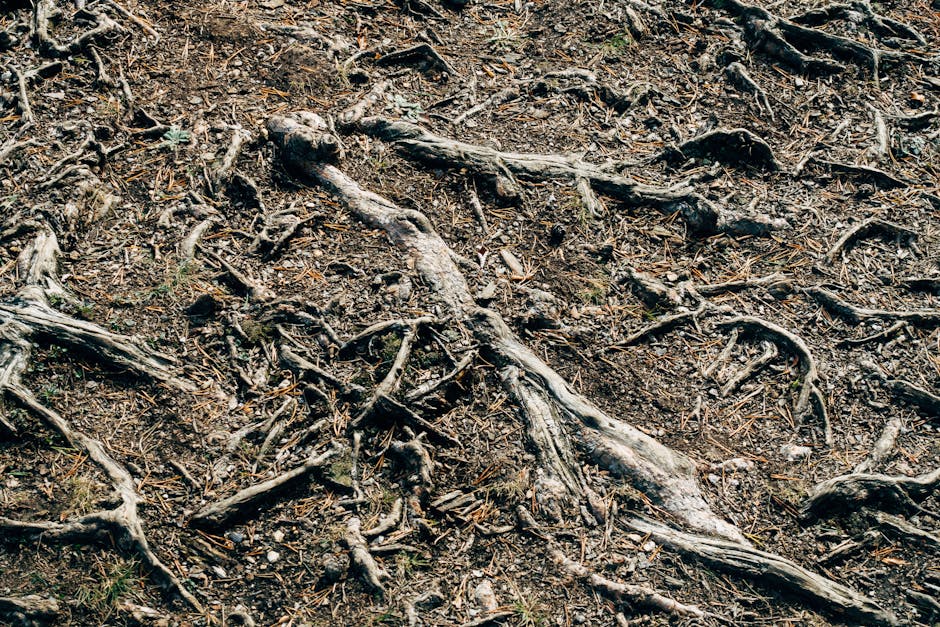
While the visible trunk and branches are what we usually think of, a massive portion of a forest’s carbon is hidden right beneath our feet. In temperate hardwood forests, soil organic carbon can represent up to 50% of the total carbon pool. This storage is driven by microbial activity and the slow decomposition of leaf litter and dead roots. Interestingly, in some northern forests, 50-70% of soil carbon is specifically tied to roots and the fungi that live on them. This underground network ensures that even if a tree reaches the end of its life, much of the carbon it gathered remains locked in the earth.
Comparing Sequestration in Carbon Capturing Hardwood Forests
Not all forests are created equal when it comes to climate impact. While pine plantations grow quickly, research in Northern Michigan has shown that mixed hardwood stands (featuring species like sugar maple, red oak, and red maple) often outperform them in the long run.
A 60-year study found that hardwood forests stored approximately 255 Mg C ha⁻¹ compared to just 201 Mg C ha⁻¹ in adjacent red pine plantations. Furthermore, the average sequestration rate in these productive hardwood forests was 2.9 Mg C ha⁻¹ yr⁻¹, notably higher than the 2.3 Mg C ha⁻¹ yr⁻¹ seen in pine. This suggests that the dense, heavy wood of hardwoods—combined with their complex root systems—makes them superior long-term carbon sinks. NASA research on global forest carbon sinks further confirms that globally, forests hold about 861 gigatonnes of carbon, with temperate hardwoods offering ideal stability due to their moderate growth and slow decomposition rates.
How Age Impacts Carbon Capturing Hardwood Forests
There is a common myth that only young, fast-growing trees matter for the climate. In reality, a forest's age plays a nuanced role in the carbon cycle:
- Young Forests (10–30 years): These are the "sprinters." They have high net primary productivity (NPP), meaning they sequester carbon very quickly as they race toward the canopy. However, they have low total storage because their trunks are still small.
- Middle-Aged Forests (30–70 years): This is the "sweet spot" where trees are both growing vigorously and beginning to accumulate significant biomass.
- Mature/Old-Growth Forests (90–120+ years): At this stage, many species reach a "steady state." While individual tree growth might slow down, the total carbon storage is at its peak. Large, old trees hold massive amounts of carbon in their heartwood, and the surrounding soil and deadwood create a stable, long-term reservoir.
By maintaining a mix of forest ages across a landscape, we ensure a continuous cycle of both rapid sequestration and high-capacity storage.
Sustainable Management and Selective Harvesting
At Real American Hardwood, we believe that a managed forest is a healthy forest. Many people worry that harvesting trees hurts the environment, but when done correctly, it can actually enhance a forest's ability to store carbon over the long term.
Sustainable management focuses on hardwood sustainability by using techniques like selective harvesting or partial cutting. Unlike clear-cutting, which removes every tree in an area, selective harvesting involves identifying specific mature, diseased, or overcrowded trees for removal. This creates "gaps" in the canopy, allowing sunlight to reach the forest floor and stimulating the growth of younger trees. These younger "recruits" then begin sequestering carbon at a rapid rate, effectively rejuvenating the forest’s carbon-capturing engine.
Other essential practices include:
- Thinning: Removing smaller or suppressed trees to reduce competition, allowing the remaining high-quality hardwoods to grow faster and larger.
- Natural Regeneration: Hardwood forests are famous for their ability to regrow on their own from seeds and stumps, often requiring no chemical intervention or replanting.
- Soil Protection: Using specialized equipment and harvesting during winter (when the ground is frozen) protects the delicate soil carbon pools from compaction and erosion.
Optimizing Long-Term Sequestration Strategies
When we look at a 100-year outlook, optimized harvesting strategies show incredible promise. Scientific research on optimized harvesting in regions like the Central Appalachians suggests that partial cut harvesting can actually surpass the carbon storage levels of unharvested forests after about 160 years.
How is this possible? It’s because we aren't just looking at the carbon in the standing trees; we are also counting the carbon stored in the wood products made from those trees. By using "improvement cuts," landowners can maintain the timber value of their woodlot and provide high-quality habitat for wildlife while simultaneously contributing to the global carbon sink. Even the leftovers—logging residues like branches and tops—can be managed to prevent rapid decay, further extending the carbon benefits.
Harvested Wood Products as Long-Term Carbon Banks
The story of carbon capturing hardwood forests doesn't end when the tree is harvested. In fact, for many hardwoods, the most stable part of their "carbon life" is just beginning.
Choosing Hardwood: An Age-Old Sustainable Choice means you are literally installing a "carbon bank" in your home. Dry wood is approximately 50% carbon by weight. When a red oak tree is crafted into flooring or a cherry tree becomes a kitchen cabinet, that carbon is "locked in."
Consider the "substitution benefit":
- Longevity: Hardwood flooring can last 50 to 100 years (or more) with proper refinishing. In contrast, synthetic materials like vinyl often need replacement every 15–20 years.
- Emissions: Producing one square meter of hardwood flooring results in about 9.2 kg of CO2e. Producing the same amount of vinyl flooring releases 41.8 kg—nearly five times as much!
- End of Life: Even if a hardwood product is eventually discarded, wood persists much longer in landfills than many other materials, and it doesn't release microplastics into the environment.
Beyond the numbers, biophilic design—incorporating natural wood into our living spaces—has been shown to boost cognitive performance by over 26%. It’s a rare win-win where the choice that’s best for your health is also best for the planet.
Regional Potential and Environmental Challenges
North America is home to some of the most productive carbon capturing hardwood forests in the world. In the Southeast US, for example, carbon storage in mixed hardwood-softwood forests grew by nearly 30% between 1953 and 2017, even as timber harvests doubled. This was driven by improved management and the natural resilience of hardwood species.
In regions like Northern Michigan and the Central Appalachians, species like sugar maple and red oak show the highest potential for sequestration. However, these vital ecosystems face modern threats:
- Invasive Species: Insects like the Emerald Ash Borer can devastate specific populations, turning a carbon sink into a carbon source as trees die and decay.
- Wildfires and Climate Change: While hardwoods are generally more fire-resistant than conifers, extreme droughts and shifting weather patterns challenge their health.
- Deforestation: The greatest threat remains the permanent loss of forest land to urban development.
To combat these, we support active fire management and policies that help private landowners keep their "forests as forests." In many areas, Indigenous management practices are also being recognized for their role in maintaining forest health and carbon stability through traditional ecological knowledge.
Frequently Asked Questions about Carbon Capturing Hardwood Forests
What makes North American hardwood forests exceptional for carbon storage?
Our temperate climate provides a perfect balance. We have a long enough growing season for trees to accumulate massive amounts of biomass, but winters are cold enough to slow down the decomposition of organic matter in the soil. This allows North American hardwoods to build deep, stable carbon reservoirs that tropical forests (where decay is rapid) often lack.
Does harvesting trees reduce the total carbon sink of a forest?
While a harvest temporarily reduces the "on-site" carbon, it doesn't necessarily reduce the "total" carbon sink. If the harvested wood is used for long-lived products (like furniture or flooring), that carbon remains stored. Meanwhile, the remaining forest regrows faster, pulling new carbon from the air. Over a century-long timeline, managed forests often provide a greater net climate benefit than those left entirely untouched.
What are the best management practices for woodlot owners to maximize carbon?
If you own a woodlot, the best things you can do are:
- Avoid clear-cutting: Use selective thinning to keep the canopy diverse.
- Extend rotation lengths: Letting trees grow a bit longer before harvest increases total storage.
- Manage for health: Remove invasive plants and diseased trees to ensure the overall stand remains vigorous.
- Protect the soil: Use low-impact harvesting methods to keep soil carbon where it belongs—underground.
Conclusion
At Real American Hardwood, we are proud to be part of an industry that looks 100 years into the future. Our forests are a truly renewable resource, growing 2.5 times faster than they are harvested. This surplus growth means that every year, our carbon capturing hardwood forests are expanding their role as a massive, natural carbon bank for the planet.
By choosing sustainable American hardwood for your home, you aren't just buying a product; you're investing in an environmental legacy. You are supporting the landowners who keep these forests standing and the foresters who ensure they remain healthy for generations to come.
Ready to make a difference in your next project? Start building your world with sustainable hardwood and join us in branching out toward a greener, more beautiful future.