

Everything You Need to Know About Buying Domestic Hardwood Lumber
Understanding Domestic Hardwood Lumber vs. Imported Species
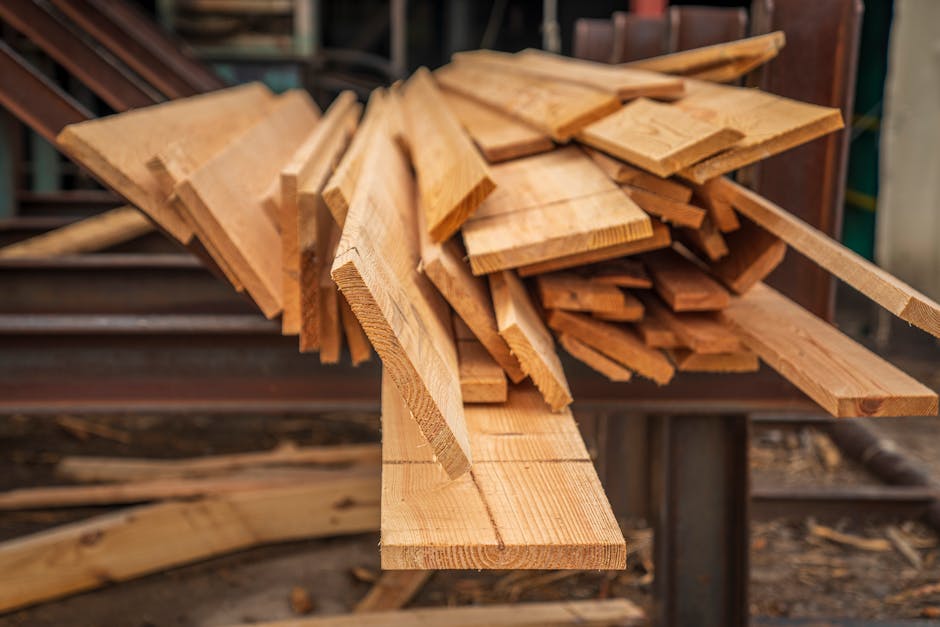
When we talk about domestic hardwood lumber, we are referring specifically to deciduous trees harvested right here in North America. But why choose a local White Oak over an imported exotic like Ipe or Mahogany? The answer lies in a combination of environmental responsibility, cost-effectiveness, and physical accessibility.
One of the most significant advantages of domestic species is the dramatically lower carbon footprint. Because these trees grow, are harvested, and are milled within North America, the transportation distances are a fraction of those required for exotic woods traveling across oceans. Furthermore, our forests are managed under some of the strictest environmental regulations in the world. We take pride in the fact that American hardwood forests are truly renewable; in fact, they are growing at a rate 2.5 times faster than they are being harvested.
From a practical standpoint, domestic woods are simply more accessible for the average woodshop. While exotic woods can be beautiful, they are often subject to volatile pricing and supply chain disruptions. By choosing domestic, you are opting for stability. You can learn more about why these natural materials stand the test of time by exploring Why Real Hardwood.
It is also important to distinguish real wood from the "lookalikes" that have flooded the market. Many vinyl and laminate products use high-resolution photographs to mimic the look of grain, but they lack the depth, warmth, and repairability of the real thing. To understand these differences better, check out our guide on Hardwood vs Lookalikes.
Common Species of Domestic Hardwood Lumber
The diversity of North American forests provides us with a "tool kit" of species, each with unique colors, densities, and grain patterns. Here are the heavy hitters you will encounter at almost any lumber yard:
- White Oak: Known for its incredible rot resistance and strength. It features a signature "fleck" when quarter-sawn and is the gold standard for high-end furniture and flooring.
- Black Walnut: The "king" of domestic woods. It is prized for its deep chocolate brown tones and excellent workability. It is often the most expensive domestic option but adds instant luxury to any project.
- Hard Maple: Extremely dense and light in color. It is the go-to choice for butcher blocks, workbench tops, and flooring that needs to withstand heavy traffic.
- Black Cherry: A favorite among traditional furniture makers. It starts as a light pinkish-brown and darkens into a rich, lustrous reddish-brown as it is exposed to light.
- Poplar: The "utility" hardwood. It is relatively soft, easy to machine, and takes paint beautifully. It is often used for painted cabinetry or internal furniture components.
- Alder: Often called "Western Cherry," it is a staple in cabinet making due to its consistent color and how well it accepts stains.
For a deeper dive into these and many more, visit our comprehensive Hardwood Species Guide.
Regional Growing Areas and Characteristics
The climate where a tree grows dictates the quality of the lumber it produces. We categorize domestic hardwood lumber by its regional origin because the differences are noticeable to the trained eye:
- The Northeast: In states like Pennsylvania and New York, harsh winters and shorter growing seasons force trees to grow slowly. This results in very tight growth rings, which translates to superior stability and a finer grain texture.
- The Appalachian Region: This is the "breadbasket" of American hardwoods. The soil and climate in the Appalachian mountains allow trees to grow quite large, producing wider and longer boards. Species like Ash, Hickory, and White Oak thrive here.
- The Western Region: While the West is dominated by softwoods (like Pine and Fir), it is the primary source for Alder, which is indispensable for modern kitchen cabinetry.
These regional differences are more than just biological; they are part of our heritage. Wood has shaped the way we build and live for centuries. You can read more about this connection in Hardwood in Culture.
Grading, Thickness, and Processing Standards
Buying lumber isn't like buying a 2x4 at a big-box home center. Domestic hardwood lumber goes through a rigorous processing cycle to ensure it is "project-ready" for fine woodworking.
Most domestic lumber is kiln-dried to a moisture content of 6% to 8%. This is critical because it minimizes the wood's tendency to shrink, warp, or crack once it enters the climate-controlled environment of your home.
You will also see terms like S2S and S4S. S2S (Surfaced 2 Sides) means the board has been planed flat on the top and bottom faces, but the edges are still rough. This is often the best value for hobbyists. S4S (Surfaced 4 Sides) means the board is planed on all four sides and is "dimensional," meaning it is ready to use immediately. To see how these processing steps add value to your purchase, visit See the Value.
How to Price and Measure Domestic Hardwood Lumber
Hardwood is not sold by the linear foot like trim; it is sold by the board foot (BF). A board foot is a unit of volume equal to a board that is 12 inches wide, 12 inches long, and 1 inch thick (144 cubic inches).
Thickness is expressed in quarters of an inch:
- 4/4 (Four-Quarter): Roughly 1 inch thick (surfaces to 3/4" or 13/16").
- 5/4 (Five-Quarter): Roughly 1.25 inches thick (surfaces to 1-1/16").
- 8/4 (Eight-Quarter): Roughly 2 inches thick (surfaces to 1-3/4").
- 12/4 and 16/4: Heavy stock used for table legs or structural posts.
Prices vary by species and grade. For example, Poplar might start at $3.00 per board foot, while Select Black Walnut can exceed $15.00 per board foot. Most online suppliers require a minimum order, often around 10 board feet, to make shipping viable.
Understanding the National Hardwood Lumber Association (NHLA) Grades
The NHLA grading system is the industry standard for determining the quality and yield of a board. When you buy domestic hardwood lumber, you are usually looking for one of the following:
- FAS (First and Seconds): The highest grade. These boards are long, wide, and mostly clear of knots or defects. They provide the highest yield of clear cuttings.
- Select & Better: A common commercial grade that includes FAS and "Select" boards (which are FAS on one side and #1 Common on the back).
- #1 Common: Often called "Cabinet Grade," these boards have more character, including small knots and color variations. They are more affordable but require more "waste" to get clear pieces.
- #2 Common: Great for "rustic" looks or flooring where small knots and mineral streaks are desired.
Our coalition works closely with these standards to ensure transparency for the consumer. You can learn more about our mission at About RAHC.
Specialty Figures and Unique Wood Features
Beyond standard grain, domestic forests produce "specialty" woods that are essentially nature's artwork. These are often the result of specific sawing techniques or rare biological occurrences.
- Quarter Sawn: By cutting the log at a 90-degree angle to the growth rings, we produce boards with incredible stability and beautiful "medullary rays" or flecks (especially in White Oak).
- Rift Sawn: Similar to quarter sawn, but without the fleck, resulting in a perfectly straight, vertical grain.
- Birdseye Maple: A rare phenomenon where the wood develops tiny, circular "eyes." It is highly sought after for musical instruments and jewelry boxes.
- Ambrosia Maple: Created when the Ambrosia beetle bores into a tree, leaving behind small holes and beautiful grey/blue streaks caused by a fungus the beetle carries.
- Spalted Maple: Wood that has begun the initial stages of decay, resulting in dramatic black "zone lines" that look like ink marbled through the wood.
For more inspiration on how to use these unique features, visit RealAmericanHardwood.org.
Workability and Project Applications
Different projects require different wood properties. We often use the Janka Hardness Scale to determine which wood is best for a specific job.
Whether you are building a legacy dining table or a simple set of shelves, the choice of species will dictate how easy the wood is to plane, sand, and finish. Start planning your next build at Build Your World.
Sustainability and the Future of North American Forests
Sustainability is not just a buzzword for us; it is our way of life. Many people are surprised to learn that there are more standing trees in the United States today than there were 100 years ago. This is the result of decades of responsible forestry practices.
When a mature hardwood tree is harvested, it makes room for younger trees to grow. These younger, faster-growing trees actually sequester carbon at a higher rate than older, stagnant trees. By using domestic hardwood lumber, you are participating in a cycle that keeps our forests healthy and productive. Read more about our commitment to the planet at Sustainability.
Environmental Benefits of Sourcing Locally
Sourcing locally does more than just save on gas. It supports the generational family businesses that make up the backbone of the American hardwood industry.
- Carbon Capture: Wood products store carbon for their entire lifespan. A hardwood floor installed today will keep that carbon out of the atmosphere for 100 years or more.
- Regeneration: Hardwood forests in North America regenerate naturally. We don't need to "plant" them like row crops; they are a self-sustaining ecosystem.
- Economic Impact: The industry supports thousands of jobs in rural communities across the Appalachian and Northeast regions.
Choosing real wood is a lifestyle choice that prioritizes quality over the "disposable" culture of plastics. Explore the Hardwood Lifestyle to see how others are integrating these values into their homes.
Frequently Asked Questions about Domestic Hardwood
What is the difference between 4/4 and S4S lumber?
4/4 refers to the rough thickness (1 inch) of the board as it comes off the saw. S4S (Surfaced 4 Sides) refers to the processing state. An S4S board has been planed and ripped so that it is smooth and square on all sides. A 4/4 board, once surfaced (S4S), will usually end up being about 3/4" thick.
Why is domestic hardwood more sustainable than exotic imports?
Domestic hardwoods benefit from shorter transportation routes, reducing CO2 emissions. Additionally, U.S. forestry laws ensure that for every tree harvested, more are growing in its place. Many exotic imports come from regions with less oversight, which can lead to deforestation.
How do I calculate board footage for my project?
The formula is: (Thickness in inches × Width in inches × Length in feet) / 12. For example, a board that is 1" thick, 6" wide, and 8' long is: (1 × 6 × 8) / 12 = 4 Board Feet.
Conclusion
Buying domestic hardwood lumber is more than just a transaction; it’s an investment in quality, tradition, and the environment. From the rot-resistant strength of White Oak to the timeless elegance of Black Walnut, North American forests offer everything a builder needs to create something beautiful and lasting.
By choosing Real American Hardwood, you are supporting a truly renewable resource that captures carbon, supports local communities, and brings the unmatched beauty of nature into your home. Ready to choose the perfect wood for your next masterpiece? Head over to our Hardwood Species Guide and start your journey today.