

The Ultimate List of Domestic Hardwood Species for Your Next Project
The Most Common Domestic Hardwood Species in North America
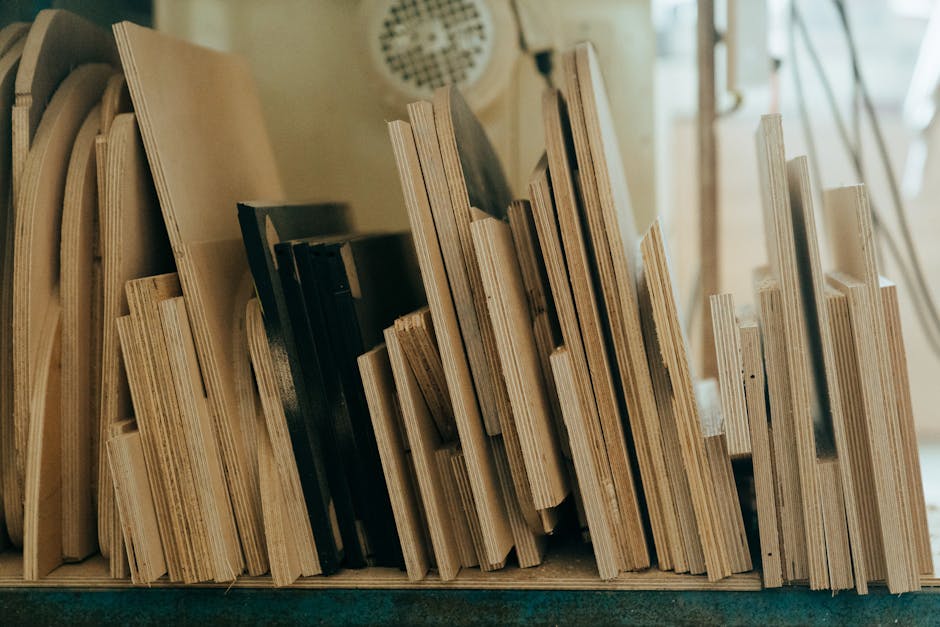
Domestic hardwood species are the backbone of American woodworking — and for good reason. Here's a quick overview of the most common ones you'll encounter:
North America's forests are home to hundreds of hardwood varieties — all growing naturally in temperate climates across the eastern and northern United States. These are deciduous trees, meaning they shed their leaves seasonally and produce fruit or nuts. That includes familiar names like oak, maple, walnut, cherry, and birch.
What makes these species so valuable isn't just their looks. It's their range of properties — from the near-indestructible hardness of hickory to the fine, workable grain of basswood. Whether you're designing a kitchen, laying a floor, or building custom furniture, there's a domestic hardwood built for the job.
And the good news? These woods are renewable, locally sourced, and sustainably managed — something that matters more than ever for eco-conscious builders and designers.
I'm Jonathan Geyer, and as part of the team at Real American Hardwood Company, I've spent years sourcing, milling, and distributing premium domestic hardwood species across the U.S. — from Appalachian cherry to Great Lakes hard maple. In the guide below, I'll walk you through everything you need to know to choose the right species for your next project.
Domestic Hardwoods vs. Other Wood Types: Why Choose American
When you’re standing in a lumber yard or browsing for flooring, you’ll hear terms like "hardwood," "softwood," and "tropical hardwood" thrown around. But what do they actually mean for your project?
The difference between hardwoods and softwoods isn't always about how "hard" the wood feels. It’s actually a botanical distinction. Hardwoods come from deciduous trees (angiosperms) that have broad leaves and produce seeds in a fruit or nut. Softwoods come from conifers (gymnosperms) like pine or cedar, which have needles and cones.
The real magic of domestic hardwood species lies in their cellular structure. Hardwoods have a complex network of pores (vessels) that transport water. This structure often results in a denser, more durable material with intricate grain patterns that softwoods simply can’t match.
FeatureDomestic HardwoodsSoftwoodsTropical HardwoodsTreesDeciduous (Broad-leaf)Conifers (Needles/Cones)Broad-leaf (Rainforest)DurabilityHigh to Very HighLow to MediumVery HighSustainabilityExcellent (2.5x growth rate)Good (Fast growing)Variable (High risk of illegal logging)Common UsesFurniture, flooring, cabinetsFraming, 2x4s, deckingLuxury decks, exotic furnitureRegional AvailabilityWidespread in North AmericaWidespread in North AmericaImported only
Choosing American hardwoods over tropical imports is a win for both your wallet and the planet. While tropical woods like Ipe or Mahogany are beautiful, they often carry a massive carbon footprint due to international shipping. Furthermore, North American hardwoods are a Truly Renewable Resource, with forests that are managed under strict regulations to ensure they remain healthy for generations.
We also have to consider physical properties like shipping weight and specific gravity. For example, a heavy-hitter like White Oak has a kiln-dried specific gravity of 0.67, making it incredibly sturdy but also quite heavy to ship (about 4,000 lbs per thousand board feet). Understanding these weights is crucial for logistics and structural planning in your build.
Understanding the Diversity of Domestic Hardwood Species

The United States is blessed with a vast temperate climate that allows a massive variety of species to thrive. From the rugged Appalachian Mountains to the fertile Lake States, the environment shapes the wood.
Take Quercus rubra (Northern Red Oak) and Acer saccharum (Hard Maple). These aren't just scientific names; they represent the backbone of our domestic timber industry. But even within a single species, geography plays a huge role. We often distinguish between "Northern" and "Southern" variations.
Northern hardwoods, grown in colder climates, tend to grow more slowly. This results in tighter growth rings and a more consistent color. Southern hardwoods grow faster in warmer temperatures, which can lead to wider grain patterns. If you’re looking for a specific aesthetic, checking our Hardwood Species Guide can help you understand these regional nuances.
The Appalachian region is particularly famous for its "Appalachian Hardwoods." The elevation and soil quality there produce some of the finest Cherry and Oak in the world, prized for their stability and grain clarity.
Top-Rated Domestic Hardwood Species for Flooring and Furniture
If you're planning a high-traffic area or a piece of heirloom furniture, these are the "Big Five" domestic hardwood species you should consider:
- Red Oak: The most abundant species in U.S. forests. It’s a classic for a reason. It’s hard, wears well, and has a distinctive open grain that takes stain beautifully.
- White Oak: Slightly harder than Red Oak, it’s famous for its rot resistance. It has a more "refined" look with longer medullary rays (those cool flecks you see in quarter-sawn wood).
- Hard Maple: This is the marathon runner of hardwoods. It’s incredibly resistant to abrasion, which is why it’s used for basketball courts and bowling alleys. It has a creamy white color and a very fine, uniform texture.
- Black Walnut: The "king" of domestic woods. It’s the only dark wood native to North America. It’s prized for its rich chocolate tones and is often used for high-end furniture and cabinetry.
- Cherry: Known for its smooth grain and warm reddish-brown color that actually darkens and becomes richer as it ages (a process called "patina").
We also see unique varieties like Swamp White Oak (Quercus bicolor). It’s part of the white oak group and shares its legendary durability. It’s often used in cabinetry and boatbuilding because it’s rated as having very good resistance to decay. When selecting a species, always look at the Janka rating—a measure of how much pressure it takes to mar the wood. Harder isn't always better for every project, but for flooring, it’s a vital stat.
Identifying Domestic Hardwood Species and Their Lookalikes
One of the most common challenges for DIYers and even some pros is telling species apart. Did you know that Poplar is frequently stained to look like Cherry? Or that Ash is often mistaken for Red Oak?
Here are a few "expert secrets" we use to tell them apart:
- Oak vs. Ash: Look at the "rays." Oak has prominent medullary rays (lines that run perpendicular to the growth rings). Ash lacks these prominent rays.
- Cherry vs. Poplar: Poplar is naturally greenish-yellow or white. When stained, it can look like Cherry, but it’s much softer. If you can dent it with your fingernail, it’s probably Poplar.
- White Oak vs. Red Oak: This is a tricky one. Red Oak has open pores—you can actually blow air through a small piece of Red Oak end grain! White Oak has pores filled with "tyloses," which makes it liquid-tight (perfect for whiskey barrels).
We've put together a guide on Hardwood vs Lookalikes to help you avoid being fooled by a "stain-alike." Also, keep an eye out for Chestnut Oak. It's a member of the white oak family that grows on rocky slopes. It’s incredibly hard and has a distinct "oak smell" that most woodworkers find quite pleasant.
Physical Properties and Janka Hardness Ratings
The Janka Hardness Scale is the industry standard for determining how well a wood species will stand up to wear and tear. It measures the force required to embed a small steel ball halfway into a piece of wood.
Here is how our top domestic hardwood species stack up:
- Hickory/Pecan (1,820 lbf): The heavyweight champion. If you have big dogs or kids with cleats, this is your flooring. It’s also the go-to for tool handles because of its shock resistance.
- Hard Maple (1,450 lbf): Excellent for high-traffic areas and butcher blocks. It has high compressive strength and doesn't splinter easily.
- White Oak (1,360 lbf) and Red Oak (1,290 lbf): Both are plenty hard for residential flooring and cabinetry.
- Black Walnut (1,010 lbf): A bit softer, making it easier to machine for intricate furniture designs.
- Cherry (950 lbf): Soft enough to carve but hard enough to last for centuries in a dining table.
- Aspen (350–420 lbf): At the lower end of the scale. It’s great for crates or light trim but shouldn't be used for flooring.
Beyond hardness, we look at things like "steam-bending properties." White Oak and Ash are world-class at this—you can literally steam them and bend them into circles for chair backs. This is one of the many Advantages of Hardwood that makes it so versatile for designers.
Sustainability and the Environmental Advantages of American Hardwoods
We are often asked, "Is it okay to use wood? Aren't we cutting down the forests?" The answer is a resounding yes, it is okay—and actually, it's good for the environment!
American hardwood forests are a carbon-capturing machine. As trees grow, they take CO2 out of the atmosphere and store it in their wood. When that wood is turned into furniture or flooring, that carbon is "locked away" for the life of the product.
The stats are even more impressive: U.S. hardwood forests are growing 2.5 times faster than they are being harvested. For every tree that is harvested, two more take its place through natural regeneration.
Take the Northern Red Oak as an example. These trees often reach 20–30 meters tall. They start bearing fruit (acorns) around 20–25 years of age, with abundant crops appearing every 2–5 years once they hit 40. This natural cycle ensures that the forest is constantly renewing itself. In fact, the net volume of Red Oak in the U.S. increases by about 28.7 million cubic meters every single year.
When you choose domestic hardwood species, you are supporting a system that keeps forests as forests, rather than seeing that land converted into parking lots or subdivisions. It’s the ultimate eco-friendly building material.
Best Applications for Common Domestic Woods
Choosing the right wood for the right room is key to a successful project. Here’s a quick guide on where to use our favorite species:
- The Kitchen: This is the heart of the home, and it needs a wood that can handle heat and moisture. Hard Maple is the gold standard for The Perfect Hardwood Species for Your Kitchen because it’s non-porous and incredibly durable. Cherry is also a favorite for high-end cabinetry.
- The Bathroom: You might think wood is a "no-go" for bathrooms, but that’s a myth. White Oak is naturally water-resistant thanks to those tyloses we mentioned earlier. Check out our tips on Selecting the Perfect Hardwood Species for Your Bathroom.
- Musical Instruments: Did you know Red Oak is becoming a favorite for electric guitars? It has a bright, punchy tone. You can read more about how Red Oak Strikes a Chord in the music world.
- Outdoor Use: If you’re building a "hideaway" or a porch, White Oak and Cypress are your best friends. They naturally resist rot and insects without the need for heavy chemical treatments. See our case study on Cypress in Hill Country Home Design for inspiration.
Frequently Asked Questions about Domestic Hardwoods
What is the hardest domestic hardwood species available?
The title belongs to the Hickory and Pecan group, with a Janka rating of 1,820 lbf. To put that in perspective, it’s about five times harder than Aspen! This extreme density makes it the top choice for tool handles (like axes and hammers) and high-impact flooring that needs to withstand a lot of abuse.
Which domestic hardwoods are best for outdoor applications?
White Oak and Chestnut Oak are the champions of the outdoors. Because their pores are plugged with tyloses, they don't let water soak in easily. This is why White Oak has been used for centuries in boatbuilding and whiskey barrels. It’s naturally resistant to rot and decay, making it a much more sustainable choice than chemically treated softwoods.
How does kiln drying affect the weight and stability of domestic wood?
Kiln drying is the process of removing moisture from the wood in a controlled environment. This is crucial because wood shrinks as it dries. If you use "green" wood for a table, it will warp and crack as it dries in your home.
Kiln drying also significantly reduces the shipping weight. For example, Hickory starts off very heavy, but once dried to a standard 6–8% moisture content, its shipping weight settles around 4,200 lbs per thousand board feet. This process ensures that the domestic hardwood species you buy are stable, predictable, and ready to be worked into your next masterpiece.
Conclusion
Whether you are a professional architect or a weekend woodworker, domestic hardwood species offer a world of possibilities. From the timeless beauty of Black Walnut to the rugged durability of Hickory, there is a species that fits your aesthetic and your performance needs.
By choosing American hardwoods, you aren't just getting a high-quality product; you are participating in one of the world's most successful sustainability stories. Our forests are growing, our carbon is being captured, and our craftsmanship is being passed down through generations.
Ready to start your next project? Dive deeper into our Hardwood Species Guide to find the perfect match for your home. Let's build something that lasts.