

Don't Get Floored by Bad Engineered Timber Choices
The Smart Buyer's Guide to Engineered Timber Flooring
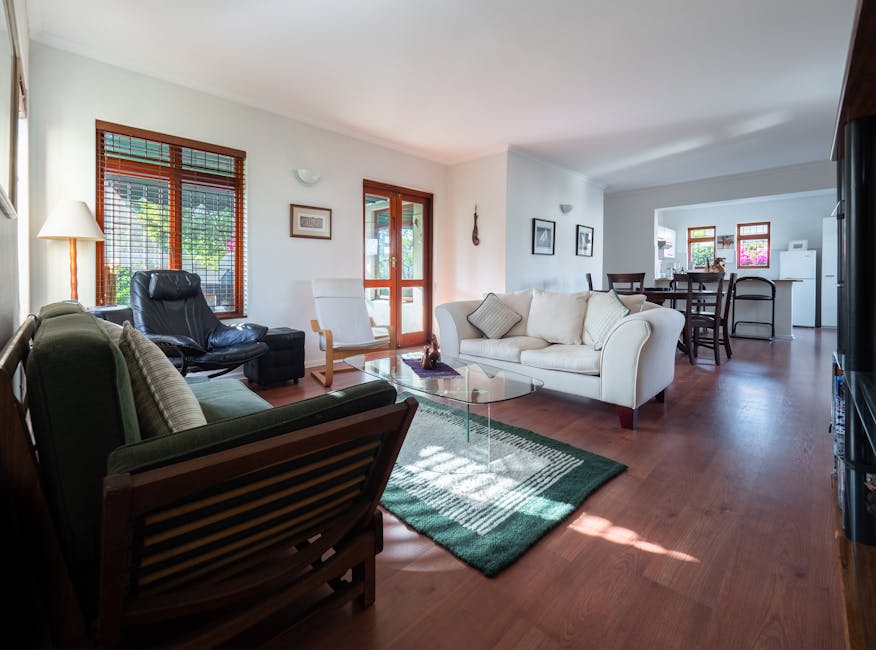
Engineered timber flooring is a multi-layer wood product with a real hardwood top layer bonded to a stable plywood or hardwood core. It looks identical to solid hardwood but performs better in humid spaces, over concrete, and with underfloor heating.
Quick answers for buyers:
So you're ready to buy — but with hundreds of products, species, and finishes on the market, it's easy to choose the wrong floor for your space. The wrong pick can warp, scratch, or simply not fit your subfloor. The right one? It can last decades and actually improve your home's air quality.
That's what this guide cuts through.
I'm Jonathan Geyer from Real American Hardwood Company, where we've spent years sourcing, milling, and distributing premium American hardwood species — including engineered timber flooring options built for real-world performance. In this roundup, I'll share exactly what separates a quality engineered floor from a costly mistake.
Understanding Engineered Hardwood Flooring vs. Solid Hardwood
When we talk about engineered timber flooring, we aren't talking about "fake" wood or laminate. We are talking about real wood that has been given a structural upgrade. While solid hardwood is a single piece of timber from top to bottom, engineered planks are a marvel of modern milling.
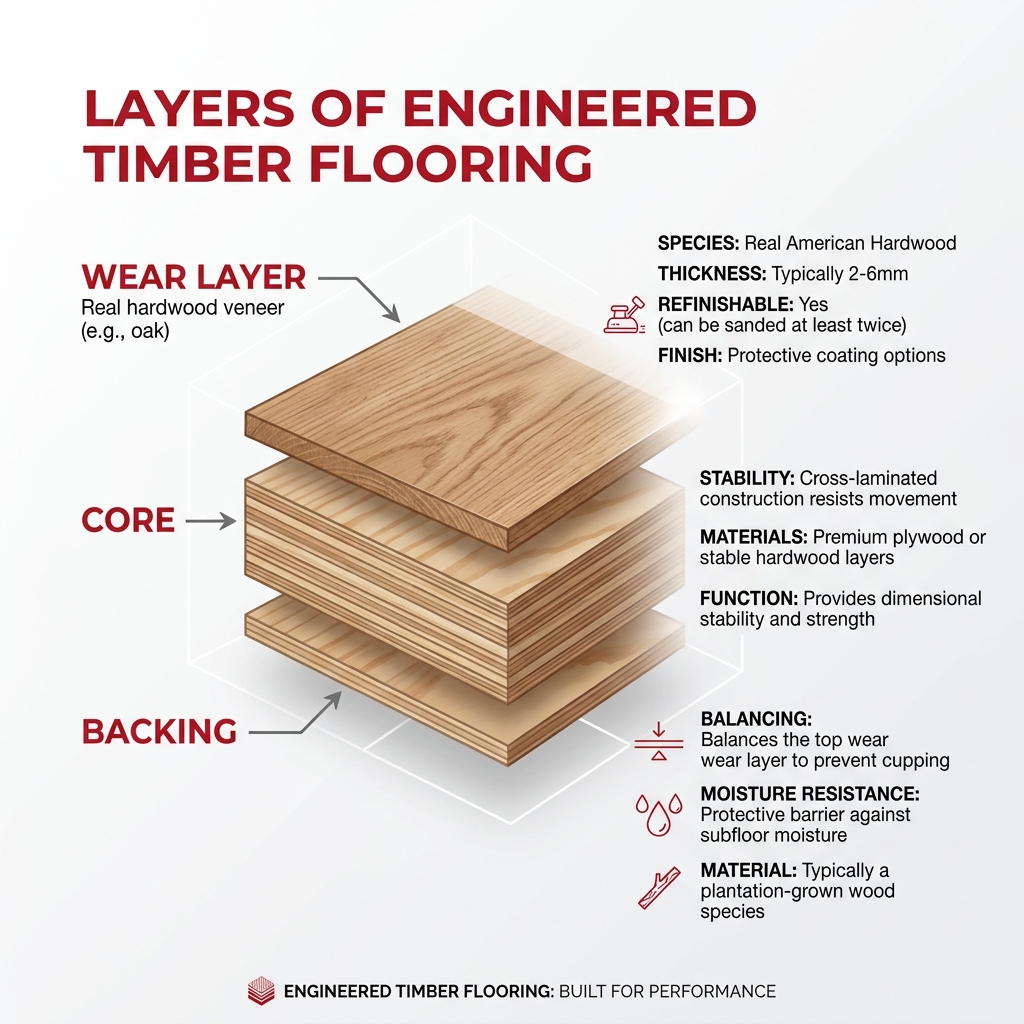
Think of a solid hardwood plank as a single steak, while an engineered plank is more like a high-end club sandwich. The "meat" on top is a beautiful hardwood veneer (the lamella), and underneath is a structural core designed to keep everything straight and true.
The primary reason we often recommend engineered options over solid wood comes down to dimensional stability. Wood is a natural material that breathes; it expands when it’s humid and shrinks when it’s dry. Solid wood does this with a lot of enthusiasm, which can lead to cupping or gaps. Because of its layered construction, engineered wood resists these urges, making it the MVP for challenging environments.

FeatureSolid HardwoodEngineered Timber FlooringMoisture ResistanceModerate (hates humidity)High (very stable)Installation LocationsAbove grade onlyAnywhere (Basements included)Refinishing PotentialMany times (4-7)1 to 3 times (depending on wear layer)Subfloor NeedsPlywood/JoistsConcrete, Plywood, or Radiant Heat
For a deeper dive into why natural materials matter, check out our guide on Why Real Hardwood is the gold standard for home design.
The Structural Advantage of Multi-Ply Design
The secret sauce of engineered timber flooring is cross-lamination. We construct these planks by stacking layers of wood (usually plywood or high-density fiberboard) with the grain of each layer running perpendicular to the one above it.
This alternating grain pattern creates a "tug-of-war" that cancels out the natural tension of the wood. If the top layer wants to expand to the left, the layer beneath it is positioned to hold it in place. This results in a floor that stays flat even when the weather gets moody. This is a massive distinction when you look at Hardwood vs Lookalikes; while vinyl or laminate might mimic the look, they lack the structural integrity and organic feel of real timber.
Performance in Challenging Environments
Because of this stability, we can confidently install engineered timber flooring in places where solid wood would struggle.
- Basements: Traditionally a "no-go" zone for wood due to ground moisture, basements are now fair game for engineered planks.
- Concrete Slabs: If your home is built on a slab, engineered wood can be glued directly down or "floated" over the top.
- Relative Humidity: While we always recommend maintaining an indoor relative humidity (RH) of at least 35% to prevent the top layer from becoming too brittle, engineered wood handles seasonal swings much more gracefully than solid planks.
The Anatomy of Quality: Wear Layers and Species
Not all engineered floors are created equal. The most important part of your floor is the "wear layer"—the slice of real hardwood on the very top. This is what you see, walk on, and eventually refinish.
In the industry, we see a wide range of thicknesses. Some budget-friendly options have a veneer as thin as 0.35mm—barely thicker than a few sheets of paper. On the premium end, we see wear layers like the 3.5mm standard found in high-quality engineered products, or even a massive 6.4mm thick hardwood lamella used by high-end Vermont mills.
Choosing the right species is about more than just color; it’s about durability. You can explore the unique traits of each in our Hardwood Species Guide.
Key Advantages of Engineered Hardwood Flooring
When you choose engineered timber flooring, you get to pick from the best of American forests. Here are a few favorites:
- White Oak: Famous for its golden tones and incredible rot resistance. It’s a designer favorite for wide-plank looks.
- Hickory: If you have big dogs or active kids, Hickory is your best friend. It has a high Janka hardness rating, meaning it stands up to scratches and dents better than almost anything else.
- Maple: Known for its clean, consistent grain, it’s perfect for modern, minimalist homes.
- Walnut: For that deep, chocolatey luxury that nothing else can replicate.
To protect these species, we use advanced finishes. Many of our floors are treated with seven layers of water-based lacquer or UV oils. These finishes provide scratch resistance and color fastness while maintaining that "natural raw wood" look we all love.
Longevity and the Ability to Refinish
A common myth is that you can’t sand engineered timber flooring. That’s simply not true! While you can't sand it as many times as a 3/4-inch solid plank, a quality engineered floor with a 3mm+ wear layer can typically be sanded back and refreshed at least twice.
Considering that research shows only 8% of timber floors are ever actually resanded in their lifetime, an engineered floor is more than capable of lasting 30 years or more. Many of our premium products even come with a 30-year warranty to prove it. You can learn more about the long-term Advantages of Hardwood to see how it stacks up as a lifetime investment.
Installation and Environmental Versatility
One of the biggest wins for engineered timber flooring is how easy it is to get into your home. Unlike solid wood, which almost always requires professional nailing, engineered wood offers versatility.
Common Installation Methods:
- Click-Lock (Floating): The planks simply click together over an underlayment. No glue, no nails, no mess. It’s a favorite for DIYers.
- Glue-Down: Often used over concrete slabs to give the floor a solid, "permanent" feel underfoot.
- Nail-Down: Yes, if you have a plywood subfloor, you can still nail engineered wood just like traditional hardwood.
Before you start, make sure you're Choosing the Right Hardwood for Your Home based on your specific subfloor and lifestyle.
Best Practices for Maintaining Engineered Hardwood Flooring
We want your floors to look as good in year 20 as they do on day one. Maintenance is actually quite simple:
- Daily: A quick sweep or gentle vacuum (with the beater bar turned off!) is all you need.
- Weekly: Use a damp (not soaking wet) microfiber mop with a pH-neutral cleaner.
- Humidity Control: This is the big one. To prevent the wood from drying out and cracking, try to keep your home's humidity above 35% year-round. In cold climates, a whole-home humidifier can be a lifesaver for your floors.
Radiant Heat Compatibility
If you’ve ever dreamed of stepping onto a warm floor on a winter morning, engineered timber flooring is your best bet. Because of its stability, it is the preferred choice for underfloor heating systems. Most manufacturers warrant their engineered floors for use with radiant heat up to a surface temperature of 29°C (84°F). The layered construction allows for efficient heat transfer without the wood warping or shrinking excessively.
The Eco-Friendly Edge of American Hardwoods
At Real American Hardwood, we are proud to say that timber is one of the most sustainable building materials on the planet. Our American hardwood forests are a truly renewable resource, growing at a rate of 2.5 times faster than they are harvested.
When you choose engineered timber flooring, you are actually making a very "green" choice. Because only the top layer is the premium hardwood, a single tree can produce significantly more floorboards than it would if it were cut into solid planks. This efficiency is a cornerstone of our sustainability and responsibility efforts.
For buyers who want an independent overview of responsible forest certification and sustainable forestry practices, resources like the Forest Stewardship Council can help explain what these standards mean in practical terms.
Efficiency in Manufacturing
We don't just stop at efficient wood use. Many of the mills we work with are 100% solar-powered and operate as zero-added-VOC (Volatile Organic Compound) facilities. This ensures that your new floor isn't off-gassing harmful chemicals into your home.
Our products often carry prestigious certifications, including:
- 100% PEFC and FSC Certified: Ensuring the wood comes from responsibly managed forests.
- Blue Angel Certified: A testament to low-emission and eco-friendly manufacturing.
- Cradle to Cradle Certified SILVER: Recognizing products designed for a circular economy.
- CARB 2 Compliant: Meeting the strictest standards for indoor air quality.
By choosing these products, you are supporting a system that captures carbon and keeps it stored in your home for decades.
Frequently Asked Questions about Flooring Selection
How many times can you sand engineered hardwood flooring?
As long as your wear layer is at least 3mm thick, you can typically sand and refinish the floor 2 to 3 times. If you have a ultra-premium 6mm wear layer, you can treat it almost exactly like solid wood. Since most homeowners only refinish their floors once every 15-20 years, this provides a lifetime of beauty.
Is engineered hardwood flooring cheaper than solid wood?
Generally, yes. Engineered timber flooring typically ranges from $4 to $10 per square foot, whereas high-end solid wide-plank flooring can go much higher. Additionally, because engineered wood can be "floated," you can often save significantly on installation labor costs compared to the specialized labor required for nail-down solid wood.
Can this flooring be used in kitchens and bathrooms?
Kitchens? Absolutely. Engineered wood's moisture resistance makes it a great fit for the heart of the home. Bathrooms are a bit trickier—while it handles humidity well, a major flood (like a tub overflowing) can still damage the wood. For half-baths or powder rooms, it’s a fantastic choice; for a kid's bathroom where splashing is guaranteed, you’ll want to be more diligent about wiping up spills immediately.
Conclusion
Choosing the right floor doesn't have to be overwhelming. When you opt for engineered timber flooring, you’re choosing a product that combines the timeless soul of American hardwood with the engineering needed for modern living. It’s stable, sustainable, and capable of transforming any room—from a cozy basement den to a sun-drenched kitchen.
At Real American Hardwood, we believe in building a world that lasts. By choosing domestic, sustainably sourced timber, you aren't just buying a floor—you're participating in a cycle of renewal that protects our forests and captures carbon for generations to come.
Ready to start your project? Build your world with sustainable timber and find the perfect species to ground your home.