

What Are Hardwood Trees and How to Spot Them
What Are the Most Common Examples of Hard Wood Trees?
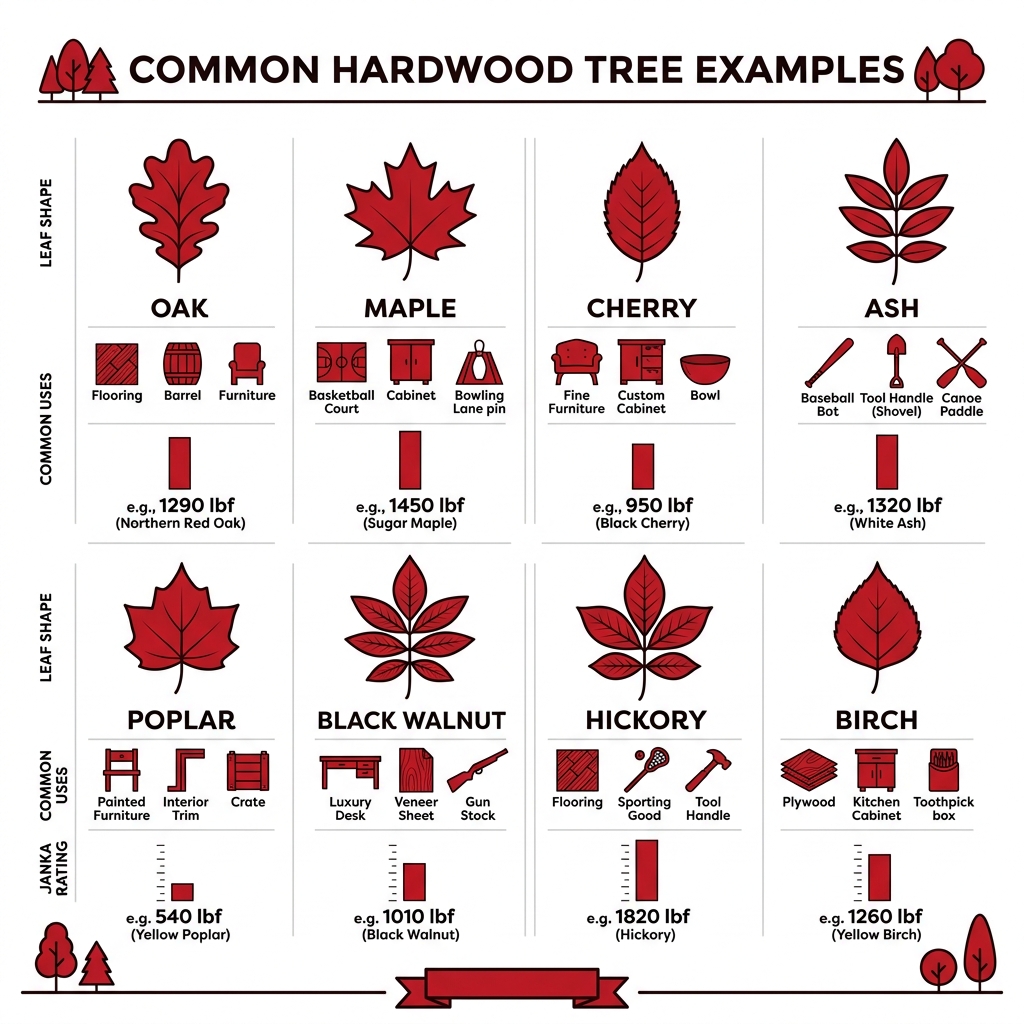
Examples of hard wood trees are all around us — from the oak shading your backyard to the maple floors inside your home. Here are the most common ones you'll encounter in North America:
These trees all share one key trait: they're angiosperms — flowering plants that produce seeds enclosed in a fruit or nut. That slower growth produces denser, tighter-grained wood compared to softwoods like pine or spruce. In fact, hardwood trees can take up to 150 years to reach harvest maturity, versus around 40 years for softwoods.
That density is exactly why hardwoods are the go-to choice for durable flooring, furniture, and construction — and why they matter to homeowners and designers who want materials that last generations.
I'm Jonathan Geyer from Real American Hardwood Company, and I've spent years sourcing, milling, and distributing premium American hardwoods — including many of the examples of hard wood trees you'll find in this guide. Let's walk through how to identify them and what makes each one special.
Hardwood vs. Softwood: The Botanical Difference
When we talk about hardwood and softwood, it is easy to assume we are talking about how the wood feels to the touch. In reality, the distinction is botanical. It’s all about how the tree reproduces and its internal structure.
Hardwoods are "angiosperms." This means they produce seeds with some sort of covering—think of an acorn, a walnut, or the fruit of a cherry tree. Most examples of hard wood trees are also deciduous, meaning they lose their broad leaves every autumn and go dormant for the winter.
On the flip side, coniferous trees (softwoods) are "gymnosperms." They usually have needles instead of broad leaves and let their seeds fall naked to the ground, often tucked inside a cone.
The internal difference is even more fascinating. Hardwoods have specialized structures called vessel elements—essentially microscopic pipes—that transport water. These vessels leave behind pores in the wood, which creates the prominent grain patterns we love. Because hardwoods grow much slower than softwoods, their fibers are packed much tighter. This results in a higher density and greater strength, making them the superior choice for high-traffic areas of your home. If you are currently choosing the right hardwood for your home, understanding this density is the first step toward a lasting investment.
FeatureHardwoodSoftwoodSeedsEnclosed (Fruit/Nut)Naked (Cones)LeavesBroadleaf (Deciduous)Needles (Evergreen)StructureContains Vessel ElementsContains TracheidsGrowth RateSlow (Up to 150 years)Fast (Approx. 40 years)DensityGenerally HighGenerally Low
Top 5 Examples of Hard Wood Trees in North America
While there are over 60,000 tree species worldwide, North America is home to some of the finest temperate hardwoods on the planet. In fact, our hardwood forests are growing 2.5 times faster than they are being harvested, making these trees a truly renewable resource.
When selecting lumber, we often look at the Janka Hardness scale, which measures the force required to embed a steel ball into the wood. This helps us determine which top five most common species are right for your specific project. You can find deep dives on all of these in our Hardwood Species Guide.
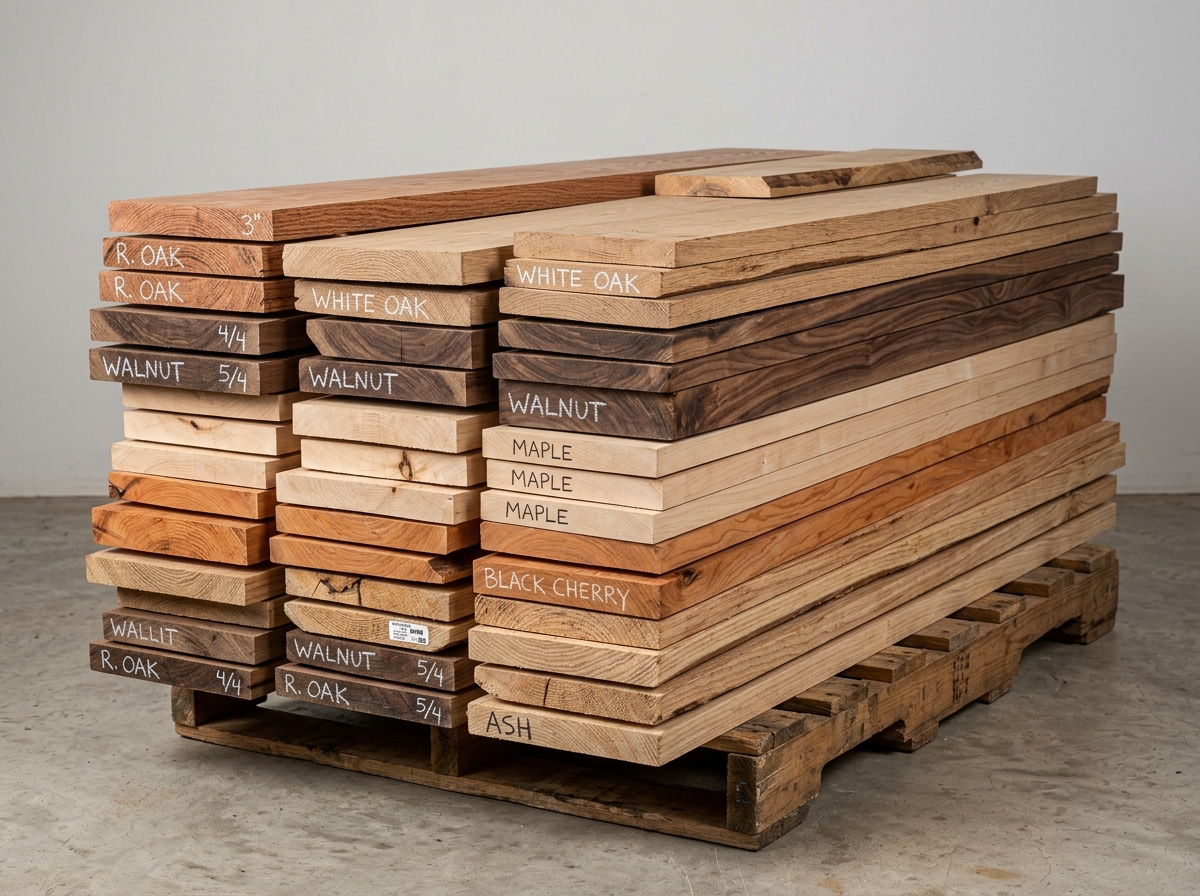
Oak (Quercus)
The mighty oak is perhaps the most iconic of all oaks. With over 600 species worldwide and 70 in North America alone, it is a staple of American woodworking. You can easily spot an oak by its fruit: the acorn. A single oak can produce 10 million acorns in its lifetime!
- Red Oak: Known for its porous, open grain and warm, reddish hues. It is the most popular choice for flooring in the U.S.
- White Oak: This is a "water-tight" wood because its pores are plugged with tyloses. This makes it rot-resistant and perfect for wine barrels and even selecting the perfect hardwood species for your bathroom.
Maple (Acer)
Maple trees are famous for their brilliant fall colors and, of course, delicious syrup. There are about 125 species of maple, but in the lumber world, we focus on two main types.
- Hard Maple: Also known as Sugar Maple (Acer saccharum). This wood is incredibly dense and abrasion-resistant. It is so tough that it’s the standard material for NBA basketball courts and bowling alleys. You can find more technical details at Hard Maple | The Wood Database (Hardwood).
- Soft Maple: Despite the name, it’s still a hardwood! It’s just slightly less dense than hard maple, making it easier to machine and paint.
Cherry (Prunus)
The Black Cherry is the largest native cherry in the U.S. and is highly prized for its elegant, fine grain. While many people recognize cherry trees for their spring blossoms, woodworkers love the timber for its unique "photo-sensitivity." Cherry wood starts as a light pinkish-brown but darkens to a rich, deep red over time as it is exposed to sunlight. This makes it the perfect hardwood species for your kitchen cabinets, where it will only get more beautiful with age.
Specialized Hardwoods for Construction and Design
Beyond the "Big Three," several other examples of hard wood trees offer specialized properties that make them indispensable for specific uses.
Black Walnut
If oak is the workhorse, Black Walnut is the luxury sedan. It is one of the few North American hardwoods that grows naturally with a dark, chocolate-brown heartwood. Because it is so highly valued, it is often used for high-end furniture and decorative veneers. You can learn about its unique properties at Black Walnut | The Wood Database (Hardwood).
Ash and Hickory
These two are the champions of "shock resistance."
- Ash: This wood is incredibly strong but relatively lightweight. For decades, it was the only choice for Major League baseball bats. Unfortunately, the Emerald Ash Borer has threatened many forests, but sustainable harvesting continues to provide this beautiful, open-grained wood for furniture and tool handles.
- Hickory: This is the heavyweight champion. Hickory is one of the hardest and strongest woods native to the U.S. It’s what we use for tool handles that take a beating, like axes and hammers. Its rustic look also makes it an ideal hardwood for hideaway cabins and floors.
Birch and Beech
Both birch and beech are known for their uniform texture and pale color.
- Birch: Often used in high-quality plywood and cabinetry because it glues and finishes exceptionally well.
- Beech: Since it is odorless and tasteless, it is a favorite for food-safe containers, wooden spoons, and butcher blocks.
Identifying Examples of Hard Wood Trees by Leaf and Bark
You don’t need to be a botanist to identify these trees in the wild. Most examples of hard wood trees give themselves away if you know where to look.
- The Leaves:
- Simple vs. Compound: Most hardwoods like maple and oak have "simple" leaves (one leaf per stem). Others, like hickory and ash, have "compound" leaves (multiple leaflets on one stem).
- Edges: Look at the leaf margins. An average elm has "serrated" or saw-toothed edges.
- Shape: The American basswood tree is famous for its large, heart-shaped leaves and lopsided bases.
- The Bark:
- As trees age, their bark develops unique patterns. White oak has light grey, scaly bark, while Black Walnut has deep, diamond-shaped furrows.
- Birch is the easiest to spot—its bark is thin and papery, often peeling back in layers.
- The History:
- Sometimes the absence of a tree tells a story. The American Chestnut was once the king of the forest until it was nearly wiped out by an exotic fungus in the early 1900s. Today, restoration efforts are bringing this legendary hardwood back.
Frequently Asked Questions about Hardwood Trees
What is the hardest example of a hard wood tree?
In North America, Hickory and Black Locust are among the hardest. However, globally, tropical woods like Ipe or Lignum Vitae take the top spots. On the flip side, Balsa is technically a hardwood (it's an angiosperm!), even though it's soft enough to dent with your fingernail!
Are all hardwood trees deciduous?
Not quite. While most North American examples of hard wood trees shed their leaves, there are "evergreen" hardwoods like Holly and Magnolia that keep their leaves year-round. The classification is always based on the seed structure (angiosperm vs. gymnosperm), not the leaves.
Why is hardwood more expensive than softwood?
It comes down to time and density. A pine tree can be harvested in about 40 years, while an oak might need 100 to 150 years. Because hardwoods grow slower, they are denser and more durable, but they also take much longer to "manufacture" in nature. You are paying for a century of growth and carbon sequestration.
Conclusion
Choosing hardwood is a vote for sustainability. These trees are a truly renewable resource; our American forests are managed so well that we have more hardwood today than we did 50 years ago. Every time you choose a product made from examples of hard wood trees, you are supporting a cycle that captures carbon and keeps our air clean.
Whether you are looking for the rugged strength of hickory or the timeless elegance of cherry, we are here to help you find the perfect match. Explore our Hardwood Species Guide to start your next project with the best nature has to offer. Real American Hardwood is more than just a building material—it's a legacy you can live on.