

Sustainable Hickory Wood Options for the Eco-Conscious Builder
Is Hickory Lumber a Renewable Resource? Here's What You Need to Know
The short answer is yes: Hickory's renewable resource status is supported by The USDA Forest Service's forest inventory and analysis program.
Here's why, at a glance:
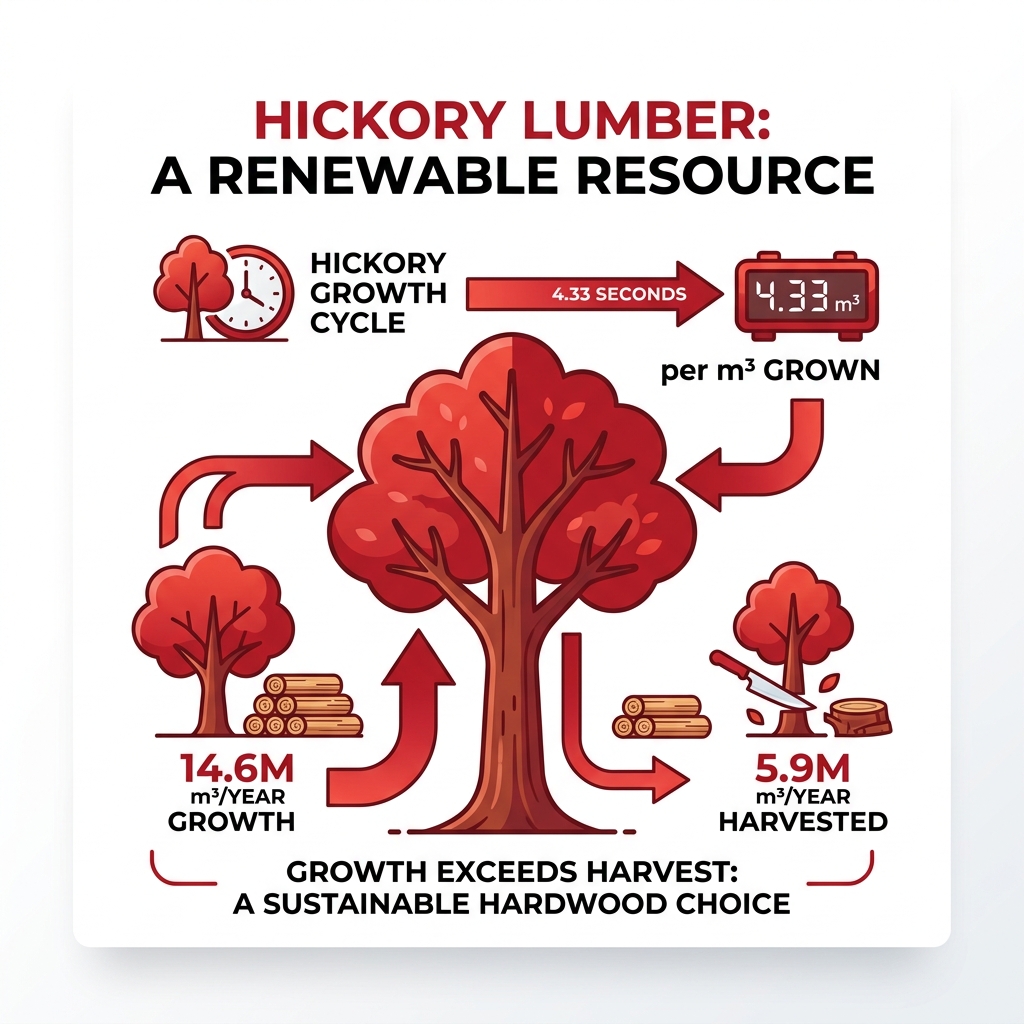
U.S. hickory trees grow more than twice as fast as they are harvested. Forest growth has outpaced harvesting in American hardwood forests since 1940 — and hickory is a strong example of that trend.
For eco-conscious builders and designers, that means choosing hickory isn't just an aesthetic decision. It's a climate-smart one.
I'm Jonathan Geyer from Real American Hardwood, and sourcing and milling premium American hardwoods — including hickory — as a hickory lumber renewable resource is at the core of what we do. Read on for a practical breakdown of the best sustainable hickory options to help you build with confidence.
Why Hickory Lumber is a Premier Renewable Resource
It is really about whether forests stay healthy, diverse, and productive over time. Hardwoods stand out in this space because they naturally regenerate through science-based forest management. Current forest inventory data shows hickory growing stock at about 742.3 million cubic meters, making it a meaningful part of the nation’s hardwood resource base.
The most encouraging statistic for any eco-conscious builder is the net annual growth surplus. Every year, U.S. forests add about 14.6 million cubic meters of hickory. We only harvest about 5.9 million cubic meters in that same timeframe. This leaves a net annual surplus of 8.6 million cubic meters. Essentially, our "forest bank account" is growing significantly every single year, even as we use the wood for beautiful floors and furniture.
According to U.S. Forest Service forest inventory data, this growth exceeds harvest in almost every significant producing state. Unlike some tropical woods that require intensive plantation management, American hickory relies heavily on natural regeneration. In our temperate forests, the conditions are so ideal that these trees often sprout and grow on their own without the need for human-led planting. This natural cycle ensures that the genetic diversity of the forest remains intact.
Choosing a Hardwood: Age-Old, Sustainable Choice like hickory means supporting a system where the resource is literally replacing itself faster than we can use it. Since 1940, the volume of hardwood in U.S. forests has increased by over 100%. When you buy hickory, you are participating in a success story of modern conservation.
Environmental Impact and Carbon Benefits of Hickory
If you want to fight climate change, look at the floor beneath your feet. Trees are the ultimate carbon capture technology. Through photosynthesis, a hickory tree breathes in CO2 and breathes out oxygen, keeping the carbon and turning it into wood. About 50% of the dry weight of hickory is actually stored carbon.
Each cubic meter of hickory lumber stores roughly 0.9 tonnes of CO2. But the benefits don't stop at storage. When we use wood instead of man-made materials like concrete, steel, or plastic, we see massive fossil energy savings. In fact, using a cubic meter of wood saves about 1.1 tonnes of fossil energy compared to other building materials.
We also look closely at the Cradle-to-gate Life Cycle Assessment research. This assessment looks at everything from the moment the saw touches the tree to the moment the lumber leaves the mill. The production of rough green hardwood lumber emits only about 41 kg of CO2 per cubic meter. Compare that to the 975 kg of carbon stored in that same wood, and you'll see that the carbon stored is 24 times greater than the emissions produced during its creation.
At Real American Hardwood, we emphasize Sustainability through every step of the process. Modern mills often use wood waste—like sawdust and bark—as biomass energy to power the kilns that dry the lumber. This creates a circular energy loop that further reduces the need for fossil fuels.
Carbon Storage in Hickory Lumber Renewable Resource Products
The "biogenic carbon" stored in your dining table or hardwood floor stays there for the life of the product. Because hickory is incredibly dense and durable, these products often last for 100 years or more. This long-term storage is vital for the planet.
When a hickory floor eventually reaches the end of its first life, it doesn't have to go to a landfill. Scientific research on life cycle assessment shows that upcycling or recovering hardwood flooring for reuse can reduce fossil CO2 emissions by as much as four times compared to buying new material. Whether it's being repurposed into a rustic accent wall or recycled into bioenergy, hickory never truly goes to waste.
Key Characteristics and Sustainable Applications
Hickory isn't just eco-friendly; it's a "workhorse" wood. It is famously the densest and strongest hardwood in North America. If you've ever swung a high-quality axe or sledgehammer, you've likely felt the power of a hickory handle. It possesses a unique combination of hardness, bending strength, and shock resistance that is unmatched by other commercial species.
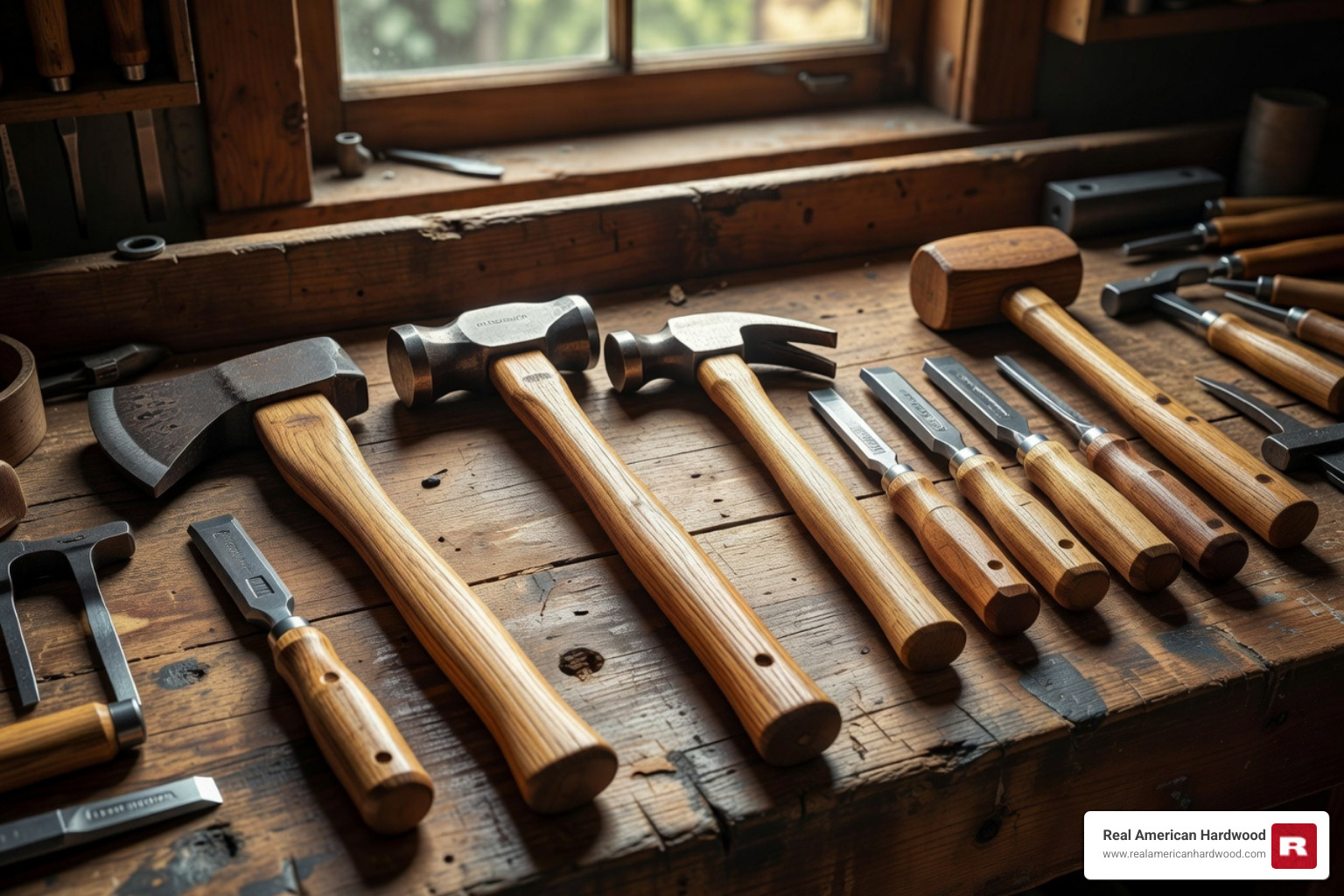
On the Janka Hardness Scale, hickory sits near the top for domestic woods, often rated at 1,820 lbf. This makes it significantly harder than White Oak (1,360 lbf) or Hard Maple (1,450 lbf).
PropertyHickoryWhite OakHard MapleJanka Hardness1,820 lbf1,360 lbf1,450 lbfBending StrengthVery HighHighHighShock ResistanceExcellentModerateModerateAestheticRustic/High ContrastUniform/ClassicClean/Modern
Sourcing Hickory Lumber Renewable Resource for Flooring and Furniture
Because of its extreme durability, hickory is the premier choice for high-traffic flooring. A well-maintained hickory floor can easily last a century. It’s the kind of floor that handles kids, pets, and heavy boots without breaking a sweat.
One of the most beautiful aspects of hickory is its natural "character." According to the American Hardwood Export Council species guide, hickory is often sold as a mix of species, including Shagbark, Shellbark, Mockernut, and even Pecan. This leads to a stunning variety of colors—from the pale yellow-brown of the sapwood to the rich, reddish-brown of the heartwood.
You might see "bird peck" (small indentations caused by woodpeckers) or deep mineral streaks in the grain. While some woods treat these as defects, in hickory, they are celebrated as hallmarks of a hickory lumber renewable resource. These markings tell the story of the tree's life in a wild, managed forest.
Ensuring Ethical Sourcing: Certifications and Standards
To ensure you are truly getting a sustainable product, it's important to look for the right credentials. Ethical sourcing starts with responsible forest management. This includes practices like selective thinning—removing certain trees to allow the strongest ones to grow larger and healthier—which mimics the natural disturbances of a forest.
We stand by the National Hardwood Lumber Association ethics, which promote uniformity and integrity in the hardwood trade. By following these standards, we ensure that the biodiversity of our forests is protected. This means maintaining habitats for the 85 species of mammals and 300 species of birds that call North American hardwood forests home.
A great example of hickory's versatility and sustainability was seen when American Hardwoods Hickory Welcomes Solar Decathlon Visitors. This project highlighted how modern, energy-efficient homes can use traditional hardwoods to achieve a low-carbon footprint without sacrificing style.
Frequently Asked Questions about Hickory Sustainability
How does hickory's growth rate compare to other hardwoods?
Hickory is a steady grower. While it takes 4.33 seconds for U.S. forests to grow one cubic meter of hickory, it is actually faster to replace than species like Walnut or Beech, which can take over 13 seconds for the same volume. With a growth-to-harvest ratio of roughly 2.5 to 1, hickory is one of the most "renewable" options on the market.
What are the environmental advantages of hickory flooring?
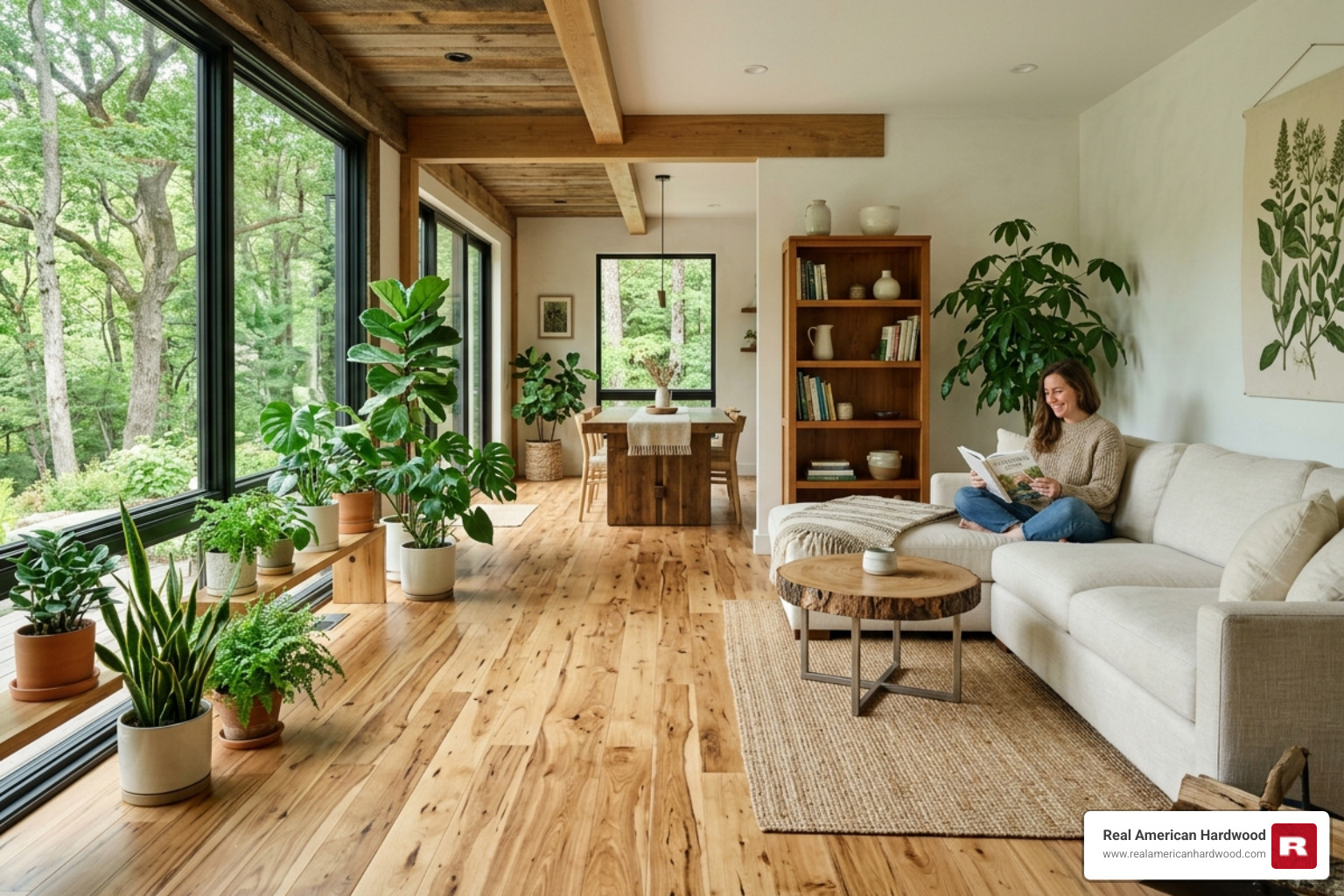
Hickory flooring offers several real environmental benefits. It is a natural, biodegradable material, and many American hardwood flooring products are made with low-VOC or VOC-free and formaldehyde-free processes, which can support healthier indoor air quality. It is also exceptionally durable, so a hickory floor can stay in service for decades. That long lifespan helps reduce replacement needs, waste, and the total energy used over the floor's full life compared with short-lived synthetic options.
What certifications should I look for when buying hickory?
Look for the Forest Stewardship Council (FSC) or the Programme for the Endorsement of Forest Certification (PEFC). These labels guarantee that the wood was harvested from a forest that is managed to be healthy for generations to come. Additionally, checking for NHLA grading ensures the quality and ethical trade of the lumber.
Conclusion
Choosing a hickory lumber renewable resource is a powerful way for eco-conscious builders to align their projects with the health of the planet. Hickory offers a rare trifecta: it is one of the strongest materials on earth, it features a stunning rustic aesthetic, and it is part of a forest system that is growing faster than we use it.
By selecting American hickory, you aren't just building a house or making a piece of furniture; you are supporting rural economies and participating in a carbon-negative cycle that protects our air, water, and wildlife. We invite you to Build Your World with the strength and sustainability of Real American Hardwood. It’s a choice that looks good today and feels even better tomorrow.