

How to Get Real Hardwood Furniture: Ask for It by Name
Shopping for furniture should be a pleasure. You are choosing pieces your family will gather around, sleep in, work at and maybe pass down. The good news is that getting real American hardwood does not require any detective work. It takes a few good questions, a little species vocabulary and a habit of reading product descriptions closely. This guide walks through all three, along with why working with local makers and designers is one of the most rewarding ways to bring real hardwood home.
Why Should You Ask for Real Hardwood by Name?
Asking by name is the simplest way to get exactly what you want. Furniture descriptions use a wide range of words, and some of them describe a color or a look rather than a material. The American Hardwood Information Center cautions that product names like “oak, maple and cherry finish” may “simply refer to the color or photographic reproduction of the wood’s grain,” and that such wording “does not necessarily mean it is authentic, natural hardwood.”
The center’s advice is direct: “be sure to ask questions.” When you ask for “solid white oak” or “cherry veneer” rather than “something in a medium brown,” you turn a vague search into a clear request. Retailers, makers and designers who work with real hardwood know their species, and they tend to enjoy talking about them.
Asking by name also helps you compare fairly. Two dressers may look similar in a photo, but a piece described as solid walnut and a piece described as walnut finish are different products. Knowing the species and the construction lets you weigh price, style and longevity side by side.
Is Hardwood Veneer Real Wood?
Yes. Solid hardwood and genuine hardwood veneer are both real wood, and both deserve a place in a well-furnished home.
The American Hardwood Information Center defines solid wood as meaning that “each exposed part” of the furniture “is made of pieces of genuine hardwood and nothing else.” It describes hardwood veneer as “thin slices of hardwood bonded to composite board or plywood.” Veneer is sliced from real logs, so it carries the same color, figure and depth as the tree it came from.
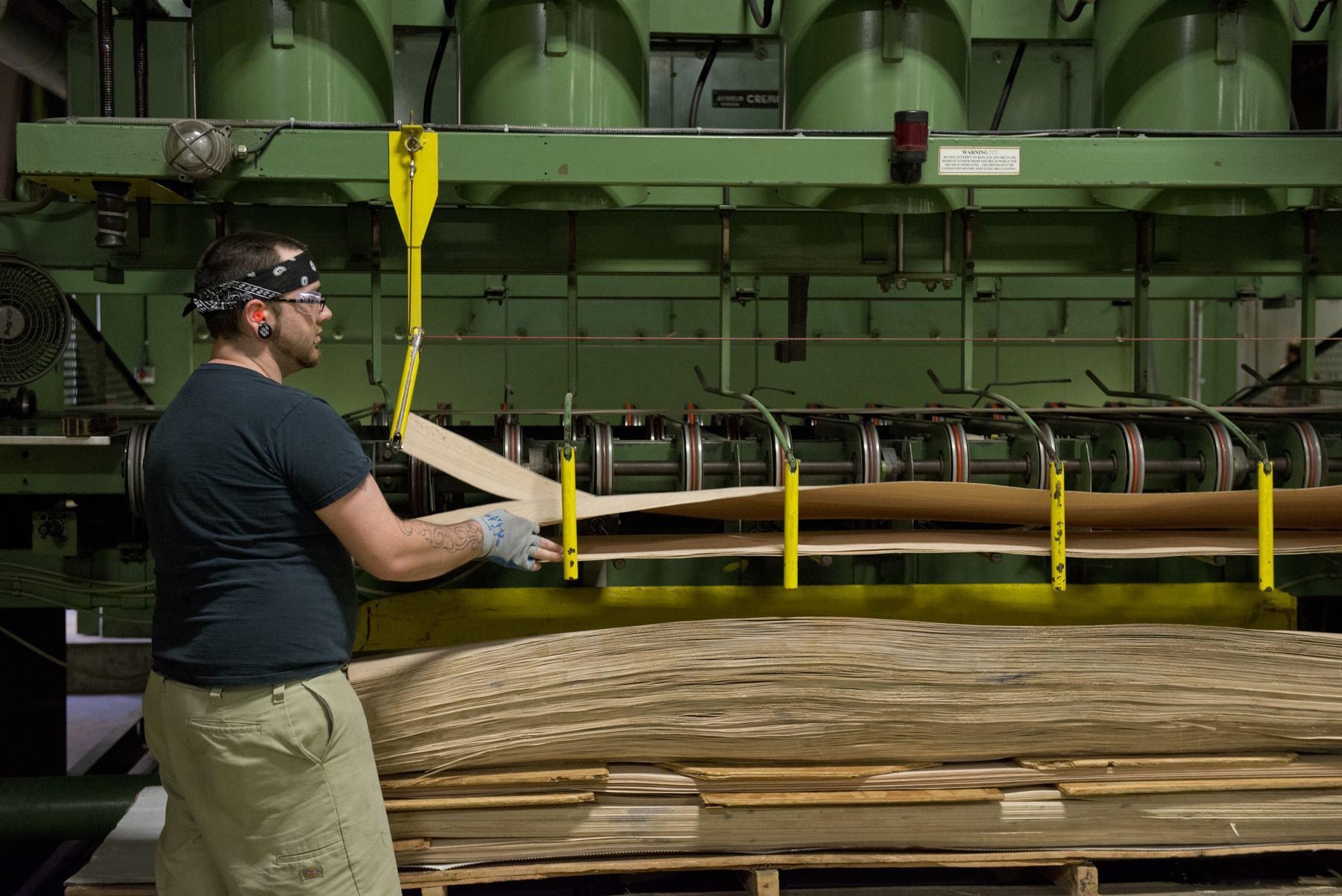
Veneer has a long and distinguished history in fine furniture and architectural woodwork. The USDA Forest Products Laboratory’s Wood Handbook notes that black cherry is used principally for “furniture, fine veneer panels, and architectural woodwork.” Veneer lets makers carry beautiful figure across wide tabletops, cabinet faces and wall panels, and hardwood plywood with a genuine hardwood face is a trusted material for furniture and cabinet panels.
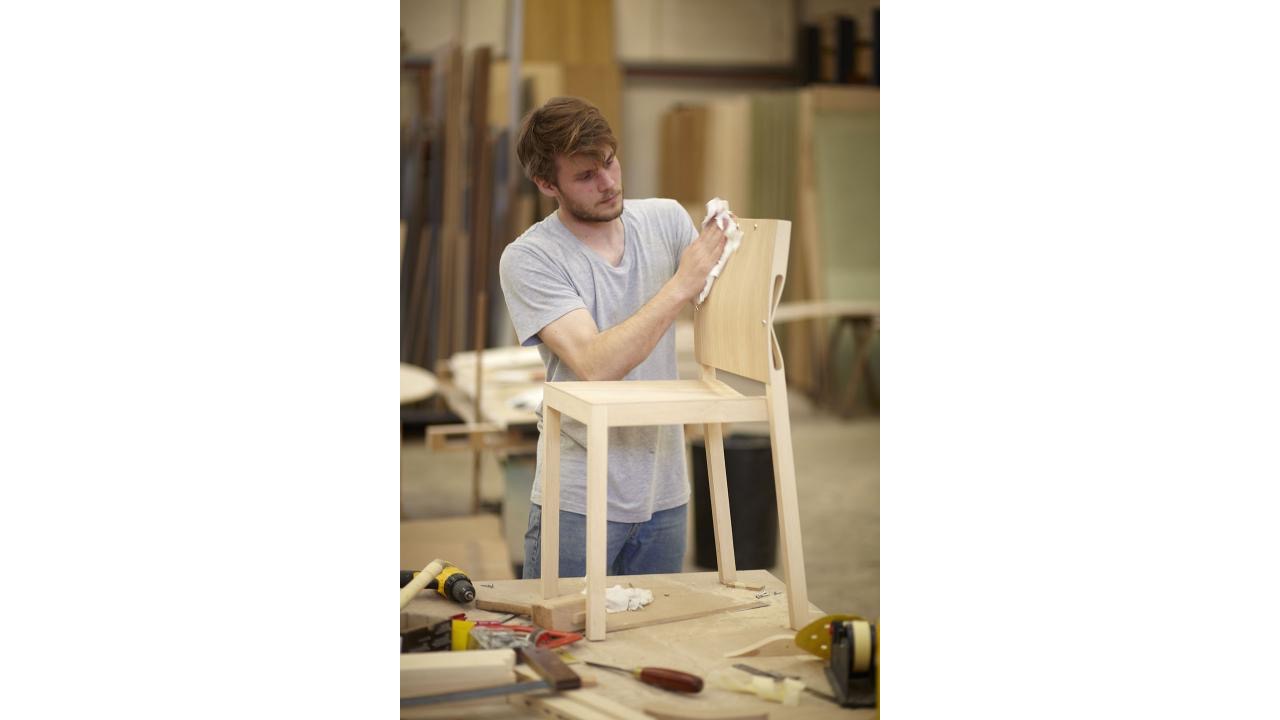
Many of the best pieces combine both. A maker may use solid hardwood for legs, frames and rails, and hardwood veneer for wide panels. When you ask for real hardwood furniture, either answer is a good one. What you are looking for is a named hardwood species on the surfaces you see and touch.
Which Hardwood Species Names Should You Ask For?
Ask for named American hardwood species. “Wood” is a material, not a species. A clear request names the tree. Here are some of the most popular American hardwoods for furniture, with their Janka hardness ratings where available:
- White oak (1,360 lbf). Strong, classic and versatile, with a warm, open grain. RAHC’s coverage of hardwood specification notes that “rift-sawn white oak produces an elegant and linear grain pattern, unlike quarter-sawn white oak,” so it is worth naming the cut you prefer too.
- Red oak (1,290 lbf). Bold grain and a warm tone, a longtime American favorite for tables and case pieces.
- Hard maple (1,450 lbf). A clean, pale surface for crisp, modern designs and hard-working tabletops.
- Black walnut (1,010 lbf). Rich chocolate tones prized for statement pieces.
- Cherry (950 lbf). Famous for a warm patina that deepens with age and light. [link: Why Cherry Wood Darkens With Age: The Beauty of Cherry’s Patina]
- Ash (1,320 lbf) and shagbark hickory (1,880 lbf). Strong, lively grain for chairs, tables and rustic designs. [link: Hickory vs. Pecan: What’s the Difference?]
Other American species, from birch and beech to elm, sycamore and poplar, bring their own colors and character. RAHC’s Hardwood Species Guide is a good place to browse before you shop. [link: Hardwood Species Guide]
Naming the species also connects you to where your furniture comes from. RAHC’s coverage of hardwood specification explains that domestic hardwoods are “found naturally in North America, whereas exotic hardwoods are sourced worldwide, typically from tropical places.”
What Questions Should You Ask a Retailer, Maker or Designer?
Ask about species, construction and wording. A knowledgeable seller should be able to answer each of these:
- What species is this piece made from? Ask about the main surfaces: the top, the sides and the front.
- Are the visible surfaces solid hardwood or hardwood veneer? Both are real wood. The answer helps you understand the piece and its price.
- Is any visible surface a printed or wrapped material? Laminate, vinyl, foil and paper wraps imitate wood. It is a fair question, and a good seller will answer it plainly.
- What does “finish,” “look” or “tone” mean in this description? These words can describe a color rather than a species.
- Can this piece be made in another species? Many makers and some retailers offer the same design in several hardwoods.
- Where does the wood come from? If American hardwood matters to you, ask.
Getting answers in writing, on the product page, a quote or a receipt, gives you a clear record of what you purchased.
How Do You Read a Furniture Product Description?
Look for a named species and a clear construction term. Descriptions that point to real hardwood often include phrases like these:
- “Solid [species].” For example, “solid cherry” or “solid white oak.”
- “[Species] veneer” or “genuine [species] veneer.” Real hardwood slices on the surface.
- “Hardwood plywood with [species] face.” A real hardwood surface over a plywood panel.
- A list of species by part. For example, “solid maple frame with walnut veneer top.”
Some phrases are a signal to ask a follow-up question:
- “Wood-look,” “wood-grain look” or “wood-tone.” These describe an appearance. Ask what the surface is made of.
- “Printed finish” or “printed grain.” These usually indicate a photograph of wood grain on a laminate, vinyl, foil or paper surface. The American Hardwood Information Center describes laminate as “surfaces of plastic, foil or paper, often printed with photographs of wood grain patterns.”
- “[Species] finish” or “[species] color.” As the center notes, this may describe only a color.
- “Wood” with no species named. Ask which species.
None of these phrases is a verdict on its own. They are prompts to ask a question, and a good seller will welcome it. [link: Real Hardwood Furniture vs. Printed Wood-Look Furniture: Why Real Wood Is Worth It]
Why Work With Local Makers and Designers?
Working with a local maker is one of the most direct ways to get exactly the real hardwood furniture you want. You choose the species, talk through the grain and color, and often see the lumber before it becomes your table. The conversation itself becomes part of the piece’s story. [link: Custom Woodwork and Furniture (Build Your World)]
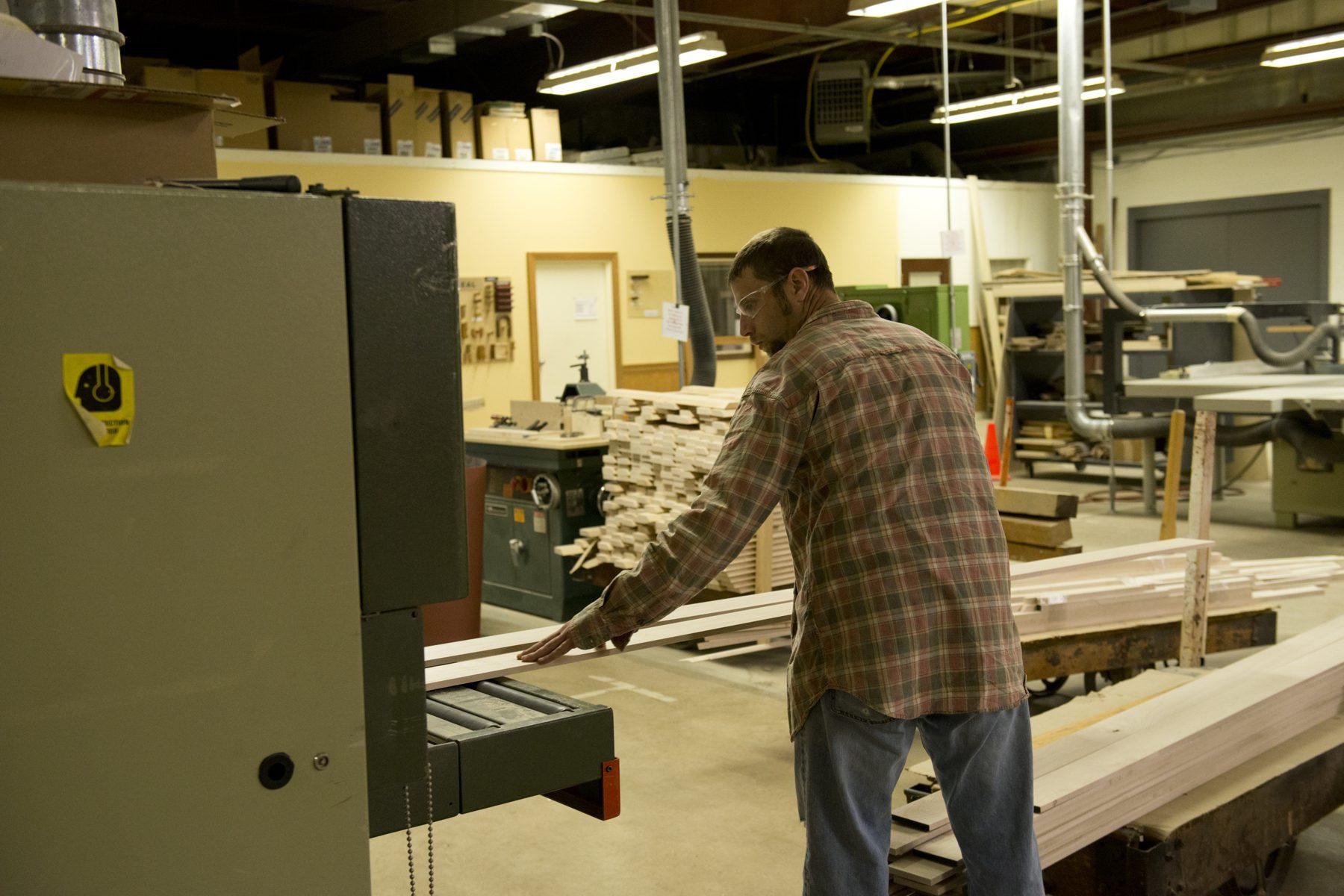
Makers who build in solid hardwood often speak about it with real conviction. Furniture maker Susan Pilato, profiled by RAHC in “Sustainability Rooted in Hardwood: Susan Pilato on Crafting Timeless Furniture,” says simply that “solid wood furniture lasts and is beautiful,” and recalls that over her career, “all the solid wood furniture stayed and is still in play after 25 years.”
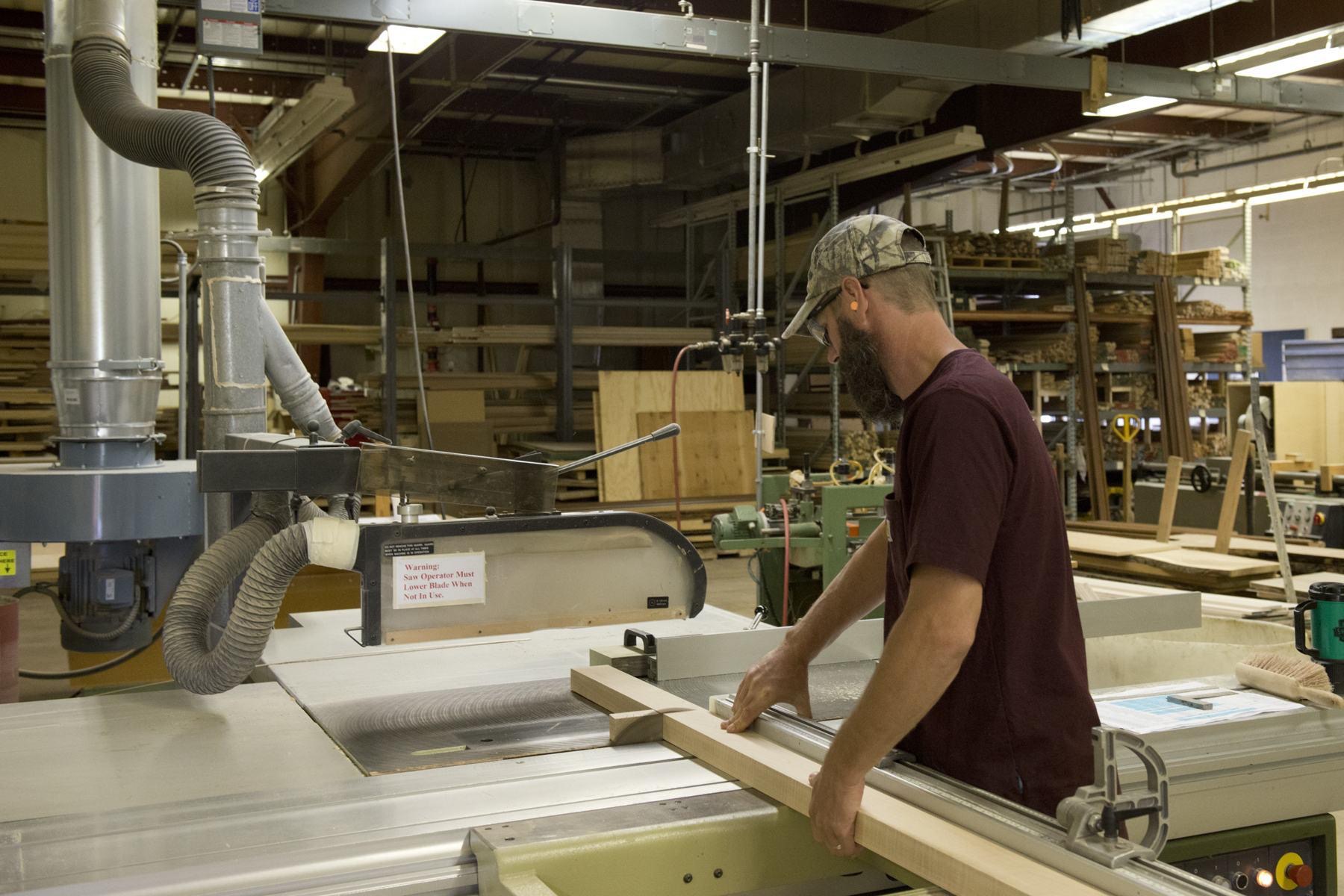
Interior designers and architects are valuable partners as well. RAHC’s coverage of hardwood specification encourages designers to understand “wood species, finish, and sustainability terminology” and the “manufacturing differences between solid, engineered, and veneered wood.” A designer fluent in that vocabulary can write species and construction directly into a furniture or millwork specification, so the real hardwood you envision is the real hardwood you receive.
Choosing real American hardwood also supports a growing resource. U.S. forests regrow about 1.66 cubic feet of hardwood for every 1 cubic foot harvested, according to AHEC, and U.S. hardwood growing stock is up roughly 90% since the 1950s, according to USDA Forest Inventory and Analysis data. [link: Is American Hardwood Sustainable? What the Forest Data Actually Shows]
What species would you ask for by name for your next piece of furniture, and why? Tell us whether you are drawn to the warmth of cherry, the depth of walnut, the classic grain of oak or something else entirely.
Frequently Asked Questions
What is the easiest way to get real hardwood furniture? Ask for it by species name and ask whether the visible surfaces are solid hardwood or hardwood veneer. The American Hardwood Information Center advises shoppers to “be sure to ask questions,” and a knowledgeable retailer, maker or designer should be able to answer.
Is veneer furniture real hardwood? Yes. The American Hardwood Information Center defines hardwood veneer as “thin slices of hardwood bonded to composite board or plywood.” Veneer is cut from real logs and has a long history in fine furniture.
What does “cherry finish” mean? It may describe only a color. The American Hardwood Information Center notes that names like “oak, maple and cherry finish” may “simply refer to the color or photographic reproduction of the wood’s grain.” If you want real cherry, ask for solid cherry or cherry veneer by name.
What does “wood-look” mean in a furniture description? It describes an appearance rather than a material. Wood-look surfaces are often laminate, vinyl, foil or paper printed with a wood grain pattern. If you want real hardwood, ask what the surface is made of and which species it is.