

Is American Hardwood Sustainable? What the Forest Data Actually Shows
Is American Hardwood Sustainable? What the Forest Data Actually Shows
American hardwood is sustainable by measurable, documented criteria. According to USDA Forest Service Forest Inventory and Analysis (FIA) data, U.S. hardwood forests have been growing more wood than is removed by harvest and natural mortality for decades.
For every 1 cubic foot of hardwood removed, U.S. hardwood forests have historically added about 1.66 cubic feet through net growth, according to USDA Forest Service data.
What Does the USDA Forest Service Data Show?
The USDA FIA program monitors forest health, volume, and growth across all 50 states and is the primary federal database for forest resource assessment. Key findings for American hardwood:
- U.S. hardwood growing stock has increased by approximately 90% since the 1950s.
- Red oak, the most commercially significant hardwood species, represents roughly 15% of eastern U.S. forest growing stock.
- The eastern U.S. hardwood forest region is considered the largest temperate hardwood forest on earth, according to AHEC.
- Net annual growth in Appalachian hardwood forests has exceeded net annual removal for every decade since national inventory records began in1928.
How Does Natural Forest Regeneration Work?
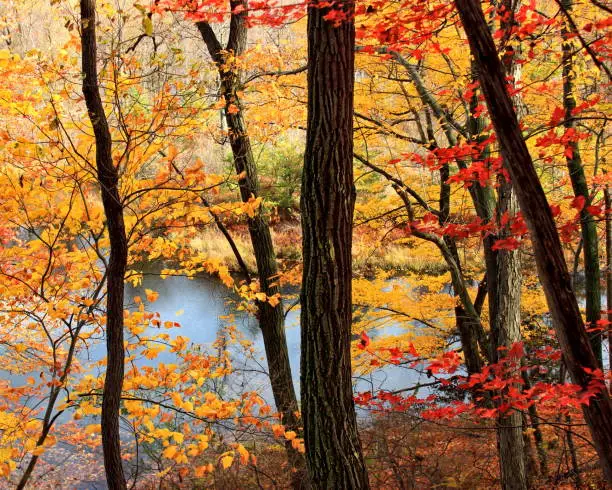
American hardwood forests regenerate naturally. Unlike plantation forestry, which relies on replanting cleared land with a single species, temperate hardwood forests regenerate through natural seeding, sprouting, and succession. After selective harvest, native hardwood species re-establish without human intervention in most forest types.
This natural regeneration maintains biodiversity, soil health, and ecological continuity in ways that monoculture plantation forestry does not. It is one of the defining environmental advantages of American hardwood relative to tropical hardwoods and plantation-grown alternatives.
What Do FSC and SFI Certifications Mean for Specifiers?
FSC, or the Forest Stewardship Council, is an independent third-party certification program focused on responsible forest management. Its standards include chain-of-custody tracking from the forest through the finished product, along with requirements related to biodiversity and responsible harvesting. Specifiers can verify FSC-certified products and suppliers through the organization’s certificate search.
SFI, or the Sustainable Forestry Initiative, is another independent certification program. Its standards address responsible fiber sourcing, forest management, conservation, and chain-of-custody practices. Certification information can be verified through the SFI certificate search.
AHECAVerified, developed by the American Hardwood Export Council, provides traceability information and supports verification that American hardwood has been sourced in accordance with U.S. harvesting laws and regulations. Information about the program is available through AmericanHardwood.org.
For architects and designers, chain-of-custody documentation can be especially useful because it tracks lumber from its forest of origin through processing and distribution to the finished product. This documentation can also support material reporting requirements for programs such as LEED and WELL.
How Does Hardwood Compare to Synthetic Alternatives Environmentally?
American hardwood is a naturally regenerating, renewable material that stores carbon throughout its useful life. At the end of its service life, hardwood can often be reclaimed, reused, or biodegraded. When properly finished, it can also have a relatively low VOC profile.
Laminate flooring is not renewable and typically relies on fossil-fuel-based materials and resins. It does not provide the same long-term carbon storage as natural wood, and it is generally sent to a landfill at the end of its useful life rather than being reclaimed or biodegraded. Adhesives and resins may also contribute to a higher VOC profile.
Luxury vinyl plank is petroleum-based and nonrenewable. It does not store carbon and is generally non-biodegradable, meaning it is commonly disposed of in landfills after use. VOC levels can vary depending on the specific product and its manufacturing process.
Engineered bamboo uses a fast-growing renewable plant material, but products sold in the United States are generally imported. Its carbon-storage benefits may be more limited depending on the product construction, and many products rely on adhesives during manufacturing. At the end of their useful life, engineered bamboo products are also typically disposed of in landfills.
What Is Carbon Storage in Hardwood and Why Does It Matter?
Trees sequester carbon dioxide from the atmosphere during growth. That carbon remains stored in the wood throughout the life of a hardwood product. According to USDA Forest Service lifecycle assessments, a cubic foot of air-dried hardwood contains roughly 26 pounds of stored carbon.
When hardwood is used in long-lived applications such as flooring and furniture, that carbon storage extends across decades or generations. This is a measurable climate benefit that no synthetic alternative replicates.
Does sustainability factor into how you specify wood in your projects?
We want to understand how architects and designers are weighing FSC certification, carbon storage, and lifecycle data in their material selections. Share what matters most to you and your clients.
Frequently Asked Questions
Is hardwood flooring environmentally friendly?
Yes, when sourced from certified U.S. forests. Domestic hardwood is renewable, stores carbon, and is regulated under U.S. harvesting law. USDA FIA data confirms American hardwood forests are growing faster than they are being harvested.
Does cutting trees for hardwood harm forests?
Responsible selective harvesting does not harm forest health. Selective cutting, the standard practice in U.S. hardwood forestry, maintains forest structure and accelerates natural regeneration by reducing canopy competition. This is documented in USDA and AHEC forest management research.
What certifications prove sustainable hardwood?
FSC (Forest Stewardship Council) and SFI (Sustainable Forestry Initiative) are the primary independent certifications. Both require third-party audits and chain-of-custody tracking from forest to finished product.
How long does it take a hardwood forest to regenerate?
Natural regeneration begins immediately after selective harvest in most temperate hardwood forest types. Commercially harvestable timber size is typically reached within 60 to 100 years depending on species. Oak, maple, and cherry regenerate naturally through seeding and stump sprouting.