

NHLA Grades Explained: A Complete Guide to Hardwood Lumber Grades
The National Hardwood Lumber Association has maintained these rules since 1898, and AHEC describes them as the standard for the U.S. hardwood industry and the basis for international trade in American hardwood. That shared language lets an architect, a cabinet shop, and a distant sawmill agree on exactly what a board will deliver. This guide is the map; our posts on FAS and No. 1 Common are the close-ups.
What Do NHLA Grades Actually Measure?
NHLA grades measure the percentage of a board that can be cut into clear pieces of a minimum size. The USDA Forest Products Laboratory’s Wood Handbook explains that the grade is determined by the proportion of the piece that can be cut into a certain number of smaller pieces, called cuttings, which are generally clear on one side, have the reverse face sound, and are not smaller than a specified size.
Hardwood is mostly sold as “factory lumber,” meant to be cut into furniture parts, cabinet components, doors, and millwork. A cabinet shop is buying the clear stiles, rails, and panels it can cut from a board, and the grade answers that question before the lumber leaves the mill.
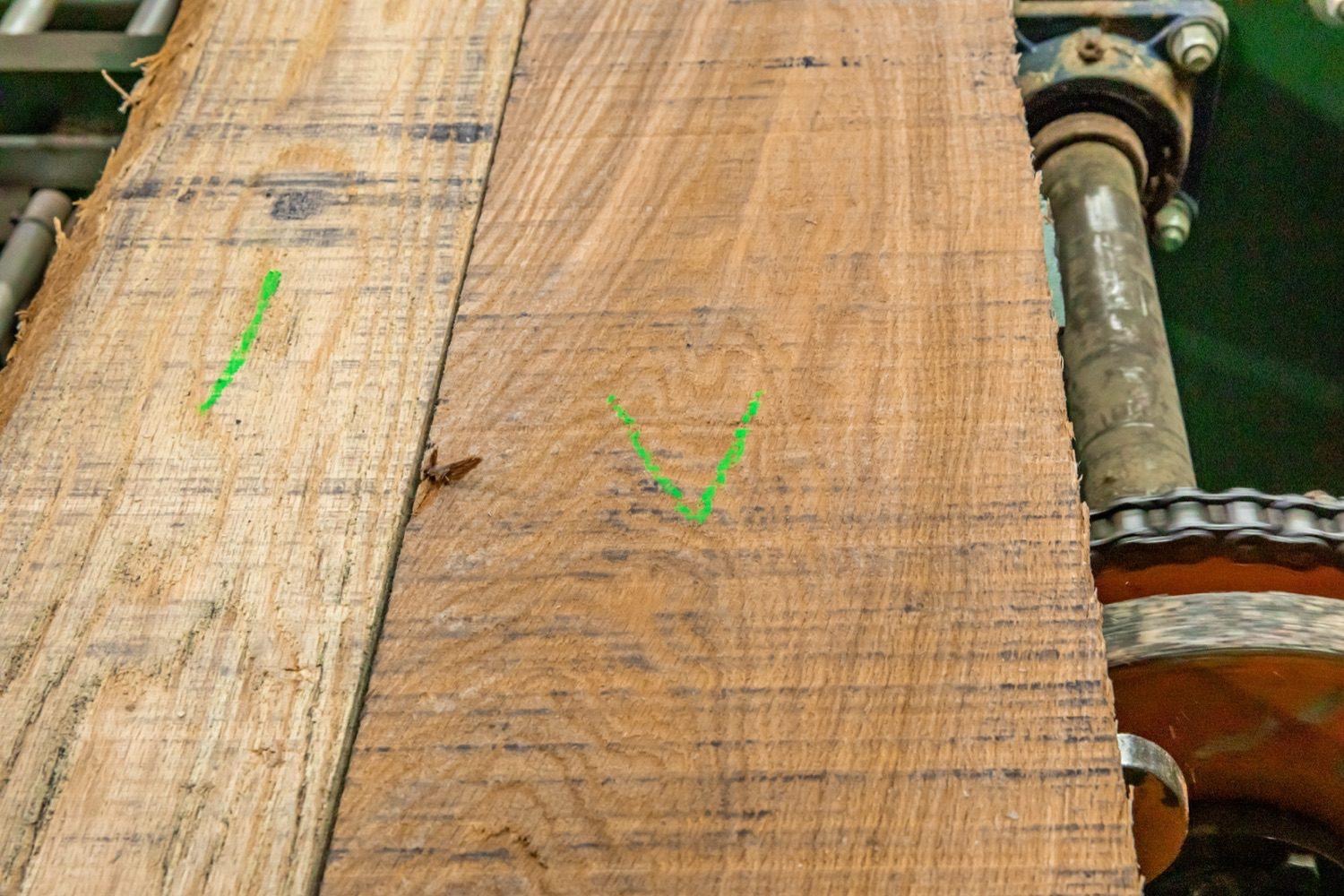
Every grade rests on three ideas: the size of the clear cuttings, the share of the board they cover (the clear yield), and how many cuttings you may use to reach that yield. The Wood Handbook notes that NHLA grades apply to factory lumber, while dimension parts are graded on use of the entire piece.
What Are the NHLA Hardwood Lumber Grades?
There are eight standard grades. The Wood Handbook lists them in this order: FAS, F1F (FAS One Face), Selects, No. 1 Common, No. 2A Common, No. 2B Common, No. 3A Common, and No. 3B Common. Here is what the Handbook’s summary (Table 6-1) asks of the grades most buyers encounter.
- FAS: boards at least 6 inches wide and 8 to 16 feet long, yielding at least 83-1/3% clear cuttings. Each cutting must be at least 4 inches by 5 feet, or 3 inches by 7 feet.
- F1F: the same board size, yield, and cutting size as FAS on the better face, with the reverse face at least No. 1 Common.
- Selects: boards at least 4 inches wide and 6 to 16 feet long, graded on the better face, with the same minimum cutting size as FAS.
- No. 1 Common: boards at least 3 inches wide and 4 to 16 feet long, yielding at least 66-2/3% clear cuttings as small as 4 inches by 2 feet, or 3 inches by 3 feet.
- No. 2A Common: the same board size, with at least 50% clear yield in cuttings as small as 3 inches by 2 feet.
- No. 3A Common: the same board size, with at least 33-1/3% clear yield and a 3 inch by 2 foot minimum cutting.
- No. 3B Common: the same board size, with at least 25% yield in cuttings at least 1-1/2 inches wide containing at least 36 square inches.
Moving down the scale, the minimum board gets smaller, the required yield drops, and the smallest acceptable cutting shrinks. These figures are a summary: the full rules adjust yield and cutting counts by the board’s surface measure, and the Wood Handbook itself says the official NHLA rules are the only full description of the grades.
How Does a Grader Decide a Board’s Grade?
A grader measures the board, examines the graded face, and checks whether enough clear cuttings of the required size fit within the grade’s limits. Per the Wood Handbook, except for F1F and Selects, the poorer side of a piece is inspected for grade assignment. That rule is a built-in promise to the buyer: a FAS board is FAS on its worst side, so both faces are ready for show work.
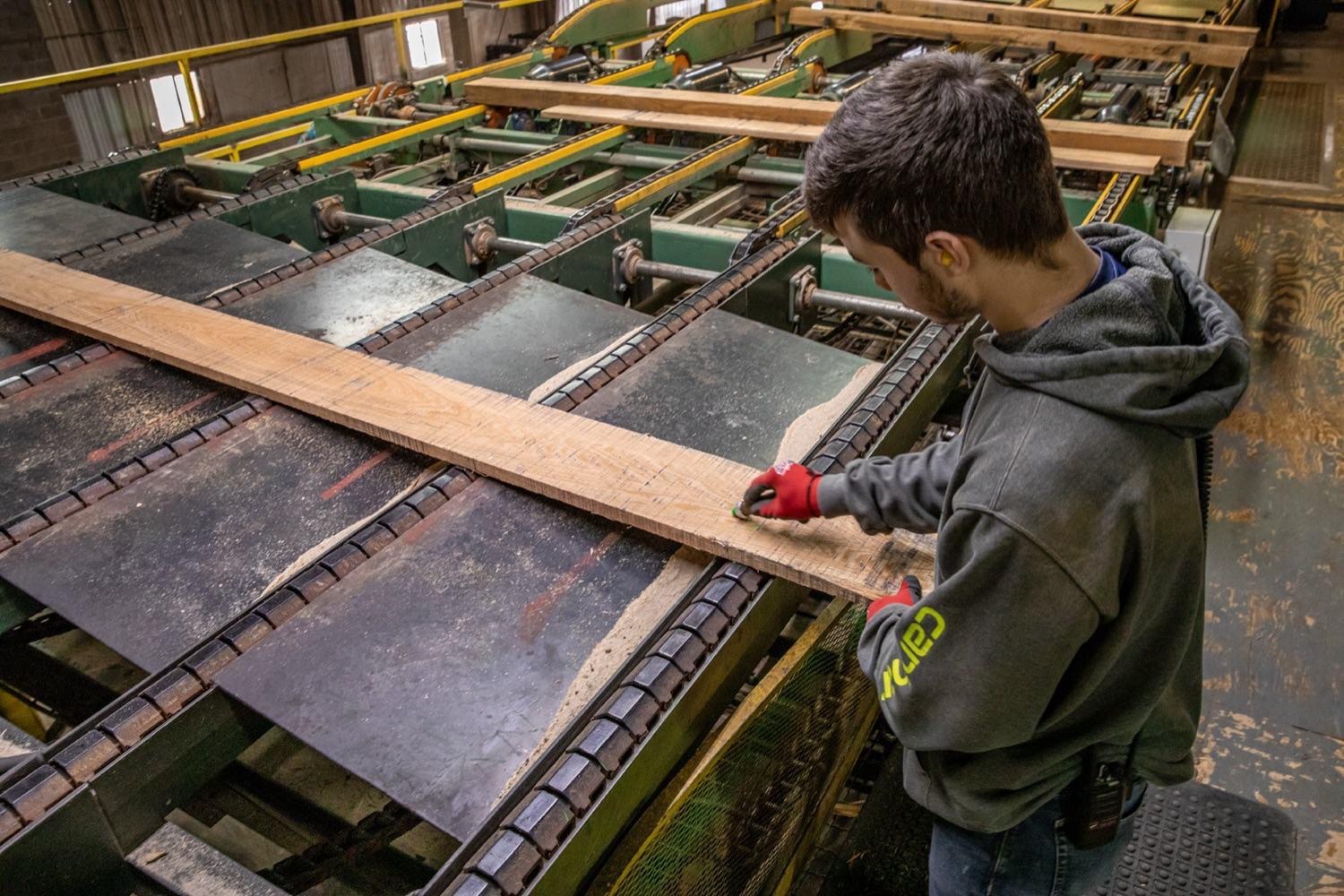
F1F and Selects are graded from the better face, an efficient choice wherever only one face will be seen.
The grader finds the board’s surface measure, lays out the allowed cuttings around natural characteristics such as knots, totals the clear area, and assigns the highest grade the board satisfies. The same steps on every board let a buyer order from a distant mill and know what will arrive. The rules also stay current: the NHLA reviews them on a four-year cycle, and changes require a two-thirds majority of votes cast by its Active Members.
Which NHLA Grade Should You Specify for Your Project?
Specify the grade that matches your cutting list. The best value comes from buying exactly the clear wood your parts require. Here is how the grades line up with common work:
- Long tabletops, casework rails, and wide panels: FAS, built for long, wide clear cuttings.
- Cabinet sides and panels with a concealed back: F1F or Selects.
- Cabinet doors, face frames, and drawer fronts: No. 1 Common, which supplies clear wood in shorter cuttings at a lower cost.
- Painted millwork, built-ins, and interior parts: No. 1 or No. 2A Common.
- Character furniture, rustic paneling, small parts, and turnings: No. 2A Common and below.
The American Hardwood Information Center makes the same point: higher grades with few, if any, character marks are generally preferred for fine tabletops and cabinet doors, while boards with character marks work well for built-ins and painted applications. It suggests upper-grade hardwood for visible areas like a desktop and No. 1 Common, which it calls a lower-cost intermediate grade, for interior component.
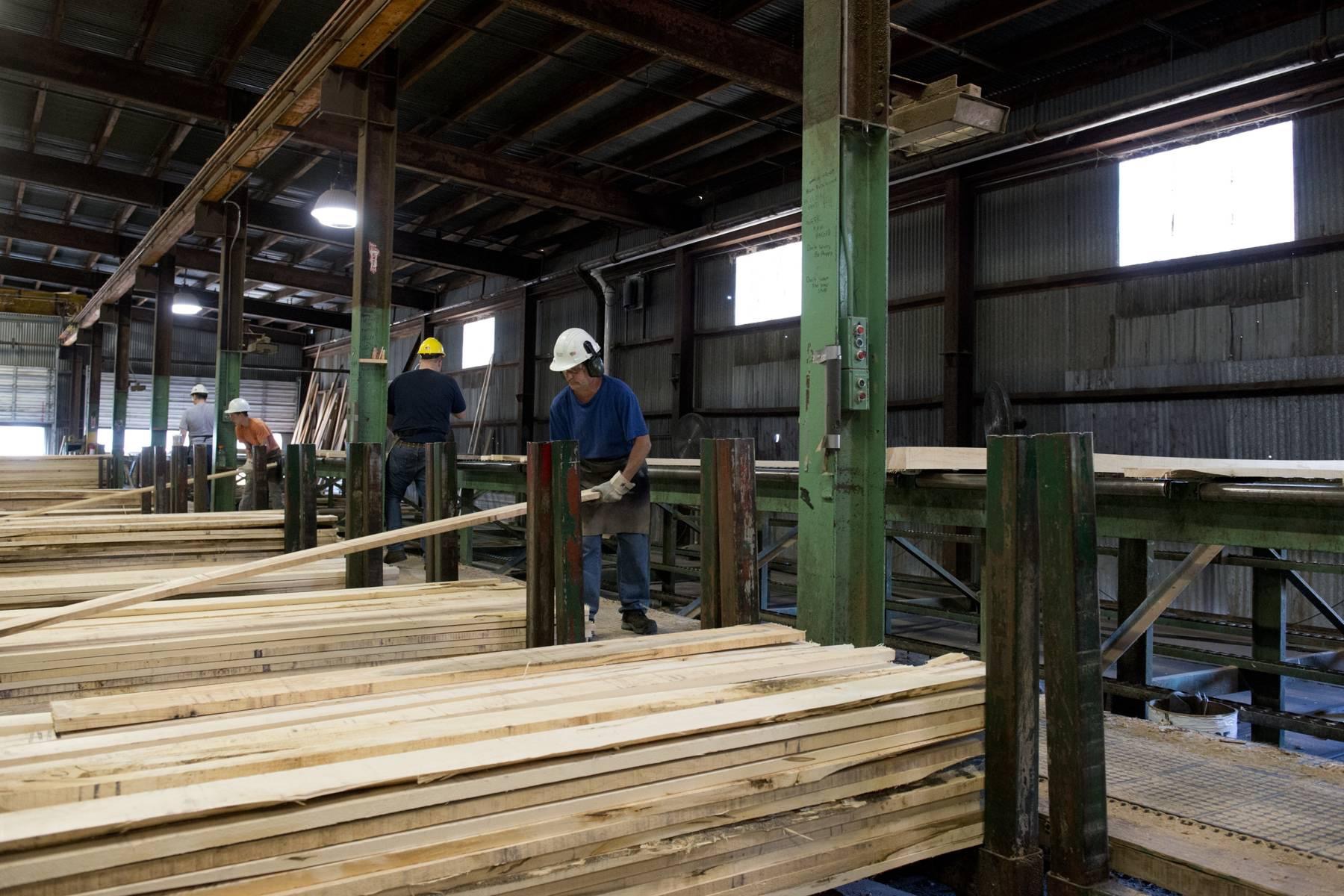
Many projects are best served by a blend: FAS or F1F for the few long show parts, No. 1 Common for everything else. A knot or mineral streak in a rustic dining table or a feature wall is the signature of a real tree, something a printed wood-look surface can only imitate.
Do NHLA Grades Mean the Same Thing for Every Species?
Yes. The same grade means the same clear-yield standard regardless of species, so FAS walnut and FAS red oak meet the same requirements. Species sets the color, figure, hardness, and working properties. Grade sets how much clear wood is in the board. Keep those decisions separate and specifying gets simpler.
Grade says nothing about hardness. Cherry rates 950 lbf on the Janka scale and shagbark hickory 1,880 lbf, in any grade. Choose the species for the performance and look you want, then the grade for the cutting list.
Color, moisture content and sawing method sit outside the grade, so put them on the order separately. AHEC also notes the NHLA system uses imperial measurement and was developed with random width and length lumber in mind.
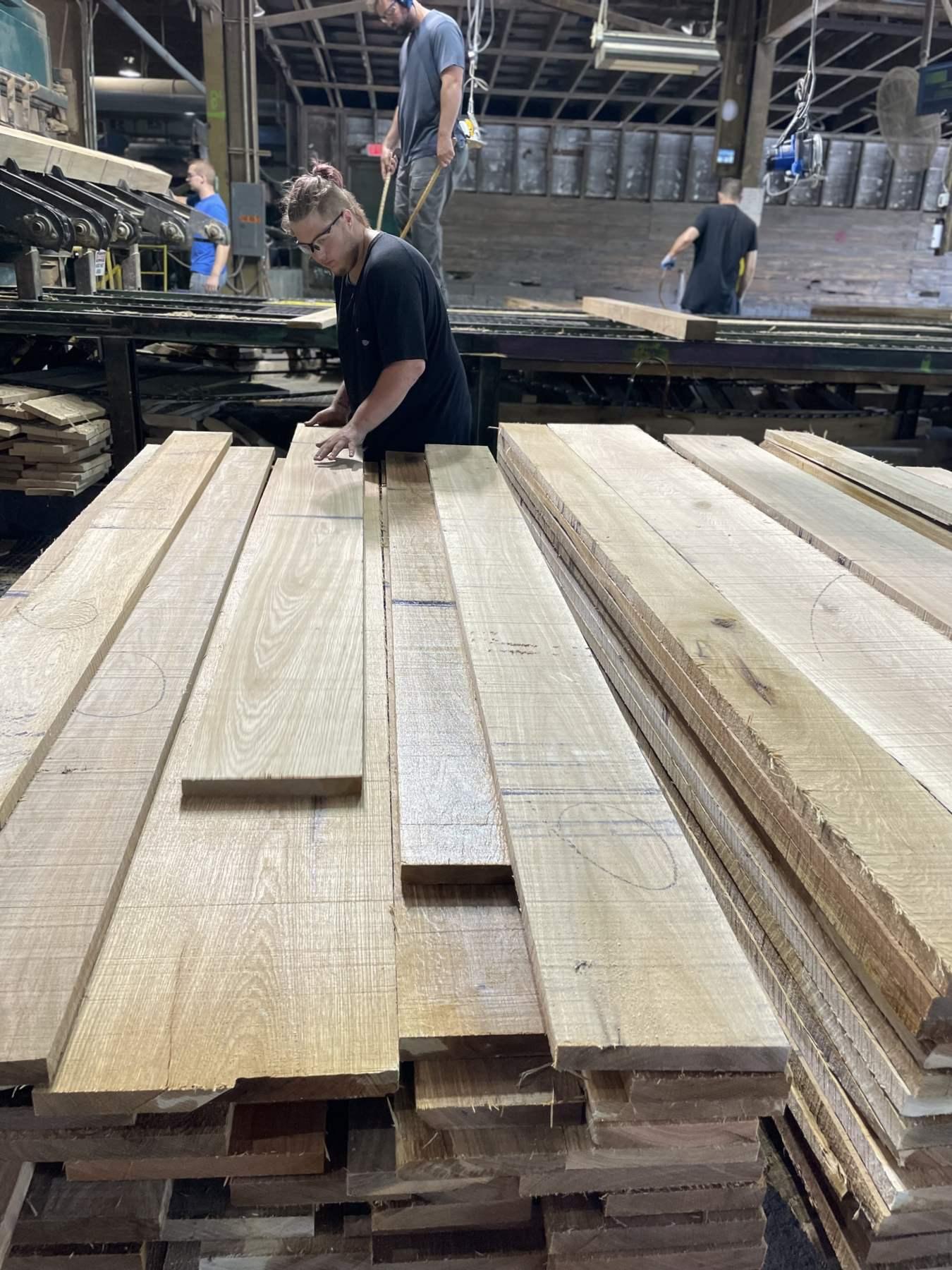
Why Does Grading Matter for American Hardwood Buyers?
Grading lets you buy exactly the wood a project needs, which saves money and puts more of every log to good use, from long FAS boards for a conference table to Common grades for painted built-ins.
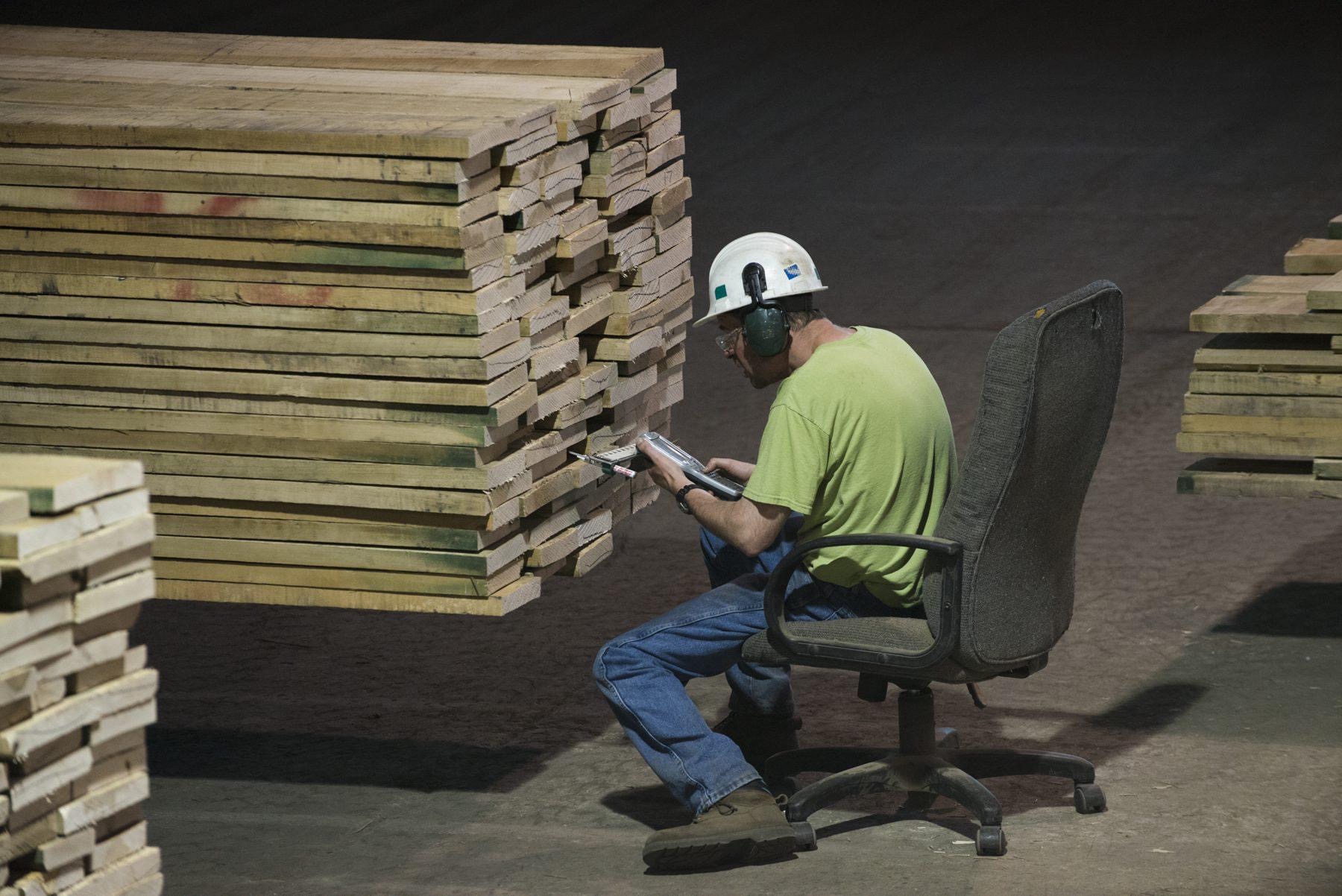
That resource is in strong shape. According to AHEC, U.S. forests regrow about 1.66 cubic feet of hardwood for every cubic foot harvested, and USDA Forest Inventory and Analysis data show U.S. hardwood growing stock up roughly 90% since the 1950s. Learn the top four grades, know your cutting list, and ask for real American hardwood by species and grade.
What grade mix do you run in your shop or specify in your projects? Whether you build cabinets from straight No. 1 Common or blend FAS and Common on every job, tell us what works for you and why.
Frequently Asked Questions
What is the highest NHLA lumber grade? FAS, short for Firsts and Seconds. A FAS board must be at least 6 inches wide and 8 feet long and yield at least 83-1/3% clear cuttings. It is graded from the poorer face, so both sides are ready for show work.
What is the difference between FAS and No. 1 Common? Cutting size and yield; the clear wood itself is the same quality. FAS requires at least 83-1/3% clear yield in long cuttings, while No. 1 Common requires at least 66-2/3% in cuttings as small as 4 inches by 2 feet or 3 inches by 3 feet. For short parts, No. 1 Common often delivers the same clear pieces at a lower cost.
What does F1F mean in hardwood lumber? F1F stands for FAS One Face. The better face meets FAS and the reverse face meets at least No. 1 Common, a strong choice where only one face will show.
Who sets the hardwood lumber grading rules? The National Hardwood Lumber Association, which has maintained the rules since 1898. The rule book, Rules for the Measurement & Inspection of Hardwood & Cypress, is reviewed on a four-year cycle by vote of NHLA’s Active Members.