

The Ultimate Guide to Responsibly Sourced American Wood
Why renewable timber for construction Is the Smartest Building Choice Right Now
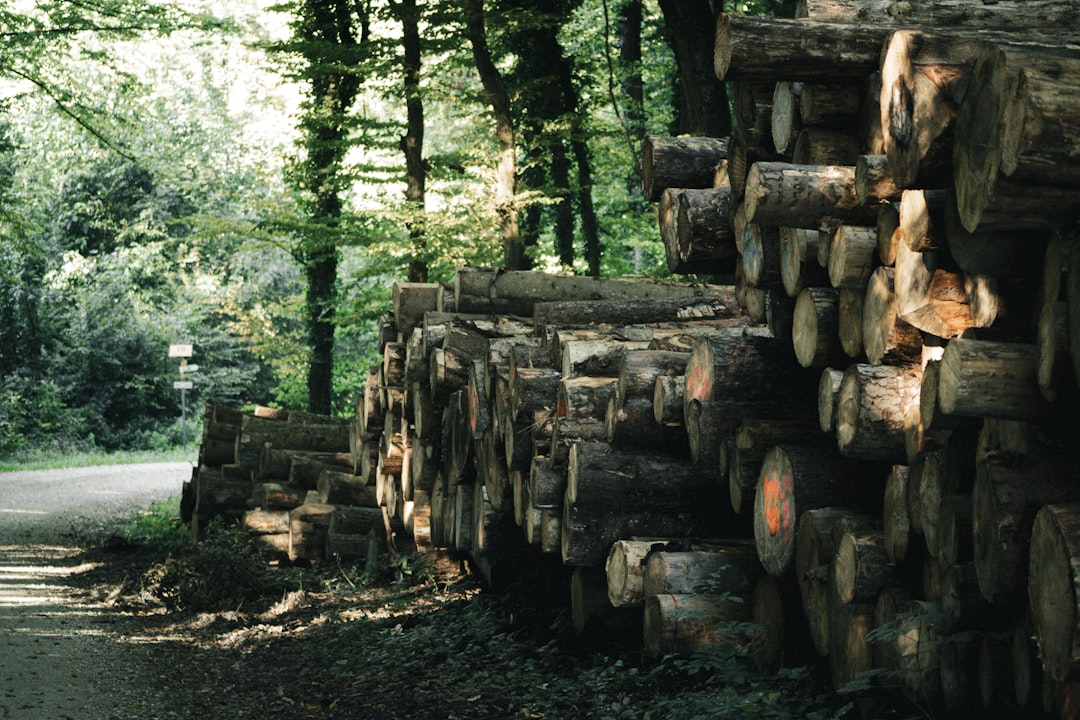
Renewable timber for construction is one of the most effective ways to reduce a building's environmental footprint while creating healthier, more beautiful spaces.
Here's a quick answer if that's what you need:
Is timber a renewable construction material?
The construction and building sector is responsible for around 40% of global greenhouse gas emissions. That's a massive problem — and timber is one of the few materials that actually pulls carbon out of the atmosphere rather than pumping it in.
Unlike concrete or steel, wood stores the carbon a tree absorbed while growing. That carbon stays locked inside the building for decades. And when forests are managed responsibly, they keep growing, keep absorbing, and keep supplying.
This guide covers everything you need to make a confident, informed choice about renewable wood — from certifications and engineered products to health benefits and real-world performance.
I'm Jonathan Geyer, and at Real American Hardwood Company we've spent years sourcing, milling, and distributing premium American hardwoods for builders, designers, and homeowners who want materials that perform and protect the planet — making renewable timber for construction central to everything we do. If you care about building responsibly without sacrificing quality or beauty, you're in the right place.
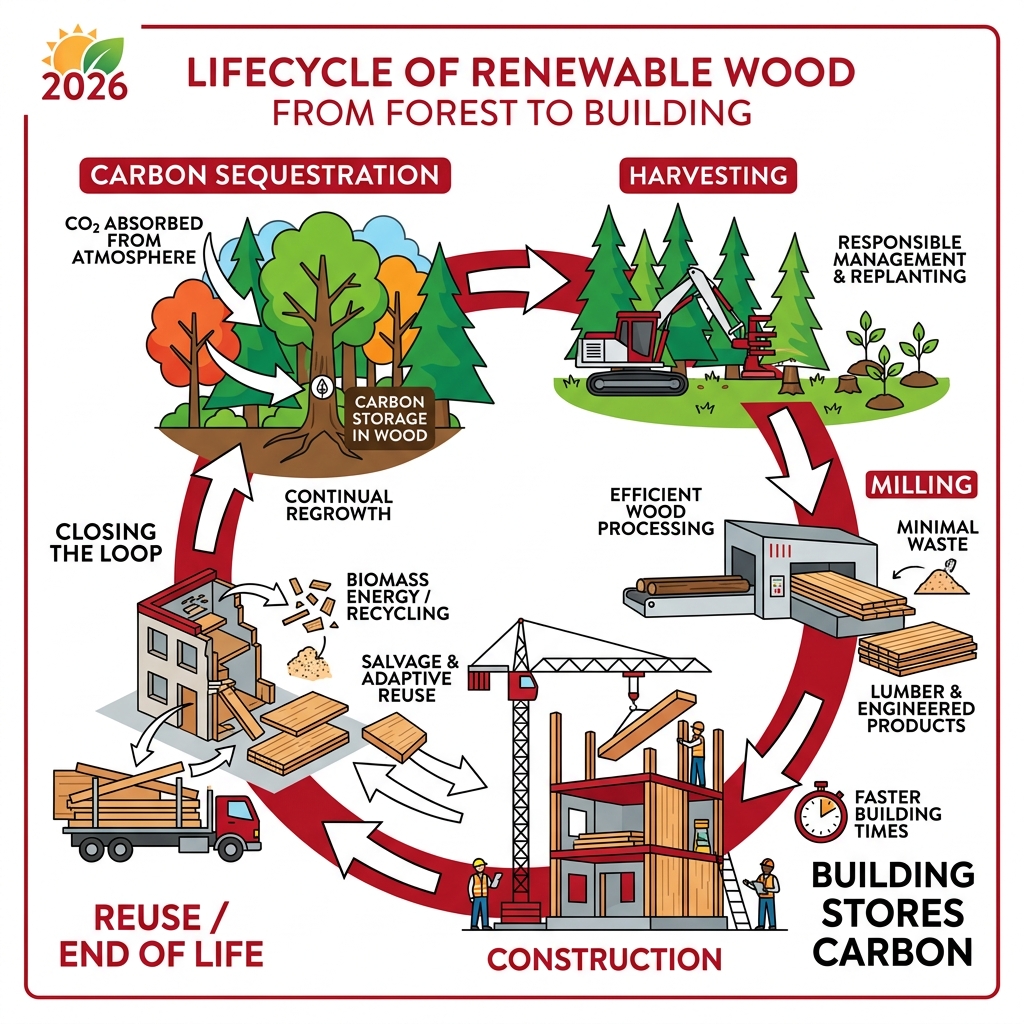
Why Renewable Timber for Construction is the Future of Building
As we look toward a net-zero future, the materials we choose to frame our skylines matter more than ever. For decades, the construction industry has relied on "the big two": concrete and steel. While these materials are strong, they are also incredibly carbon-intensive to produce. In fact, the cement and steel industries are notoriously difficult to decarbonize.
Enter renewable timber for construction. Unlike its industrial counterparts, wood is the only primary building material that is grown by the sun. When we talk about Sustainable timber as a core building material, we are talking about a material that offers a "triple win": it sequesters carbon during the tree's life, stores that carbon in the building's structure, and substitutes for materials that would have emitted even more CO2.
The Embodied Carbon Advantage
Every building has a "carbon debt" the moment it opens its doors. This is known as embodied carbon—the emissions from manufacturing, transporting, and installing materials. By choosing mass timber over concrete and steel, builders can reduce the emissions associated with building materials by 13% to 26.5%. In some high-performance projects, like the Caltech Resnick Sustainability Center, using mass timber helped slash embodied carbon by over 50%.
Energy Efficiency and Insulation
Wood isn't just a structural powerhouse; it’s a natural insulator. Timber is a more effective insulator than metals, glass and concrete. This means timber buildings require less energy to heat in the winter and cool in the summer, leading to lower operational costs and a smaller environmental footprint over the building's entire lifespan. When comparing Hardwood vs. Lookalikes, the thermal performance and longevity of real wood simply cannot be matched by synthetic alternatives.
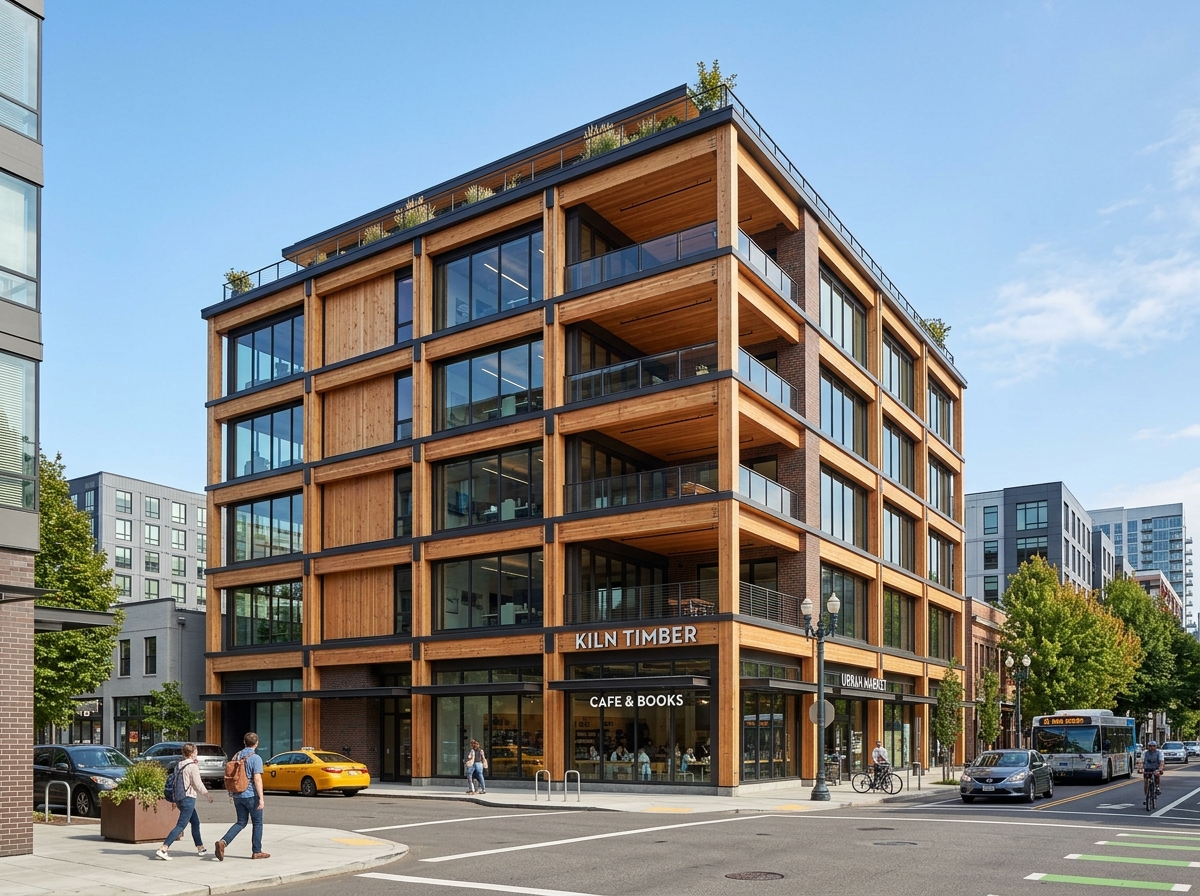
Sourcing Renewable Timber for Construction through Certification
To ensure that wood remains a truly renewable resource, we must prioritize responsible forest management. This is where certification programs like PEFC (Programme for the Endorsement of Forest Certification) and FSC (Forest Stewardship Council) come into play.
These organizations provide a "chain of custody" that tracks timber from the forest floor to the construction site. When you see a certification label, it means the wood was harvested in a way that protects Sustainability, preserves biodiversity, and ensures the forest will be there for generations to come. In the U.S., our hardwood forests are a model of this success—we are currently growing 2.5 times more hardwood than we harvest.
The Economic Advantages of Renewable Timber for Construction
Sustainability is a great driver, but the bottom line still matters. Fortunately, building with timber is increasingly cost-competitive.
- Faster Timelines: Mass timber buildings can be completed 20-25% faster than traditional builds. Because components are prefabricated off-site, they arrive ready to be "clicked" into place.
- Reduced Labor: Prefabrication reduces onsite labor costs by 15-20%. Smaller crews can assemble large structures quietly and efficiently.
- Job Creation: The growth of the mass timber industry is a massive economic engine. In Oregon alone, growing the mass timber market share to just 5% could create over 2,000 direct manufacturing jobs.
Engineered for Excellence: Mass Timber and Modern Wood Products
The "timber revolution" is powered by engineered wood products. These aren't your standard 2x4s; these are high-tech composites that allow us to build bigger, taller, and stronger than ever before.
Engineered Hardwood Products vs. Traditional Materials
Product TypeCompositionBest UseAdvantage vs. SteelCLT (Cross-Laminated Timber)Layers of lumber glued at 90-degree anglesFloors, walls, roofsLightweight; 25% faster installationGlulam (Glued-Laminated Timber)Parallel wood laminationsBeams and columnsCan be curved; higher strength-to-weightLVL (Laminated Veneer Lumber)Thin wood veneers bonded with heat/pressureHeaders, rim boardsMore uniform and less prone to warping
While softwoods have traditionally dominated this space, we are seeing a surge in hardwood mass timber. Species like Appalachian Poplar are being utilized for CLT because of their abundance and impressive structural properties. Our Hardwood Species Guide details how different American hardwoods offer unique densities and strengths suitable for various structural applications.
Strength, Fire Resistance, and Seismic Performance
One of the most common myths about renewable timber for construction is that it’s a fire hazard. In reality, mass timber performs exceptionally well in fire tests. When exposed to flame, thick timber sections develop a "char layer" on the outside. This char acts as an insulator, protecting the structural integrity of the inner core.
Furthermore, mass timber blast testing results have shown that these structures can withstand extreme forces, including explosions, making them viable for sensitive government and commercial buildings.
In seismic zones, timber's lightweight nature is a major asset. Projects like REUSE are even developing modular panels with friction dampers that concentrate earthquake damage on replaceable components, leaving the main structure intact. This is just one of the many reasons Why Real Hardwood is becoming the material of choice for resilient urban design.
Innovations in Hardwood Composites and Salvaged Materials
The future of timber isn't just about new growth; it's about being "carbon smart." Every year, 36 million tons of urban wood waste are generated in the U.S. Innovations are now allowing us to reclaim this salvaged hardwood timber—trees affected by disease, disaster, or urban clearing—and turn them into structural mass timber.
We are also seeing the development of natural fiber-timber hybrids. By combining timber with fast-growing fibers like flax, researchers have created hybrid beams that use 53% less timber while maintaining full structural performance.
The Environmental Impact: Carbon Storage and Forest Health
When we choose wood, we aren't just buying a material; we are investing in the health of our planet's lungs. Forests are the ultimate carbon sink. A single hectare of Radiata pine can sequester up to 779 tonnes of CO2 by the time it is harvested.
Protecting Biodiversity and Old-Growth Ecosystems
A key part of Hardwood: Age-Old, Sustainable Choice is understanding the difference between old-growth and new-growth. Old-growth forests are irreplaceable ecosystems that must be protected. By utilizing "New Growth" timbers from rapidly renewable plantation forests and responsibly managed secondary forests, we can meet the global demand for wood without encroaching on ancient habitats.
In fact, creating a market for sustainable timber actually helps prevent deforestation. It gives landowners an economic incentive to keep their land as forest rather than clearing it for agriculture or urban sprawl. Climate-smart forestry insights show that active management—including thinning and selective harvesting—reduces the risk of catastrophic forest fires and keeps the forest ecosystem resilient.
Achieving Global Sustainability Goals
Timber construction plays a vital role in meeting the UN’s Sustainable Development Goals. Specifically:
- SDG 11 (Sustainable Cities and Communities): Mass timber allows for high-density, low-carbon urban housing.
- SDG 3 (Good Health and Well-being): Natural materials in the built environment are proven to reduce stress and improve indoor air quality.
Designing for Well-being: Biophilic Benefits and Performance
We spend about 90% of our time indoors. Shouldn't those spaces make us feel better? This is the core of biophilic design—the idea that humans have an innate need to connect with nature.
Health, Productivity, and Biophilic Design
The Hardwood Lifestyle isn't just an aesthetic choice; it’s a physiological one. A Slovakian study found that people in buildings made from natural materials showed lower stress levels and higher heart rate variability (a sign of better recovery).
- Air Quality: Wood helps regulate indoor humidity by absorbing and releasing moisture, which can reduce the prevalence of respiratory issues.
- Acoustics: Timber has excellent sound-absorbing properties, reducing echoes and creating quieter, more productive workspaces.
- Cognition: Biophilic-certified buildings have been shown to boost cognitive performance by a staggering 26.4%.
Award-Winning Timber Architecture
The global design community is taking notice. The World Architecture Festival now features a dedicated prize for the "Best Use of Certified Timber."
A standout example is the Scion Innovation Hub in New Zealand. This project used a unique "diagrid" structure that required significantly less material than traditional mass timber builds while creating a stunning, open-plan space. It’s a testament to how renewable timber for construction is pushing the boundaries of what is architecturally possible.
Frequently Asked Questions about Renewable Timber
Is mass timber actually fire-safe for high-rise buildings?
Yes. Mass timber is engineered to be fire-resistant. In the event of a fire, the outer layer of the wood chars, creating a protective barrier that prevents the core from burning. This allows the structure to maintain its strength for a predictable amount of time, often exceeding the fire-rating requirements for steel, which can melt and fail suddenly at high temperatures.
How does using wood help prevent forest fires?
It sounds counterintuitive, but a healthy market for wood products supports "thinning" operations. By removing small-diameter, diseased, or overcrowded trees to create timber products, we reduce the "fuel load" in the forest. This makes it much harder for a small fire to turn into a catastrophic crown fire.
Can timber buildings be recycled at the end of their life?
Absolutely. This is a key part of the circular economy. Mass timber components can be deconstructed and upcycled into new structural elements, or downcycled into products like particle board or wood chips. This ensures the carbon remains stored for even longer, rather than being released through decomposition or burning.
Conclusion
The shift toward renewable timber for construction is more than just a trend—it is a necessary evolution of the built environment. By choosing American hardwood, you are choosing a material that is truly renewable. Our forests are growing 2.5 times faster than they are being harvested, acting as a massive, natural carbon capture system.
Whether you are an architect aiming for a World Architecture Festival prize or a builder looking to slash your project timeline, sustainable wood offers the strength, safety, and soul that modern construction demands.
Let’s build something that lasts—not just for our clients, but for the planet. Build a greener future with sustainable American hardwood and join the movement toward a more resilient, beautiful, and carbon-negative world.