

Types of Walnut Wood: Color, Heartwood and Sapwood Explained
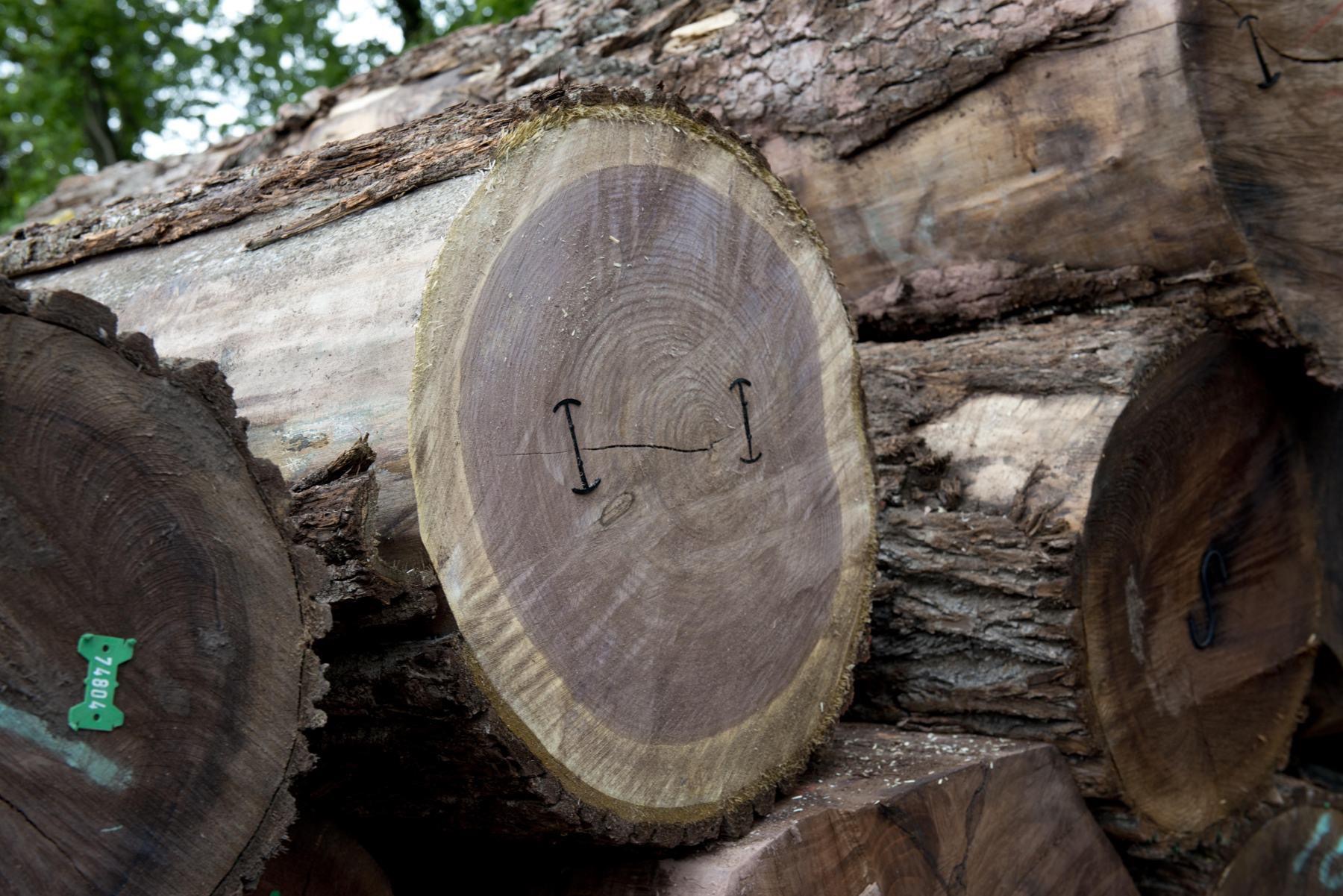
The main types of walnut wood you will meet in North America are black walnut, claro walnut, English walnut and butternut (sometimes called white walnut). Black walnut is the American standard: a rich chocolate-brown heartwood rated 1,010 lbf on the Janka scale, with creamy sapwood that makers can feature for contrast or steam to blend.
Walnut has a reputation few woods can match. The Wood Database says “it would be hard to overstate black walnut’s popularity among woodworkers in the United States,” and credits its good working properties and rich brown color with putting it “in a class by itself.” Several species in the walnut genus, Juglans, are sold as lumber, and each brings its own personality. This guide sorts out the species and their colors, so homeowners can describe the walnut they love and specifiers know exactly what to ask for.
What Are the Main Types of Walnut Wood?
Four walnuts account for most of what you will see: black walnut, claro walnut, English walnut and butternut. Black walnut and butternut are native to the eastern United States. Claro is native to the West Coast, and English walnut is native to Europe and Asia, though it is grown in California orchards.
- Black walnut (Juglans nigra). Native to the eastern United States. This is the most common walnut species used for American furniture, cabinetry and millwork.
- Claro walnut (Juglans hindsii). Native to California and Oregon. The Wood Database notes that its wood properties closely mirror black walnut. Claro is best known for highly figured slabs.
- English walnut (Juglans regia). Native to Eastern Europe and western Asia, and also called European, French or Circassian walnut. It is the source of most edible walnuts.
- Butternut (Juglans cinerea). Native to the eastern United States and “sometimes called White Walnut,” per The Wood Database. It is a close relative of black walnut with a lighter, golden-tan color.
Claro and English walnut share an interesting story. In California orchards, growers commonly graft English walnut branches onto claro walnut rootstock, because claro’s robust roots suit the California climate while English walnut produces the nuts. The Wood Database notes that wood from these grafted trees may show marbled striping near the graft union, a look prized by makers of statement pieces.
How Do the Walnut Species Compare?
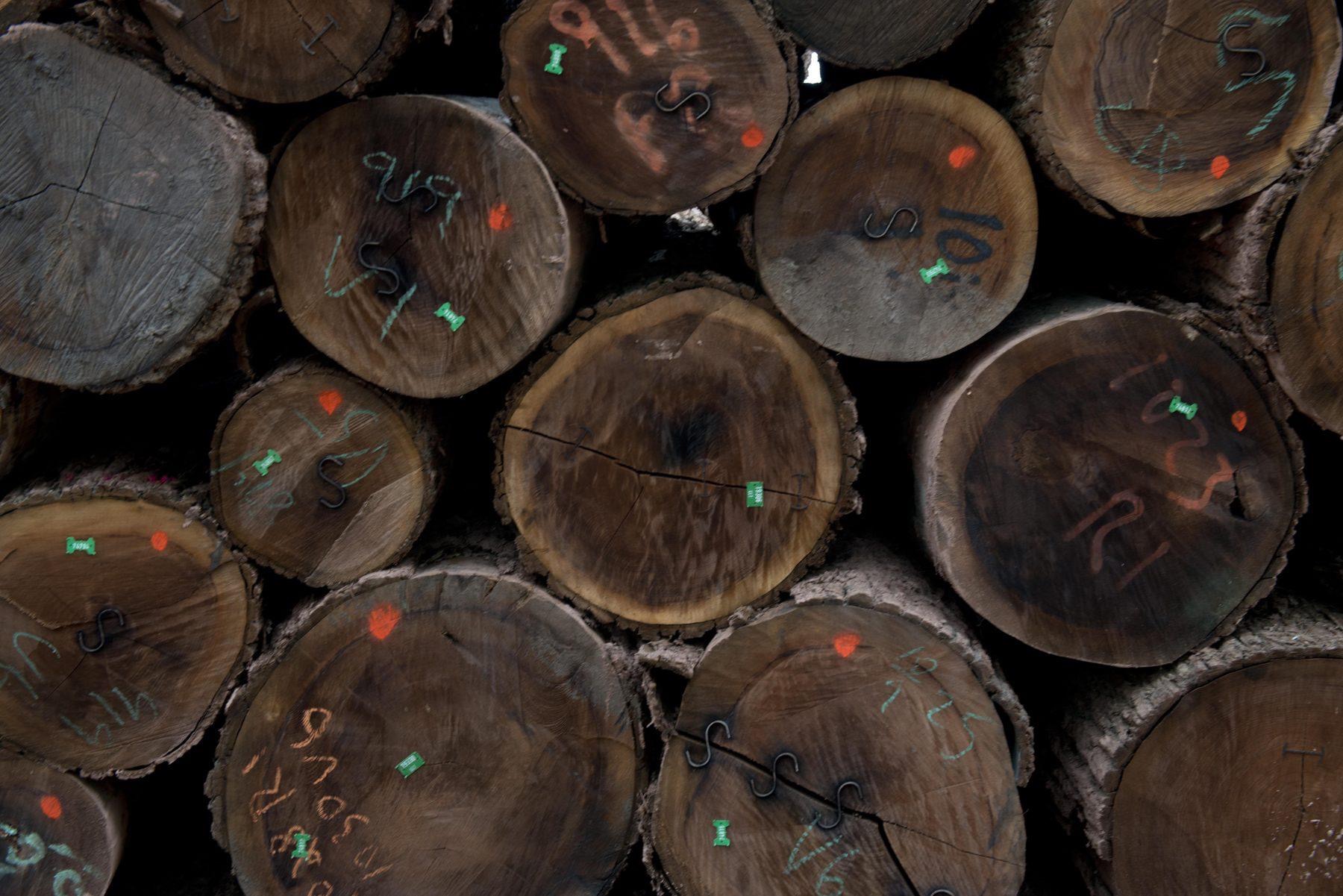
The three brown walnuts share a similar rich color and land close together in hardness, while butternut is lighter in color and softer, which makes it a carver’s favorite.
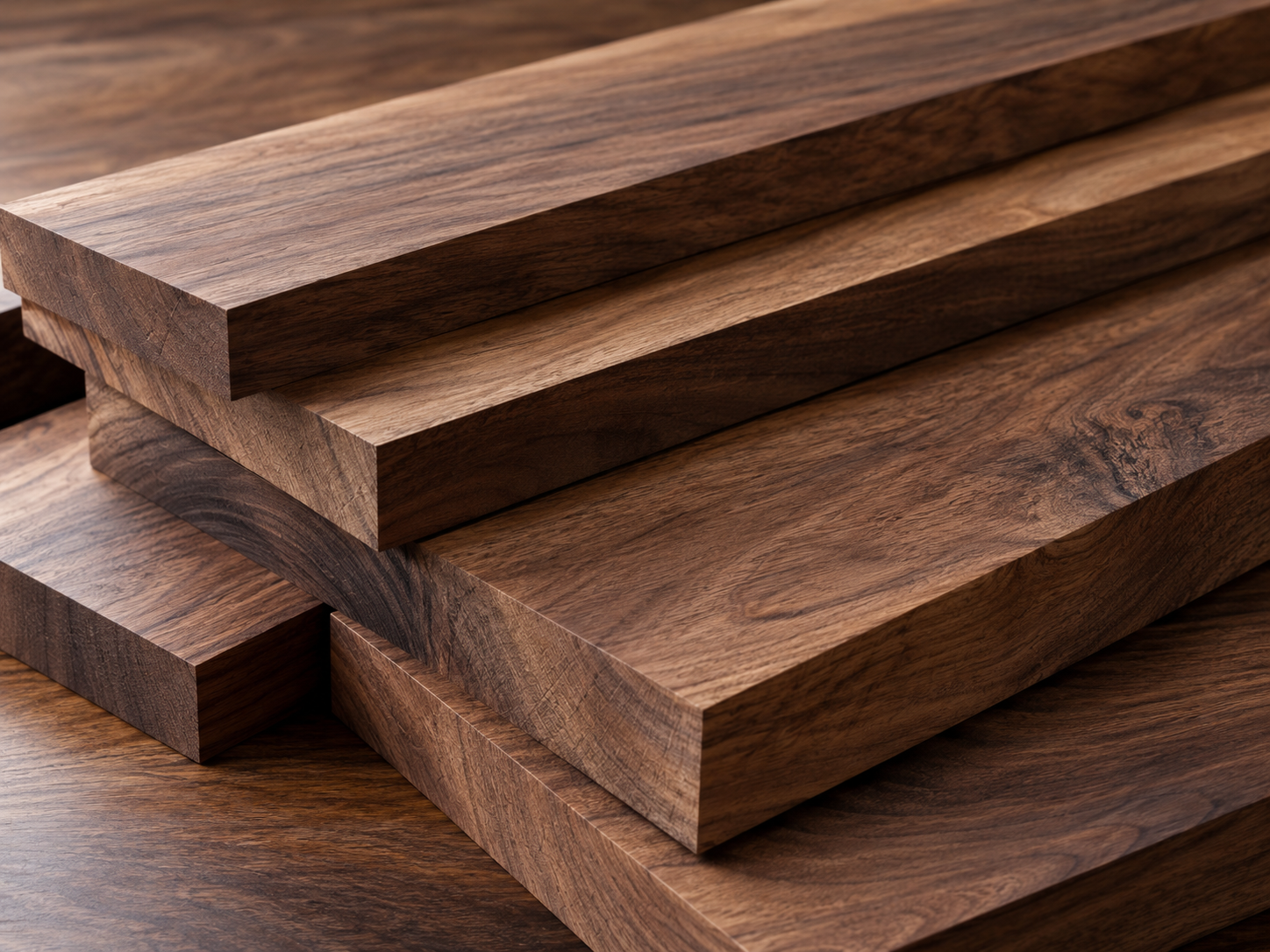
Black walnut, the American standard, rates 1,010 lbf on the Janka hardness scale. Its heartwood runs from pale brown to dark chocolate brown with darker streaks, sometimes with a gray, purple or reddish cast, and its sapwood is pale yellow-gray to nearly white. It is used for furniture, cabinetry, paneling, millwork, gunstocks and turnings.
Claro walnut rates 1,130 lbf, and English walnut rates 1,220 lbf, according to The Wood Database. Both have heartwood in the same pale-brown-to-dark-chocolate range, with nearly white sapwood, and both appear in furniture, cabinetry, gunstocks and veneer. Claro also shows up in musical instruments, and English walnut in paneling.
Butternut rates 490 lbf. Its heartwood is light to medium tan, sometimes with a reddish tint, and its sapwood is pale yellowish white. It is used for carving, furniture, interior trim, veneer and boxes.
Two points stand out. First, because the brown walnuts share such a similar look, the best way to get the one you want is to ask for it by species name. Second, black walnut’s 1,010 lbf sits right alongside black cherry (950 lbf), another classic American furniture wood, while butternut’s softness is exactly what makes it a joy to carve.
What Is the Difference Between Walnut Heartwood and Sapwood?
Heartwood is the dark brown center of the walnut tree, and sapwood is the pale outer band beneath the bark. In black walnut the contrast is striking. The Wood Database describes the heartwood as ranging “from a lighter pale brown to a dark chocolate brown with darker brown streaks,” while the sapwood is “pale yellow-gray to nearly white.” The American Hardwood Information Center describes the sapwood as creamy white and notes the heartwood can carry “a purplish cast and darker streaks.”
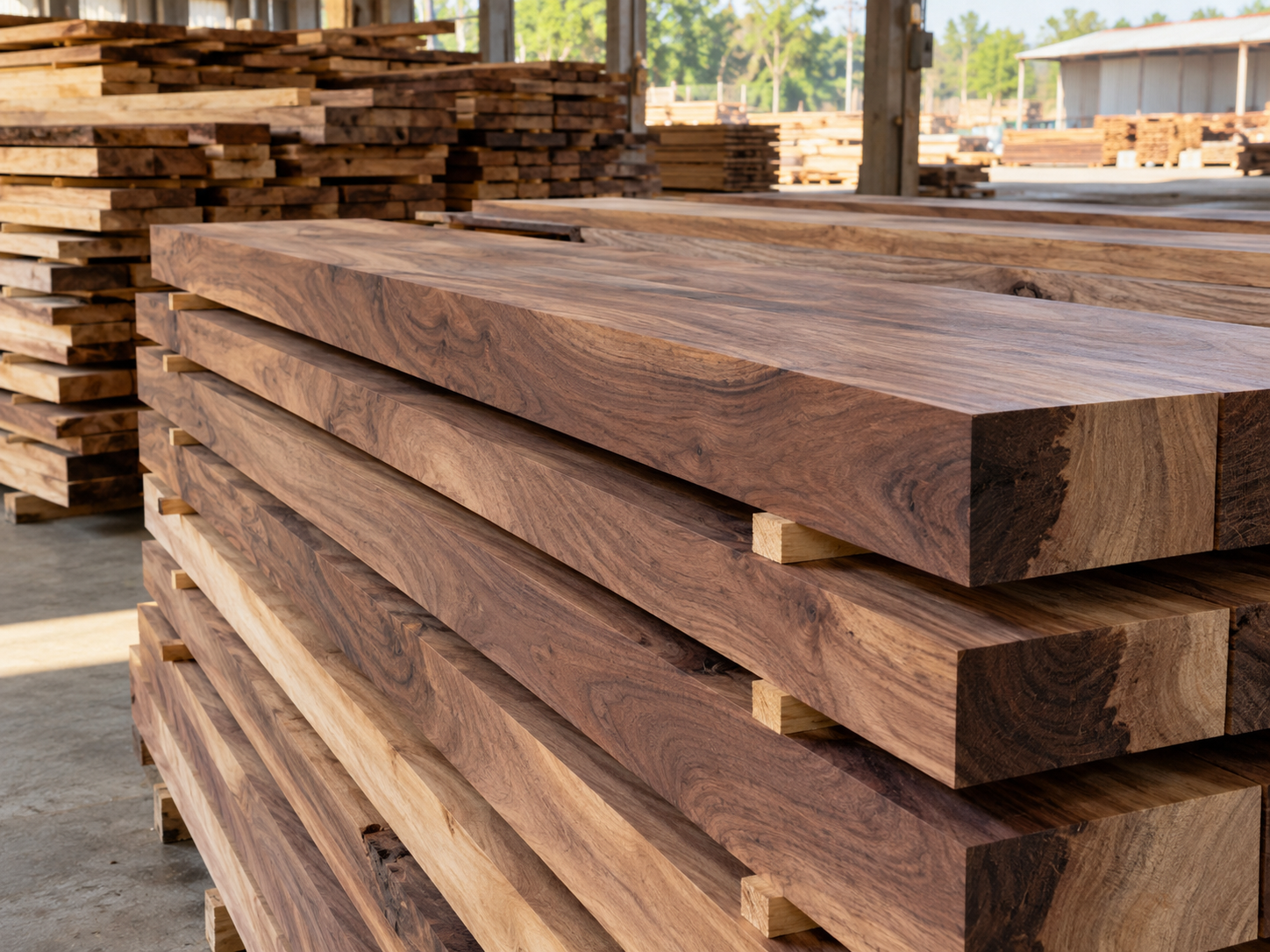
That contrast is a design opportunity. A maker can let a pale sapwood edge run through a dark tabletop for a natural, live look, or select and steam boards for an even brown from edge to edge. Both approaches celebrate real walnut. The key is telling your maker which look you want.
Color variation within the heartwood is part of walnut’s charm, too. One board may lean purple and the next reddish. Across a run of cabinet doors or paneling, that variation gives a room warmth and depth. Specifiers who want a tighter color match can say so up front, and the supplier can select boards accordingly.
Why Is Walnut Lumber Steamed?
Walnut lumber is commonly steamed to darken the pale sapwood so it blends with the heartwood. The American Hardwood Information Center states that walnut is “usually supplied steamed, to darken the sapwood,” and The Wood Database notes that the sapwood is commonly steamed for this purpose.
That gives buyers two lovely options:
- Steamed walnut. Sapwood is darkened so boards read more uniformly brown. This is the common commercial form and a practical choice when a project needs consistent color with good yield from each board.
- Unsteamed or air-dried walnut. Sapwood keeps its creamy color, and the heartwood keeps its own natural tones. It is the choice for maximum contrast.
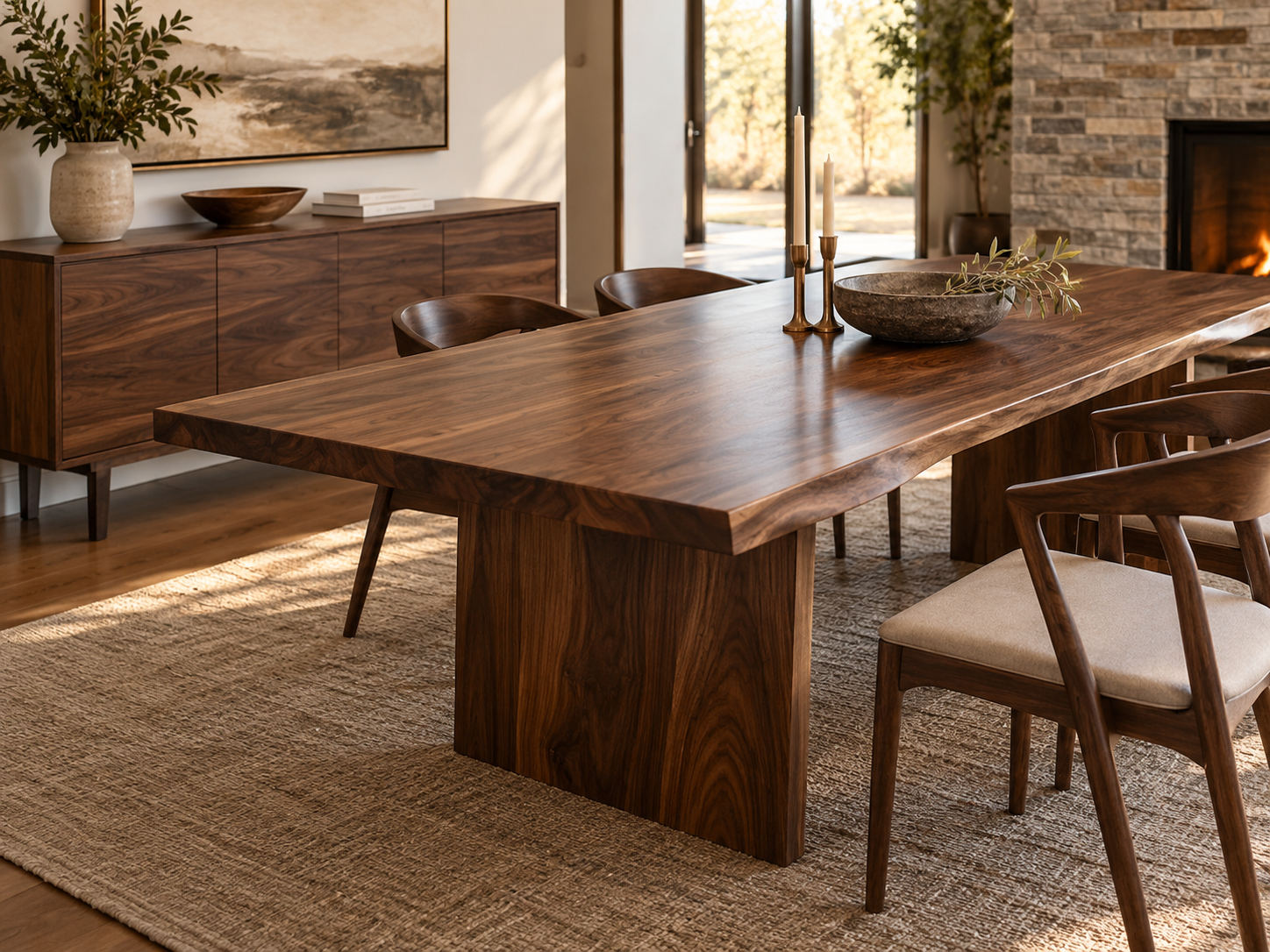
For the trade, the takeaway is simple: specify which one you want, and approve color from a sample of the actual lot. Grade matters as well. Under NHLA rules, FAS lumber yields at least 83.3% clear cuttings and No. 1 Common yields at least 66.7%, so a shop cutting short cabinet parts can often work efficiently from No. 1 Common while long, wide panels call for FAS.
Where Does Each Type of Walnut Work Best?
Black walnut is the all-purpose choice for fine furniture and casework, claro and figured walnut suit statement pieces, and butternut shines in carving and light-duty work.
- Furniture and cabinetry. Black walnut is the American workhorse here. The Wood Database calls it typically easy to work when the grain is straight, and notes that it glues and finishes well, with good dimensional stability. The American Hardwood Information Center lists furniture, cabinets, architectural millwork, doors and paneling among its main uses.
- Accents and contrast. The American Hardwood Information Center calls walnut “a favored wood for use in contrast with lighter-colored species.” Walnut inlays, pulls, edge banding and trim set against hard maple or ash create a crisp, tailored look.
- Figured pieces. All the brown walnuts can produce curly, crotch and burl figure. Claro walnut is especially prized for figure, and The Wood Database notes that figured claro commands premium prices.
- Bending. The Wood Database notes black walnut responds well to steam bending, which makes it a strong candidate for curved chair parts.
- Carving. Butternut carves beautifully and is sold as both lumber and carving blanks. The Wood Database notes its supply is affected by a fungal disease called butternut canker, so availability can vary.
- Finishing. Walnut is rarely stained. Its natural color is the reason people choose it, and a clear finish lets it glow.
Black walnut also comes from a renewable resource. U.S. forests regrow about 1.66 cubic feet of hardwood for every cubic foot harvested, according to AHEC, and U.S. hardwood growing stock is up roughly 90% since the 1950s, according to USDA Forest Inventory and Analysis data.
Do you prefer walnut with its creamy sapwood showing, or an even brown from edge to edge? Tell us which way you lean and what project made up your mind.
Frequently Asked Questions
What is the most common type of walnut wood in the United States? Black walnut (Juglans nigra), native to the eastern United States. It is the walnut used in most American furniture, cabinetry and millwork, and it rates 1,010 lbf on the Janka hardness scale.
Is butternut the same as walnut? Butternut is a close relative in the same genus and is sometimes called white walnut. It has a lighter, tan heartwood and rates 490 lbf, which makes it a favorite of carvers.
Why is some walnut lumber lighter at the edges? The pale band is sapwood, which grows beneath the bark and ranges from pale yellow-gray to nearly white. Much commercial walnut is steamed to darken the sapwood, so boards with a bright, creamy edge are often unsteamed, and many makers feature that edge on purpose.
How do I make sure I get American black walnut? Ask for it by name. Tell your designer, maker or retailer you want real American black walnut, say whether you prefer steamed or unsteamed, and read the product description for the species.