

What Are American Hardwood Species? A Complete Guide to Domestic Wood
What Are American Hardwood Species? A Complete Guide to Domestic Wood
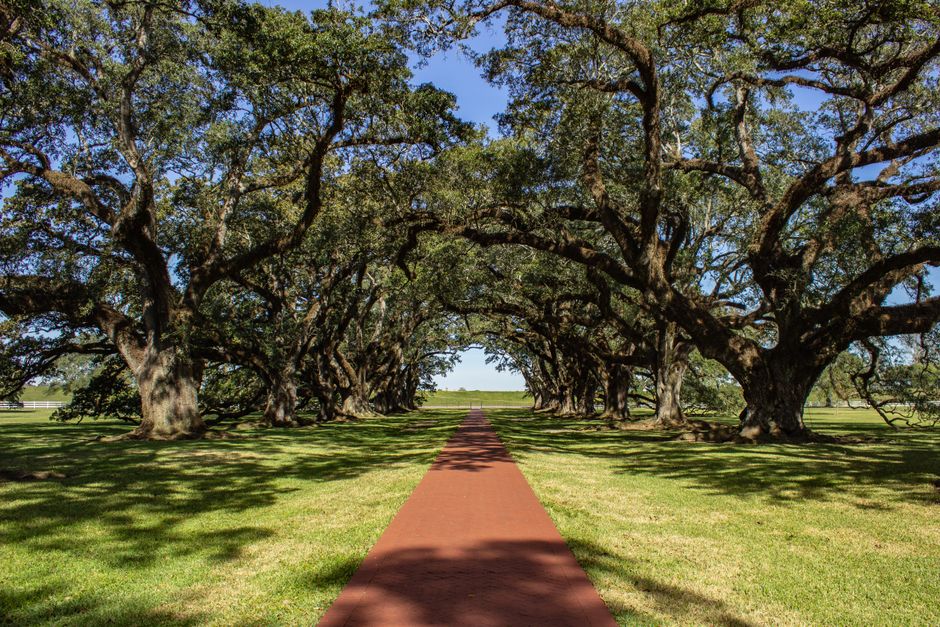
American hardwood species are broadleaf, deciduous trees native to North American forests. According to the American Hardwood Export Council (AHEC), the United States contains the largest temperate hardwood forest on earth, with commercially significant species concentrated east of the Mississippi River and in the Pacific Northwest.
Which Species Are Considered American Hardwoods?
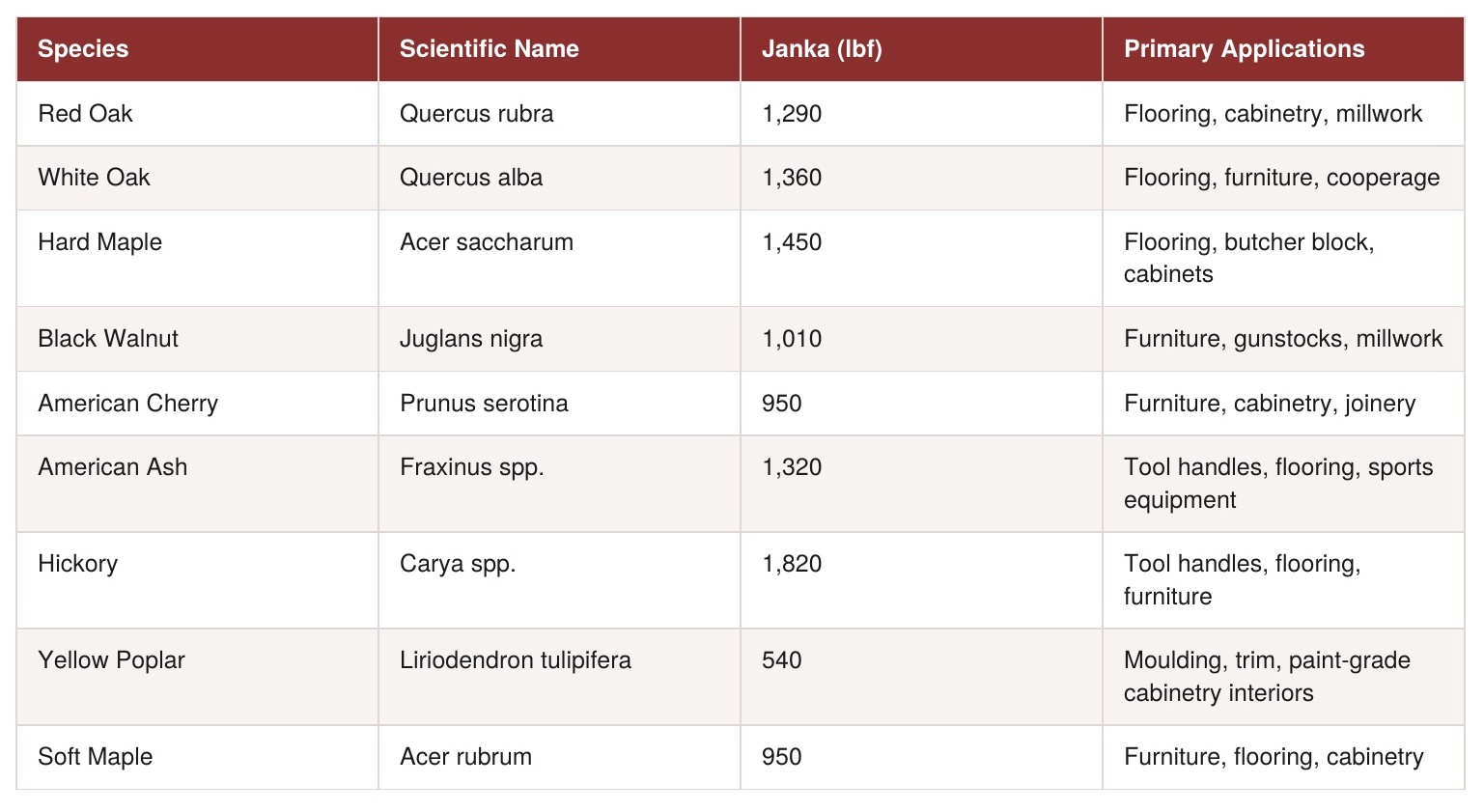
The National Hardwood Lumber Association (NHLA) recognizes nine primary commercial species. Each has distinct structural and aesthetic properties suited to different applications.
How Are American Hardwood Species Classified?
Hardwood classification is based on botanical structure, not hardness. Hardwoods are angiosperms, meaning they produce seeds enclosed in fruit. They are the standard for exposed interior surfaces, cabinetry, flooring, furniture, and millwork. Softwoods, by contrast, are gymnosperms and are typically used in structural framing, sheathing, and exterior applications where finish quality is not the priority.
NHLA grading rules govern how each species is measured for commercial quality. Grades are assigned based on the percentage of clear, defect-free yield a board produces. A board graded FAS (Firsts and Seconds) must yield a minimum of 83.3% clear cuttings, according to NHLA standards.
HLA grading rules govern how each species is measured for commercial quality. Grades are assigned based on the percentage of clear, defect-free yield a board produces. A board graded FAS (Firsts and Seconds) must yield a minimum of 83.3% clear cuttings, according to NHLA standards.
Where Do American Hardwood Species Grow?
According to USDA Forest Service Forest Inventory and Analysis (FIA) data, American hardwood forests span more than 650 million acres. The Appalachian and Central Hardwood regions, covering states from Maine through the Ozarks, account for the majority of commercially harvested species. Red oak alone represents approximately 15% of total growing stock in eastern U.S. forests.
Pacific Northwest species, including red alder (Alnus rubra), are graded under separate NHLA Pacific Coast Red Alder Rules and are used extensively in furniture and millwork applications.
What Is the Difference Between Hardwood and Softwood?
The distinction is botanical, not physical. Some hardwoods, such as yellow poplar, have lower Janka ratings than many softwoods. The relevant difference for architects and designers is application: hardwoods are the standard for exposed interior surfaces, cabinetry, flooring, furniture, and millwork. Softwoods serve structural framing, sheathing, and exterior applications where finish quality is not the priority.
Solid hardwood and engineered hardwood share the same species composition. Engineered hardwood uses a real hardwood face bonded to cross-laminated layers, providing dimensional stability in environments where solid wood would expand or contract seasonally.
Which American Hardwood Species Have Appeared in Your Projects?
Whether you have worked with quarter-sawn white oak, figured maple, or wide-plank walnut, we want to hear about it. Share your experience in the comments or tell us what species you are specifying next.
Frequently Asked Questions
What is the hardest American hardwood species?
Hickory (Carya spp.) is the hardest commercially available American hardwood at approximately 1,820 lbf Janka. It is used in flooring, furniture, and tool handles where impact resistance is a primary requirement.
What hardwood species grows in the Pacific Northwest?
Red alder (Alnus rubra) is the primary commercial hardwood native to the Pacific Northwest. It grows among Douglas fir and pine stands and is graded under NHLA Pacific Coast Red Alder Rules. Pin knots are considered a character feature rather than a defect under those rules.
Is American hardwood the same as domestic hardwood?
Yes. The terms are used interchangeably in the industry. Both refer to hardwood species that are native to and harvested within the United States.
What hardwood is best for painted cabinetry?
Hard maple (Acer saccharum) is the industry standard for paint-grade cabinet faces, doors, and drawer fronts. Its fine, closed grain accepts primer and paint without bleed-through and resists denting at high-wear edges. Yellow poplar (Liriodendron tulipifera) is widely used for cabinet interiors, moulding, and trim where a paint-grade surface is needed at lower cost.
Conclusion
Investing in the cost to replace hardwood floors is more than a simple aesthetic upgrade; it is a long-term commitment to your home's value, your family's health, and the health of our planet. Real American hardwood provides an unmatched combination of biophilic beauty, superior indoor air quality, and lifetime durability.
Unlike synthetic alternatives that must be torn out and thrown into landfills every few years, real wood can be refinished and enjoyed for generations. When you choose real wood, you are choosing a sustainable, carbon-storing material that naturally regenerates. Ready to transform your living space? Build Your World with Real American Hardwood today.