

Laminate That Looks Like Hardwood: A Master of Disguise
Nothing Beats the Real Thing
Finding the best real hardwood flooring for a luxurious look is the ultimate goal for homeowners who want lasting value. While many products try to imitate the appearance of natural timber, nothing matches the depth, warmth, and longevity of genuine American species.
Here are the top real hardwood floors for a high-end aesthetic:
Unlike synthetic lookalikes, real hardwood is a natural product. It isn't a photograph glued to fiberboard; it is a solid or engineered plank of timber harvested from sustainably managed forests. It can be refinished multiple times, stores carbon for its entire lifespan, and adds significant resale value to your home.

What is Genuine American Hardwood?
When searching for the best real hardwood flooring for a luxurious look, it is important to understand what makes it unique. Unlike synthetic laminate, which was designed as a budget alternative, real hardwood is a 100% natural resource.
Genuine hardwood flooring is typically available in two forms:
- Solid Hardwood: A single, solid piece of wood from top to bottom. It is the gold standard for longevity.
- Engineered Hardwood: A real wood veneer (the wear layer) bonded over a high-quality plywood or wood core. This provides extra stability in varying humidity levels.
Because it is a product of nature, every plank is unique. There are no "pattern repeats" like you find in laminate. The grain patterns, mineral streaks, and knots are the authentic fingerprints of the American forest.
The 7 Best Real Hardwood Floors for a Luxurious Look
If you want a floor that truly impresses, these seven American species represent the pinnacle of natural beauty and durability.
1. White Oak
White Oak is currently the most sought-after species for high-end design. It offers a neutral, wheat-colored palette that takes stains beautifully. Its tight grain makes it highly resistant to rot and moisture, making it a top choice for modern kitchens.
2. Black Walnut
For pure luxury, nothing beats Black Walnut. Known for its deep chocolate tones and flowing grain, it creates an immediate sense of sophistication. It is a softer hardwood, so it is best suited for bedrooms or formal living areas where its beauty can be admired.
3. Hard Maple
Maple is famous for its light, creamy color and subtle grain. It is incredibly hard and durable, often used in basketball courts, making it perfect for a clean, minimalist home that needs to withstand heavy activity.
4. Hickory
Hickory is the strongest commercial wood grown in North America. It features dramatic color variations between the heartwood and sapwood, providing a bold, rustic look that is virtually indestructible.
5. Black Cherry
Cherry wood is prized for its warm, reddish-brown hues that deepen and become richer with age and light exposure. It offers a smooth, satiny texture that feels exceptionally high-end underfoot.
6. Red Oak
Red Oak is the classic American floor. It features prominent grain patterns and a warm undertone. It is widely available and offers an excellent balance of durability and traditional style.
7. White Ash
Ash is known for its incredible shock resistance and bold, distinct grain. It is a fantastic alternative to Oak for those who want a more pronounced, energetic look in their flooring.
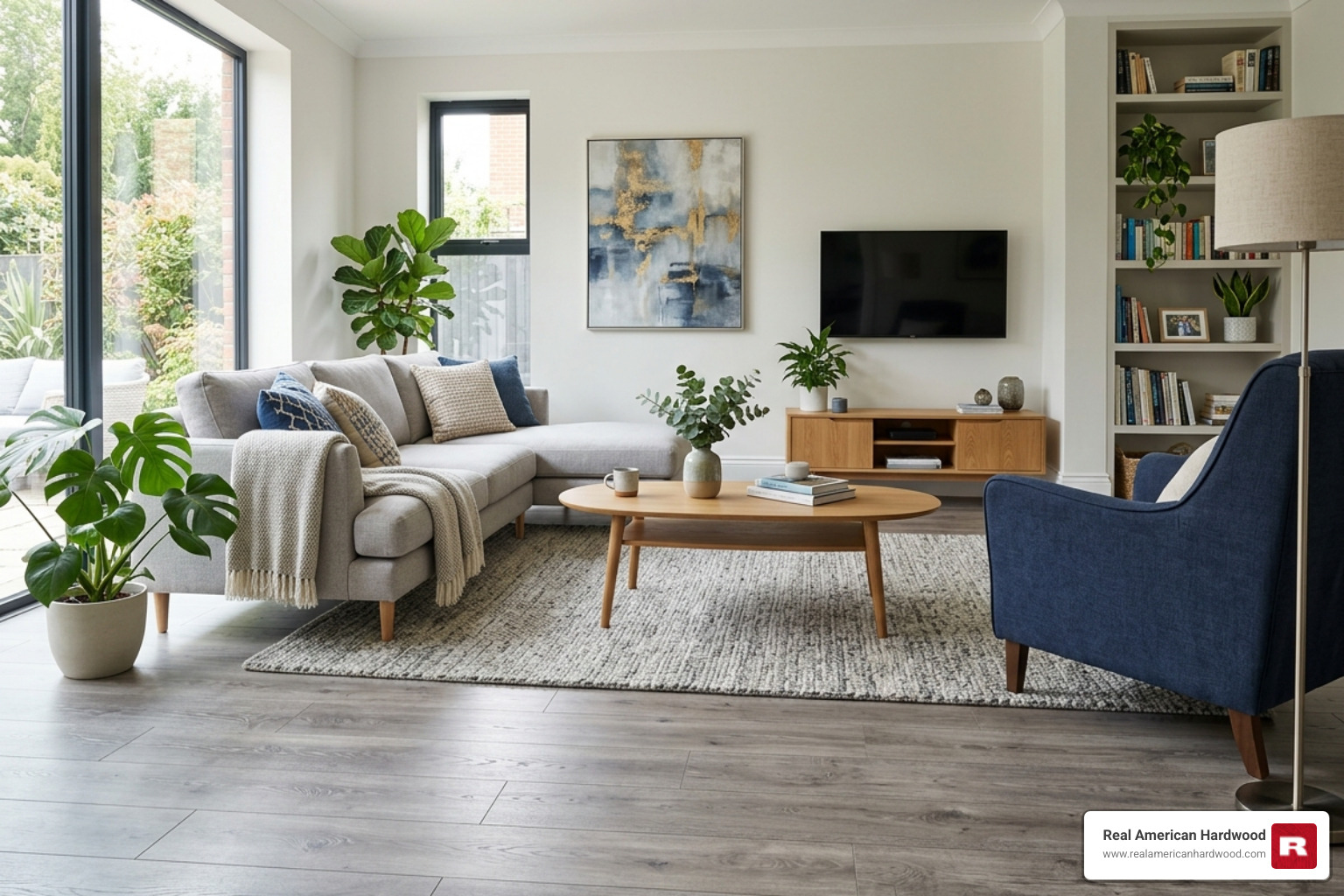
Benefits of Choosing Real American Hardwood
Why prioritize the best real hardwood flooring for a luxurious look over synthetic alternatives?
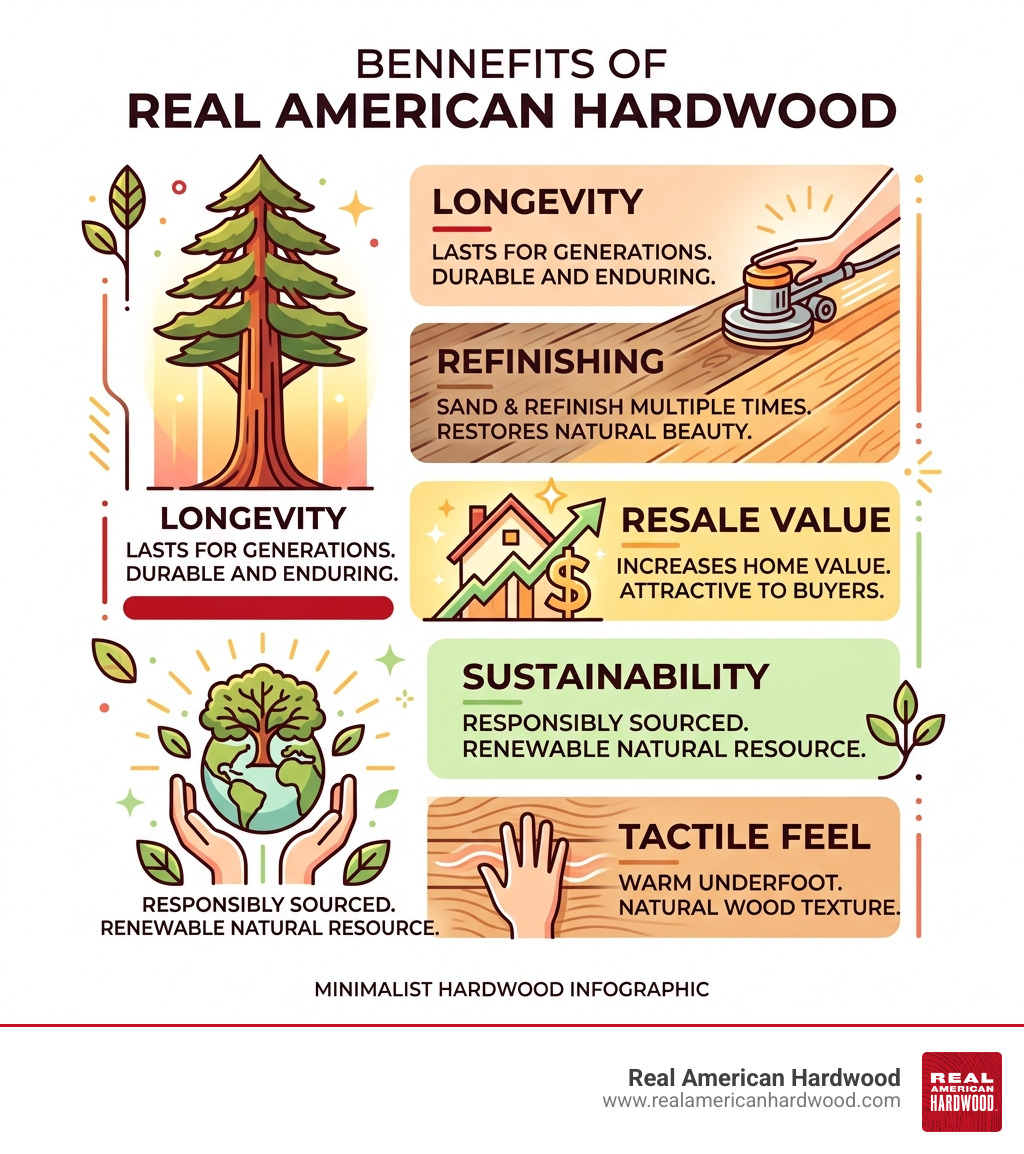
- Unmatched Longevity: A well-maintained hardwood floor can last 100 years or more.
- Refinishability: If your style changes or the floor gets scratched, real hardwood can be sanded and refinished instead of replaced.
- Investment Value: Hardwood is one of the few home upgrades that can boost resale appeal and deliver a strong return on investment.
- Home Health: Real hardwood is an all-natural material, with no plastic wear layer and no fake wood print. It also does not tend to trap pet dander, dust, and other debris the way some softer, more textured flooring surfaces can.
- Biophilic Design Benefits: Bringing natural wood into your home supports biophilic design, a simple idea with powerful results: people often feel calmer, more comfortable, and more connected to nature when real natural materials are part of the space.
- Sustainability: American hardwoods are a truly renewable resource. Our forests are growing significantly faster than they are being harvested.
The Disadvantages of Lookalikes
While laminate and vinyl are often marketed as "just as good" as wood, they have significant drawbacks:
- Environmental Waste: Most lookalikes are made with plastics and resins that end up in landfills. They are not biodegradable.
- Made From Chemicals: Plastics and resins can potentially off gas in your home, comprimising air quality and potentially home health.
- Disposable Nature: Once the wear layer on a laminate floor is compromised, the entire floor must be replaced. It is a "disposable" product.
- Acoustics: Synthetic floors often produce a hollow, clicking sound. Real wood has a solid, natural sound that improves the acoustics of a room.
How Does Real Hardwood Deliver Long-Term Value?
When homeowners compare flooring options, the biggest difference is not just appearance - it is lifespan, repairability, and lasting character.
Real hardwood is a truly renewable resource. In the U.S., our hardwood forests are growing 2.5 times faster than they are being harvested. When you choose real wood, you are choosing a product that actually helps the environment by sequestering carbon for the life of the floor. You can learn more about why real hardwood is the gold standard.
For additional background on the material itself, see Hardwood on Wikipedia.
Comparing Solid and Engineered Hardwood
Within genuine wood flooring, homeowners usually choose between two main constructions:
- Solid Hardwood: A single piece of wood from top to bottom. It offers maximum refinishing potential and is often preferred for long-term installations.
- Engineered Wood: A real wood veneer on top of a plywood or wood core. It can provide greater dimensional stability in spaces with fluctuating humidity or over concrete slabs while still delivering the advantages of hardwood.
Both options use real wood and provide the beauty, warmth, and authenticity that imitation products cannot duplicate.
For a deeper dive into these differences, check out our guide on Hardwood vs. Lookalikes.
Durability and the Janka Hardness Scale
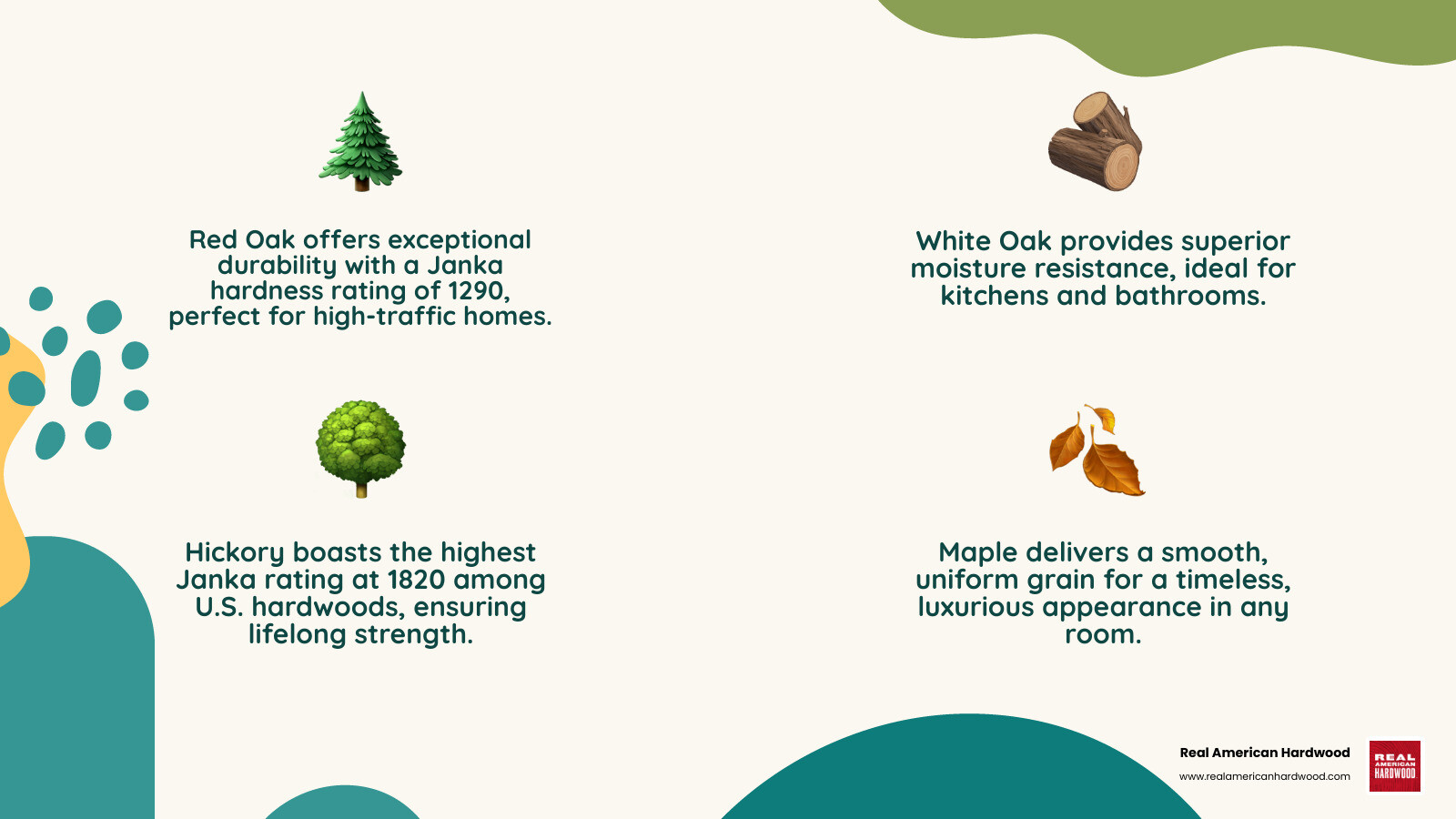
When shopping for the best real hardwood flooring for a luxurious look, pay attention to the Janka rating. The Janka scale measures how much force it takes to press a steel ball into the wood, so it gives you a quick read on dent resistance.
- Highest common rating: Hickory (1820) - one of the hardest widely used domestic hardwoods; great for busy homes with pets and kids.
- Hard Maple (1450) - very durable and better at resisting dents than many other species.
- White Oak (1360) - a popular sweet spot for durability, stability, and timeless style.
- Lowest common rating: American Cherry (950) - softer than oak, with a rich look that works best in lower-traffic spaces.
Unlike synthetic floors that eventually wear out, hardwood timber flooring can be restored to its original glory whenever needed.
Best Rooms for Installation
Real hardwood performs beautifully in many of the most-used spaces in a home, especially when the right species and construction are selected.
- Living Rooms & Bedrooms: Ideal spaces for showcasing natural grain, warmth, and timeless style.
- Dining Rooms & Hallways: Excellent choices because hardwood adds continuity and long-term value to high-visibility areas.
- Kitchens: Often a great fit when properly installed and maintained, especially with durable species and prompt attention to spills.
We generally advise caution in full bathrooms with showers, as the steam and frequent puddles can challenge any natural wood floor over time.
Installation: Investing in Quality
Installing real hardwood is an investment in your home's structure. While some engineered products offer click-lock systems, most professional installations involve:
- Acclimation: Essential for real wood to adjust to your home's humidity.
- Subfloor Prep: Ensuring a perfectly level surface.
- Fastening: Nailing or gluing the planks for a permanent, squeak-free fit.
Choosing the right installation method ensures your floor remains beautiful for decades. You can learn more about choosing the right hardwood for your home to match your specific environment.
Cost vs. Value Breakdown
The best real hardwood flooring for a luxurious look requires a higher upfront investment, but costs less over time:
- Solid Hardwood ($5 – $15+/sq ft): Higher initial cost, but lasts a century.
- Engineered Hardwood ($4 – $12/sq ft): Excellent for basements or slab-on-grade homes.
- Laminate ($1 – $5/sq ft): Low initial cost, but must be replaced every 15-20 years, making it more expensive in the long run.
Maintenance and Cleaning Tips
To keep real hardwood floors looking beautiful for decades, follow these rules:
- Never use a steam mop. Excess heat and moisture can damage wood fibers and finishes.
- Sweep or vacuum regularly. Grit acts like sandpaper on the finish.
- Use felt pads. Put these under all furniture legs to help prevent scratches and dents.
- Wipe spills immediately. Prompt cleanup helps protect the wood and finish.
Thickness and Wear Layer: Does it Matter?
For solid hardwood, the full plank is real wood, which allows for multiple refinishing cycles over its lifespan.
For engineered hardwood, the thickness of the top wear layer matters because it affects how many times the floor can be refinished. A thicker wear layer generally supports greater long-term value and restoration potential.
Whether you choose solid or engineered construction, real hardwood offers the authentic feel, sound, and character that homeowners seek in a premium floor.
Choosing the Right Species
When you are ready to select your floor, focus on the species that best fits your lifestyle. Real American Hardwood provides resources to help you identify the best options:
- For Durability: Look toward Hickory or White Oak.
- For Color Depth: Consider Black Walnut or Cherry.
- For Modern Styles: Explore Hard Maple or Ash.
By choosing genuine wood, you are supporting American landowners and the health of our domestic forests.
Conclusion: Making the Right Choice for Your Home
The best real hardwood flooring for a luxurious look is more than just a design choice; it is a commitment to quality and sustainability. While imitations may offer a temporary solution, they cannot replicate the soul and character of real American timber.
We encourage you to see the value in the original. Real American hardwood is a story of our heritage, providing a floor that will still be beautiful when your grandchildren are grown.