

Siding with Sustainability: How Cypress Captures Carbon and Looks Good Doing It
Why Carbon Capturing Cypress Siding Belongs on Your Next Sustainable Build
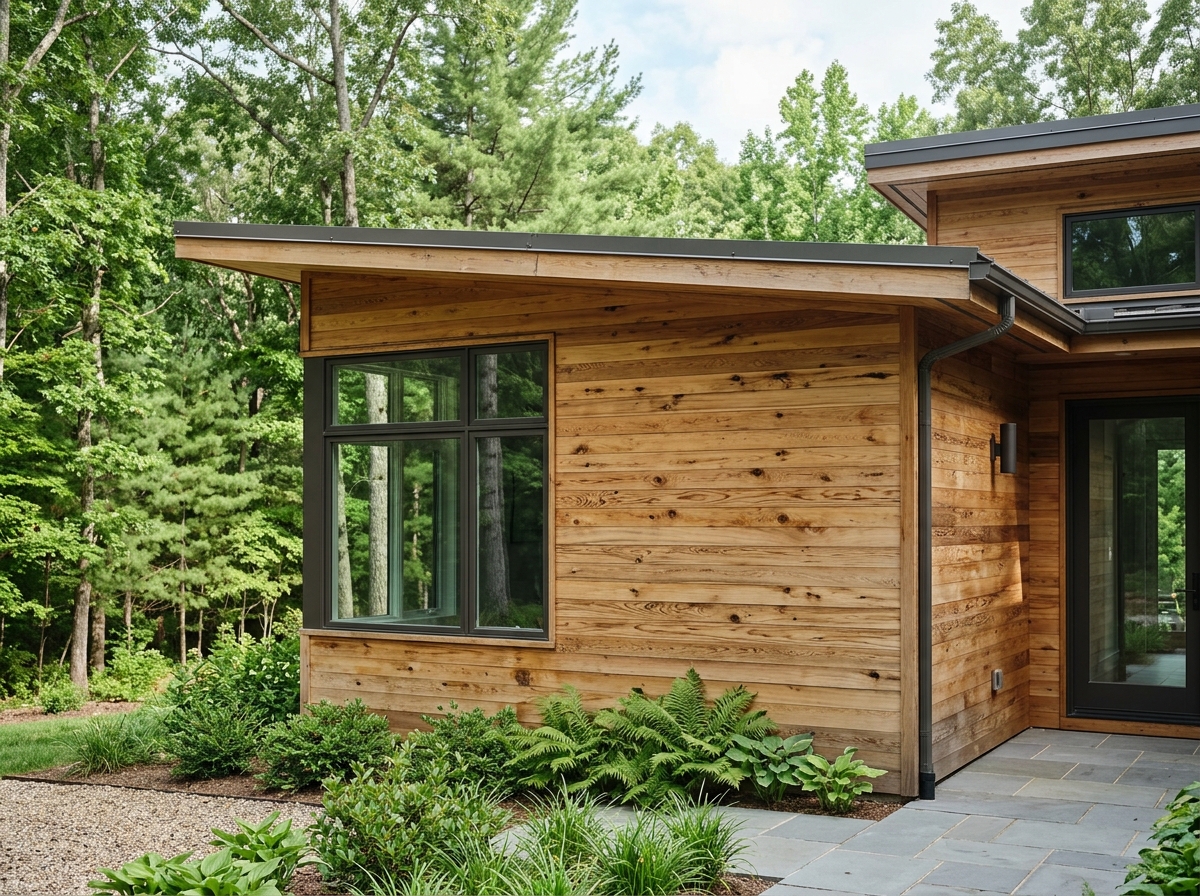
Carbon capturing cypress siding is one of the most effective ways to reduce the environmental footprint of a home while gaining a durable, beautiful exterior. Here's a quick summary of why it stands out:
- Stores carbon for 100+ years — wood locks in carbon absorbed during the tree's life, and keeps it stored for the life of the building
- Requires up to 126x less energy to manufacture than materials like aluminum, concrete, or brick
- Naturally rot- and insect-resistant thanks to cypressene, an oil the tree produces itself — no chemical treatments needed
- Locally sourced options cut transportation emissions significantly compared to imported materials
- Recyclable at end of life — cypress siding can be reused or repurposed instead of landfilled
Building materials matter more than most people realize. The production of concrete, steel, and aluminum alone accounts for roughly 23% of global greenhouse gas emissions. Meanwhile, carbon dioxide in the atmosphere has risen by 50% in less than 200 years of industrial activity. The materials we choose for our homes are part of that story — for better or worse.
Cypress siding offers a genuinely different path. Trees capture CO2 as they grow, and nearly 50% of a tree's dry weight is stored carbon. When that wood becomes siding on your home, that carbon stays locked in place — not released into the air.
It's a simple idea with real, measurable impact.
I'm Jonathan Geyer from Real American Hardwood Company, and my work sourcing and distributing premium American hardwoods — including evaluating species for their durability, sustainability, and performance — gives me a close-up view of what makes carbon capturing cypress siding such a compelling choice for eco-conscious builders and homeowners. In this guide, I'll walk you through everything you need to know to make a confident, informed decision.
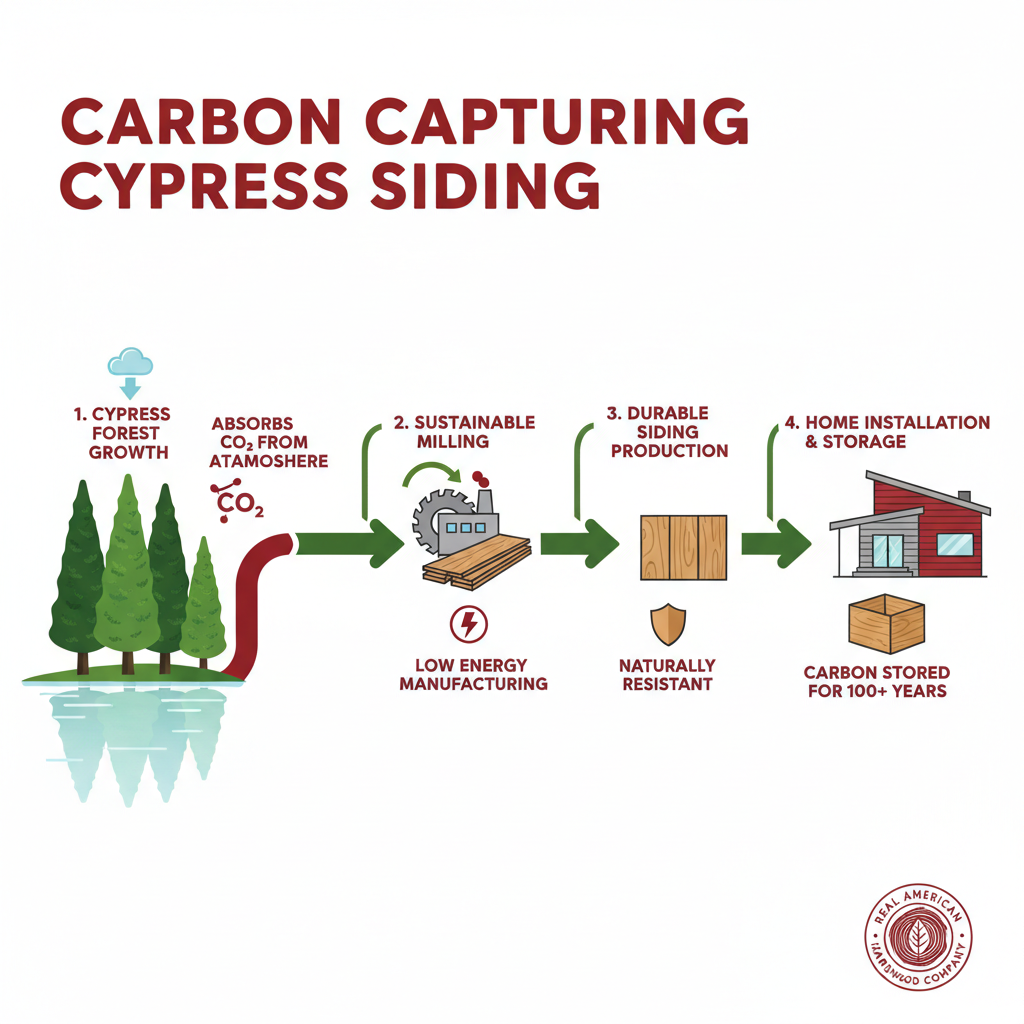
The Science of Carbon Capturing Cypress Siding
To understand why carbon capturing cypress siding is such an environmental powerhouse, we have to look at the biology of the tree itself. We often think of high-tech solutions for climate change, but nature already invented the most efficient carbon-removal machine: the tree.
Through photosynthesis, trees pull CO2 from the atmosphere, use sunlight to break it down, release the oxygen back to us, and keep the carbon to build their trunks, branches, and roots. In a Bald Cypress, this process is exceptionally efficient. These trees can reach heights of 150 feet and diameters of 12 feet. Because carbon accounts for nearly 50% of the dry weight of the wood, a single mature cypress tree represents a massive "vault" of stored greenhouse gases.
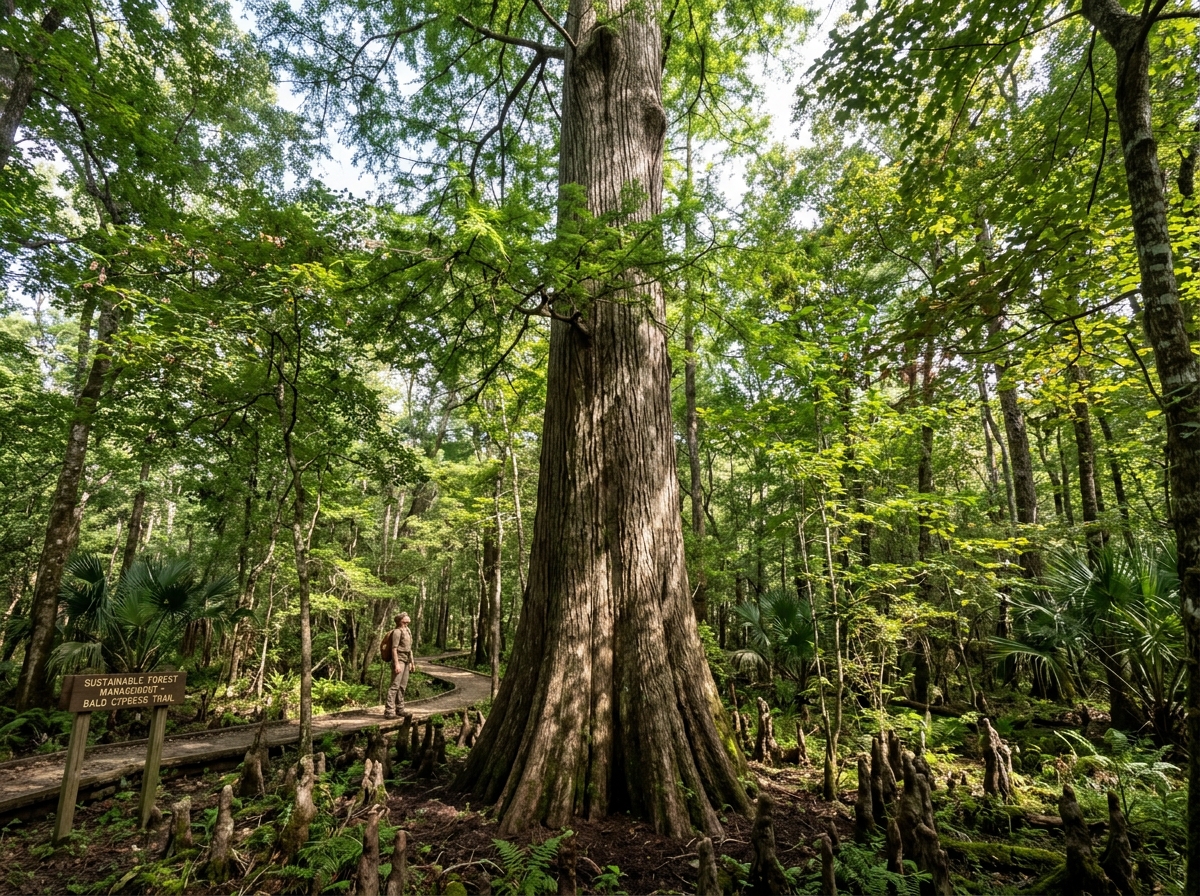
When we evaluate materials from a cradle-to-grave perspective, we look at every stage of its life—from the forest floor to the eventual deconstruction of the building. Unlike synthetic materials that release carbon during high-heat manufacturing, cypress stores it.
Why Carbon Capturing Cypress Siding is a High-Performance Sink
The carbon sequestration potential of cypress is linked to its incredible longevity. Bald Cypress trees are known to live for up to 1,200 years in the wild. When harvested from a managed forest, that stored carbon doesn't just disappear. It is "locked" into the boards used for your home’s siding.
As long as that wood remains part of your home—which can be 80 to 100 years or more—that carbon is kept out of the atmosphere. Furthermore, manufacturing wood products is remarkably "low-energy."
Comparing Cypress Species and Sustainability
While Bald Cypress is a star of the Southeast, other species like Nootka cypress (often called Alaskan Yellow Cedar) also offer incredible sustainability. Nootka cypress can live as long as 3,500 years, acting as a carbon sink for millennia.
We always advocate for native species over imported "exotic" woods. Sourcing native cypress ensures that the growth rates and carbon balance are monitored under strict domestic regulations, and it avoids the massive carbon footprint associated with shipping heavy timber across oceans.
Environmental Benefits and Life-Cycle Sustainability
When we talk about a life-cycle assessment (LCA), we are measuring the total environmental impact of a product. Carbon capturing cypress siding scores remarkably high because it is a renewable resource that requires minimal processing.
One of the most carbon-intensive parts of lumber production is drying the wood. However, cypress is often conducive to air-drying. While kiln-drying is faster, air-drying vs. kiln-drying footprints show that allowing the wind and sun to do the work can significantly lower the "embodied carbon" of the final product. Even when kilns are used, many modern mills use wood scraps (biomass) to fuel the heat, creating a circular energy economy.
Maximizing Longevity with Carbon Capturing Cypress Siding
A building material is only as sustainable as it is durable. If you have to replace your siding every 15 years, the carbon cost of manufacturing and transport doubles or triples. This is where cypress shines.
Cypress generates its own natural preservative called "cypressene." This oily substance makes the heartwood exceptionally resistant to rot, decay, and insect attacks. In fact, old-growth cypress lumber can last many decades outdoors without any chemical sealants. This natural durability is a cornerstone of Cypress in Hill Country Home Design, where homes must withstand intense heat and humidity. By lasting 80–100+ years, cypress ensures that the carbon it captured remains sequestered for a century.
Local Sourcing: The Key to Negative Carbon Footprints
At Real American Hardwood, we believe that "where" your wood comes from is just as important as "what" it is. A "carbon-negative" material can quickly become carbon-positive if it has to be trucked 3,000 miles or shipped from another continent.
By shortening the supply chain, we reduce transportation emissions—one of the largest contributors to a material's carbon footprint. Supporting local mills also has profound social and economic benefits. It keeps money in the community and supports family-owned businesses that have a vested interest in keeping their local forests healthy.
Sustainable Forest Management and Certifications
To ensure that cypress remains a renewable resource, it must be harvested responsibly. Look for certifications like FSC certification or PEFC standards. These organizations verify that the wood comes from forests managed to protect biodiversity and prevent deforestation.
Sustainable forestry management impact is clear: in the United States, we grow hardwoods about 2.5 times faster than we harvest them. This means that by choosing carbon capturing cypress siding, you are participating in a system that actually increases the total amount of carbon stored in American forests over time. Selective logging, rather than clear-cutting, allows the forest canopy to remain intact, protecting wildlife habitats while removing mature trees that have reached their peak carbon-absorption age.
Enhancing Performance: Shou Sugi Ban and Weathering
If you are looking for the ultimate in sustainability and "cool factor," you might consider shou sugi ban (also known as yakisugi). This traditional Japanese technique involves flash-burning the surface of the cypress.
This process does more than just look beautiful; it carbonizes the outer layer of the wood. This makes the siding:
- Fire-resistant: The soft cellulose is burned away, leaving a char layer that is difficult to ignite.
- Hydrophobic: The wood becomes naturally water-repellent.
- Maintenance-free: The charred surface doesn't rot or attract insects, and it develops a stunning "wabi-sabi" patina over time.
We’ve seen this used to incredible effect in projects like the Cypress: Something Old, Something New Rejuvenates Long Island Home, where charred cypress provided a chemical-free, high-performance exterior that will last a lifetime.
Frequently Asked Questions about Cypress Siding
What are the environmental advantages of cypress over other siding options?
The biggest advantage is the energy required for production. Manufacturing wood siding requires up to 126 times less energy than aluminum and significantly less than cement or brick. Furthermore, while materials like vinyl or fiber cement eventually end up in a landfill, cypress is biodegradable and can often be recycled into mulch or bioenergy at the end of its life.
Does cypress siding require chemical treatments to prevent rot?
In many cases, no. Because of the natural cypressene oil, the heartwood of the tree is naturally resistant to decay. While some homeowners choose to apply a UV-protective stain to maintain the wood's original color, many allow it to weather naturally to a beautiful silvery-gray. This eliminates the need for toxic fungicides or pesticides.
How can I ensure my cypress siding is sustainably harvested?
The best way is to check the "chain of custody." Ask your supplier for FSC 100% labels or evidence of SFI (Sustainable Forestry Initiative) membership. Buying from a local mill is also a great "green" indicator, as local operations often rely on long-term forest health for their survival.
Conclusion
Choosing carbon capturing cypress siding is more than an aesthetic choice—it’s a commitment to a cooler planet. By utilizing a material that grows naturally, stores carbon for centuries, and requires minimal energy to produce, you are helping move the needle toward a net-zero building future.
At Real American Hardwood, we are proud to promote these truly renewable resources. Whether you are building a modern masterpiece or a cozy cabin, cypress offers the perfect blend of performance and environmental stewardship. If you're ready to explore more options, check out our Hardwood Species Guide to find the perfect fit for your next project. Future-proofing your home starts with the materials you put on the outside. Siding with cypress means siding with the planet.