

Hard Truths About Finding the Most Durable Wood Flooring
What Actually Makes Wood Flooring Durable? (The Short Answer)
Durable wood flooring comes down to four core factors. Here's a quick breakdown:
Many of today’s most durable wood flooring options come with factory-applied finishes, often UV-cured and strengthened with aluminum oxide for strong scratch and wear resistance. But prefinished is not the only durable choice. Many hardwood flooring professionals still prefer site-finished floors because the final performance also depends on the product, the installer, and how the floor is used and maintained.
If you're short on time: choose a hard species like Hickory or White Oak, pair it with a quality factory finish, and match the construction type to your room's moisture level. That combination covers most durability needs.
Still here? Good — because the details matter more than most flooring guides let on.
Most people pick hardwood floors for how they look. That's fair. But looks fade fast if the floor can't handle daily life — pets, spills, heavy furniture, and years of foot traffic. This is where hardwood shines, it is more durable than LVP. The right choice can last a century. The wrong one and you'll be replacing it in a few years.
This guide cuts through the noise. No filler, no jargon — just what you need to choose floors that hold up for the long haul.
At Real American Hardwood, the focus is on helping homeowners, builders, and designers understand what makes durable wood flooring perform well over time. Whether you're building new or renovating, the principles in this guide come from real-world flooring experience and trusted industry research about species, construction, finishes, and long-term performance.
The Science of Durable Wood Flooring: Janka Ratings and Species
When we talk about how "tough" a wood floor is, we aren't just guessing. The industry uses a standardized measurement called the Janka hardness scale. This test measures the force required to embed a .444-inch steel ball halfway into a piece of wood. The higher the number, the more resistant the wood is to dents and wear.
If you are hunting for durable wood flooring, your journey begins with species selection. Not all trees are created equal; some are built for beauty, while others are built for battle.
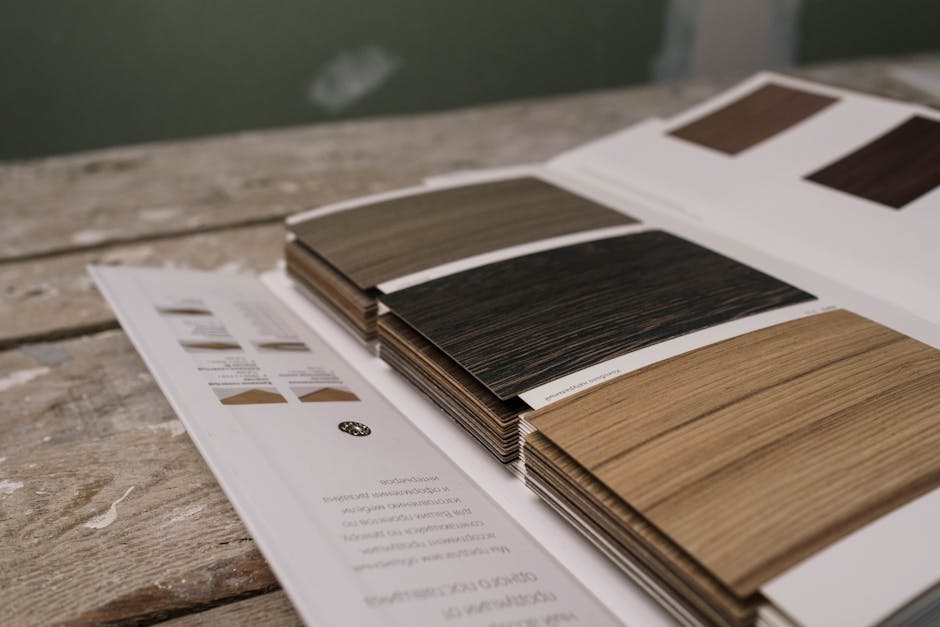
The Heavy Hitters of Hardness
In North American hardwoods, three species consistently top the charts for residential durability:
- Hickory (1820 Rating): This is the undisputed heavyweight champion of domestic woods. Hickory is incredibly dense and shock-resistant. It’s the same wood used for tool handles and baseball bats, so it can certainly handle a dropped cast-iron skillet or a rambunctious Labrador.
- Hard Maple (1450 Rating): Ever wonder why basketball courts are almost exclusively maple? It’s because maple has a tight, uniform grain that wears evenly and resists heavy impact. It’s a fantastic choice for modern homes that see a lot of activity.
- White Oak (1360 Rating): White Oak is a legend in the flooring world. Beyond its respectable Janka score, it contains high levels of tannic acid, making it naturally resistant to rot and water. This is why it has been used for centuries in wine barrels and shipbuilding.
- Red Oak (1290 Rating): The gold standard of American flooring. While slightly softer than its white cousin, Red Oak is incredibly resilient and has a porous grain that hides small scratches and "character marks" better than smoother woods.
If you want to compare a few more species, Black Cherry, Walnut, and Soft Maple are all worth a look. They are generally softer than hickory, maple, or oak, but each offers a distinct appearance and can still perform well in the right home. You can explore more about these options in our Hardwood Species Guide.
Maximizing Lifespan with Durable Wood Flooring Finishes
If the wood species is the "muscle" of your floor, the finish is the "armor." Even the hardest Hickory will look dull and scratched if it isn't protected. Modern technology has revolutionized how we shield our floors.
Many of today’s most durable wood flooring options come with factory-applied finishes, often UV-cured and strengthened with aluminum oxide for strong scratch and wear resistance. But prefinished is not the only durable choice. Many hardwood flooring professionals still prefer site-finished floors because the final performance also depends on the product, the installer, and how the floor is used and maintained.
When choosing a finish, consider the gloss level. While high-gloss floors look stunning in showrooms, they act like a mirror for scratches and dust. We often recommend a matte or satin finish for busy households. These lower-sheen options do a much better job of hiding the "micro-scratches" that occur from daily living, keeping your floors looking newer for longer. You can learn more about the long-term Advantages of Hardwood and how these finishes preserve your investment.
Best Durable Wood Flooring for Pets and High-Traffic Areas
Pets and kids do not automatically rule out hardwood. That is one of the biggest misconceptions about durable wood flooring. In a busy home, hardwood can perform very well when you choose a harder species, a tough factory finish, and practical surface textures. Floors with wirebrushed or distressed looks help disguise light scratches, while species with higher hardness ratings are better at resisting dents from claws, toys, and everyday foot traffic. With the right wood and a little routine maintenance, hardwood is absolutely a realistic option for homes with children and pets.
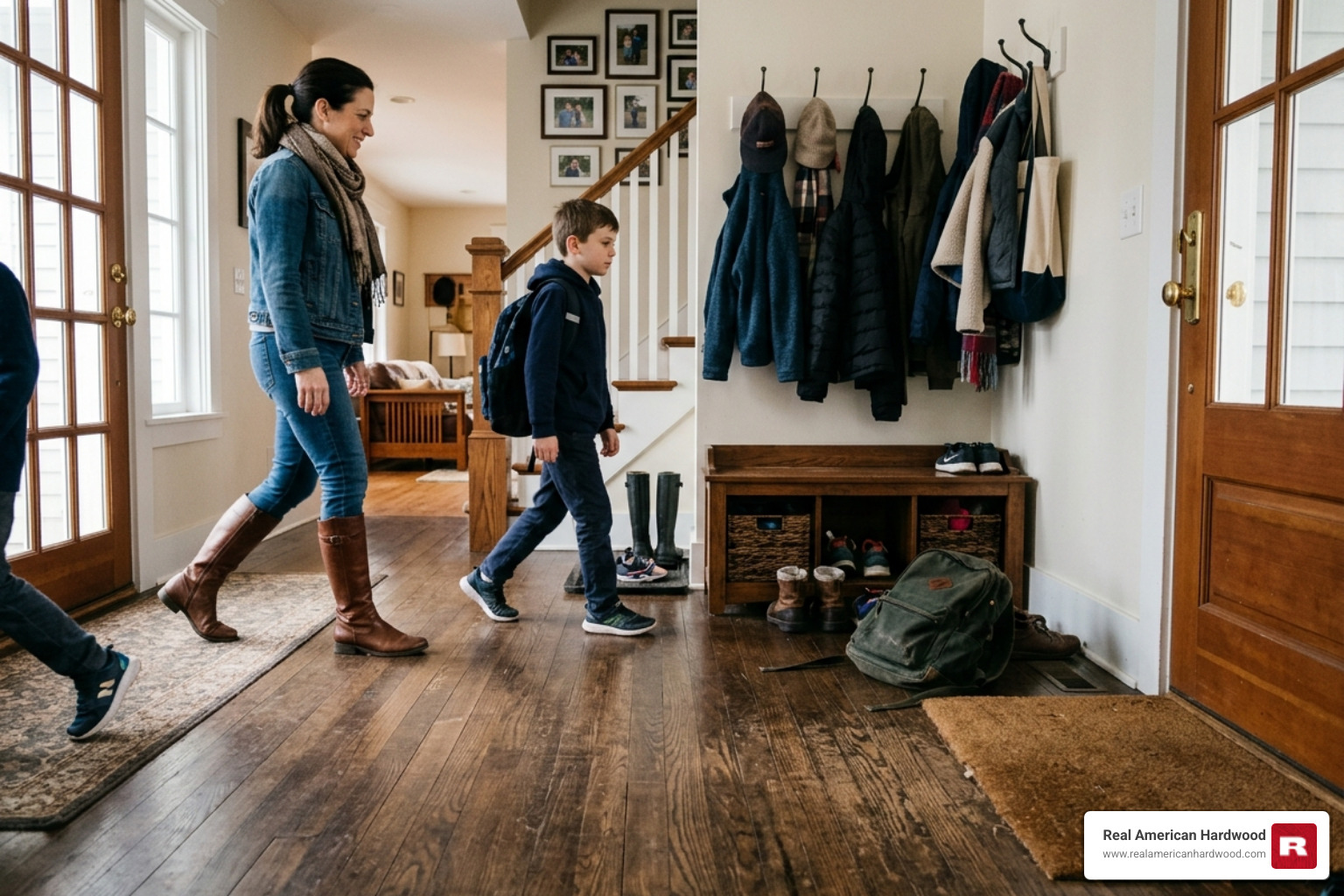
Newer options like densified wood push durability even further. Using heat and pressure, manufacturers compress real wood fibers to create flooring with much better dent resistance than standard boards. That can make a big difference in busy spaces like entryways, hallways, and kitchens where dropped items, foot traffic, and daily wear are constant. For more help pairing wood floors with real-life use, see Choosing the Right Hardwood for Your Home.
Solid vs. Engineered: Which Construction Wins for Longevity?
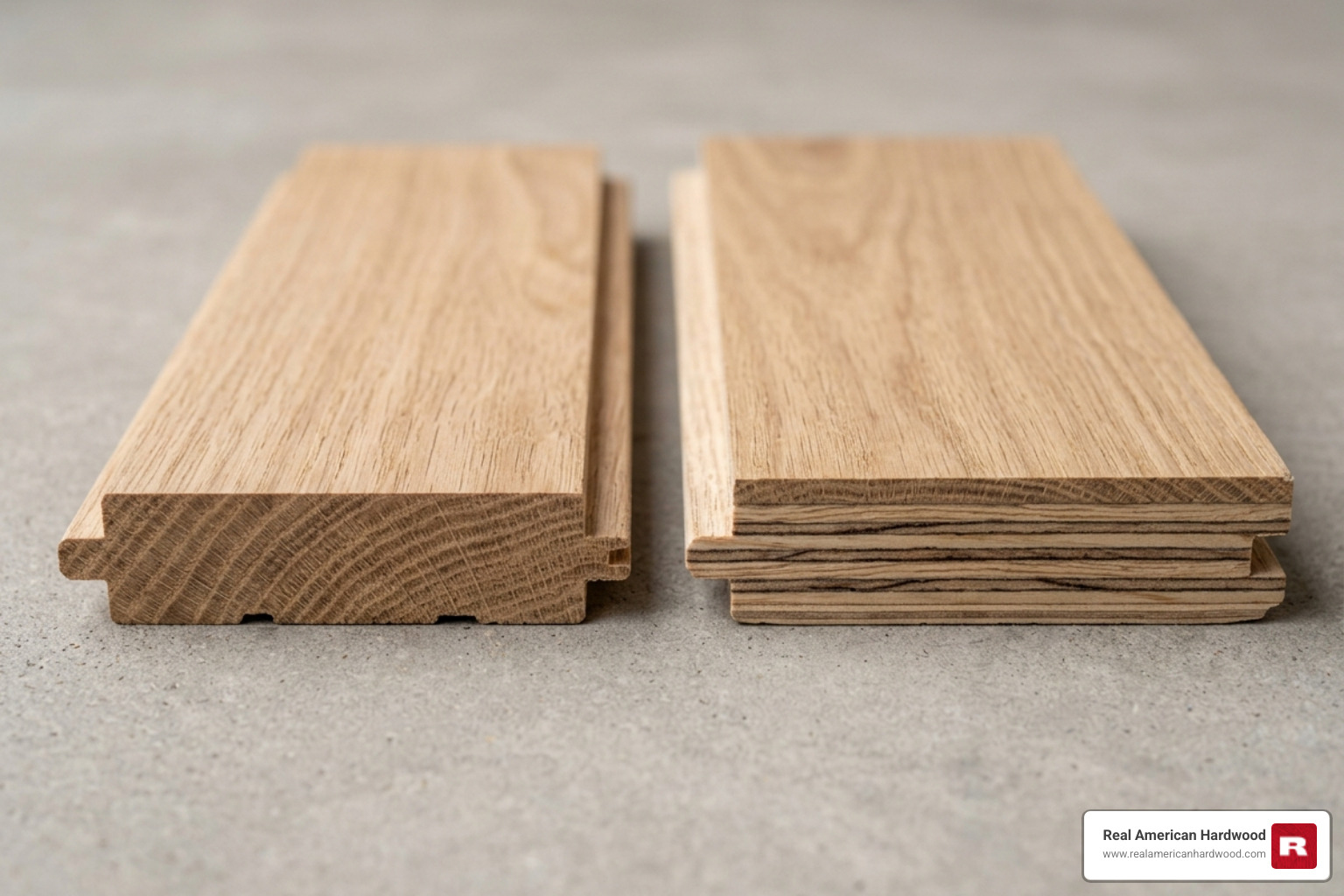
This is the "Great Debate" of the flooring world. To choose the most durable wood flooring, you have to understand that "durability" means two different things: resistance to scratches/dents and resistance to environmental changes.
Pets and kids do not automatically rule out hardwood. In fact, the right durable wood flooring can hold up very well in busy homes. For better day-to-day performance, look for harder species, strong finishes, and forgiving textures like wirebrushed or distressed surfaces that help hide small scratches and wear.
The Case for Solid Hardwood
Solid hardwood is exactly what it sounds like: a single, solid piece of wood from top to bottom. Its greatest durability asset is its longevity. Because it is thick, it can be sanded and refinished multiple times over a century. If your floor gets damaged or you simply want to change the color in twenty years, you just sand it down and start fresh. It is a truly permanent floor.
The Case for Engineered Hardwood
Engineered hardwood is made of a real wood veneer (the "wear layer") bonded over layers of high-quality plywood or a stone-polymer core. While it can’t be refinished as many times as solid wood, it wins the durability battle against humidity. Because the layers run in different directions, engineered wood doesn't expand and contract nearly as much as solid wood. This makes it the only real choice for basements or homes with radiant heating systems.
If you choose engineered, look for a thick wear layer (4mm or more). A high-quality engineered floor like those found in premium collections can still be refinished once or twice, giving you a 50-year lifespan while offering superior stability. We believe these are among the Top 5 Reasons to Prioritize Hardwood in any renovation.
Environmental Factors and Installation Strategies
Even the most durable wood flooring can fail if it isn't installed correctly or if the environment isn't controlled. Wood is a "living" material; it breathes and reacts to the air around it.
Climate and Acclimation
Before a single plank is nailed down, the wood must acclimate. This means sitting the wood in the room where it will be installed for several days (or even weeks) so its moisture content matches the home's environment. Skipping this step is the #1 cause of floor failure, leading to cupping or gaps.
In regions with extreme seasonal swings, we recommend maintaining a consistent humidity level between 30% and 50%. Using a humidifier in the winter and a dehumidifier in the summer will prevent your wood from stressed movement, preserving the structural integrity of the planks for decades.
Installation Methods
The way your floor is attached to the subfloor impacts its "feel" and durability.
- Nail-Down: The gold standard for solid wood. It provides a rock-solid feel and allows the wood to move slightly as a cohesive unit.
- Glue-Down: Often used for engineered floors over concrete. It creates a very quiet floor with zero "bounce."
- Floating: Common for DIY-friendly engineered floors. While easy to install, it can sometimes feel less "permanent" underfoot.
For specialized areas like stairs, the installation must be even more precise to handle the focused impact of every step. You can see how to Step Up with Hardwood Staircases to ensure safety and durability in high-vertical-traffic areas.
The Unmatched Performance and Value of Real Hardwood
When comparing durable wood flooring to alternatives like vinyl or laminate, the "value" goes far beyond the initial price tag. Real American Hardwood is a lifetime investment.
Financial and Health Benefits
- Resale Value: Data shows that homes with real wood floors sell faster and can command a 10% higher sale price. Buyers recognize the quality and longevity of real wood.
- Antimicrobial Properties: A fascinating study showed that bacteria (like E. coli and Salmonela) survive for shorter periods on oak surfaces compared to plastic or stainless steel, thanks to the wood's natural chemical makeup.
- Indoor Air Quality: Unlike carpet, which traps allergens, or some synthetic floors that may off-gas VOCs, real hardwood is a clean, natural choice for healthy homes.
The Carbon Footprint
In an era where sustainability matters, hardwood is the clear winner. Real hardwood flooring emits only 9.2 kg of CO2e per square meter—the lowest among all flooring materials. In contrast, vinyl flooring emits over 41 kg. By choosing wood, you are essentially "locking" carbon into your home's structure. You can read more about Why Real Hardwood is the most responsible choice for the planet.
Sustainable Practices in Durable Wood Flooring
We take pride in the fact that American hardwoods are a truly renewable resource. Our forests are managed so responsibly that they are growing at 2.4 times the rate of harvest and mortality combined. For every tree harvested, 2.4 seedlings are taking its place.
By sourcing from regions like the Appalachian Mountains, we ensure that the wood is not only consistent in grain and strength but also legally and sustainably harvested. This commitment to the land ensures that durable wood flooring will be available for generations to come.
Frequently Asked Questions about Wood Durability
What is the most durable wood species for homes with large dogs?
Hickory is the top choice due to its 1820 Janka rating. However, we also recommend White Oak with a wirebrushed finish. The hardness of the Hickory resists dents, while the texture of the wirebrushed Oak hides the inevitable surface scratches from claws.
Can engineered hardwood be refinished as many times as solid wood?
No. Solid hardwood can typically be refinished 5 to 7 times. Engineered hardwood's refinishing potential depends on the thickness of the top veneer (the wear layer). A high-quality engineered floor with a 4mm wear layer can usually be refinished 2 to 3 times, which is still enough to last 50 years.
How does humidity affect the long-term durability of my floors?
Wood is hygroscopic, meaning it absorbs and releases moisture. High humidity can cause "cupping" (edges higher than the center), while low humidity can cause "gapping." Maintaining a stable indoor environment is the best way to ensure your durable wood flooring stays beautiful for life.
Conclusion
Finding the most durable wood flooring isn't about finding a "bulletproof" material—it's about matching the right wood species and construction to your specific lifestyle and environment. Whether you choose the rugged strength of American Hickory or the timeless stability of White Oak, you are choosing a material that grows more beautiful with age.
At Real American Hardwood, we believe in building for the future. By selecting sustainable, locally sourced hardwoods, you aren't just floor-shopping; you're making a century-long investment in your home and a commitment to responsible forestry.
Ready to transform your space? Step into the world of sustainable design and discover how real hardwood can stand the test of time in your home.