

Engineered Wood Flooring: Why It Is Perfect for Kitchens
The Kitchen Flooring Dilemma — and Why Engineered Hardwood Solves It
Engineered hardwood flooring for kitchen spaces is one of the smartest flooring choices you can make in 2026 — combining the warmth and beauty of real wood with the durability and moisture resistance that busy kitchens demand.
Quick answer: Is engineered hardwood good for kitchens?
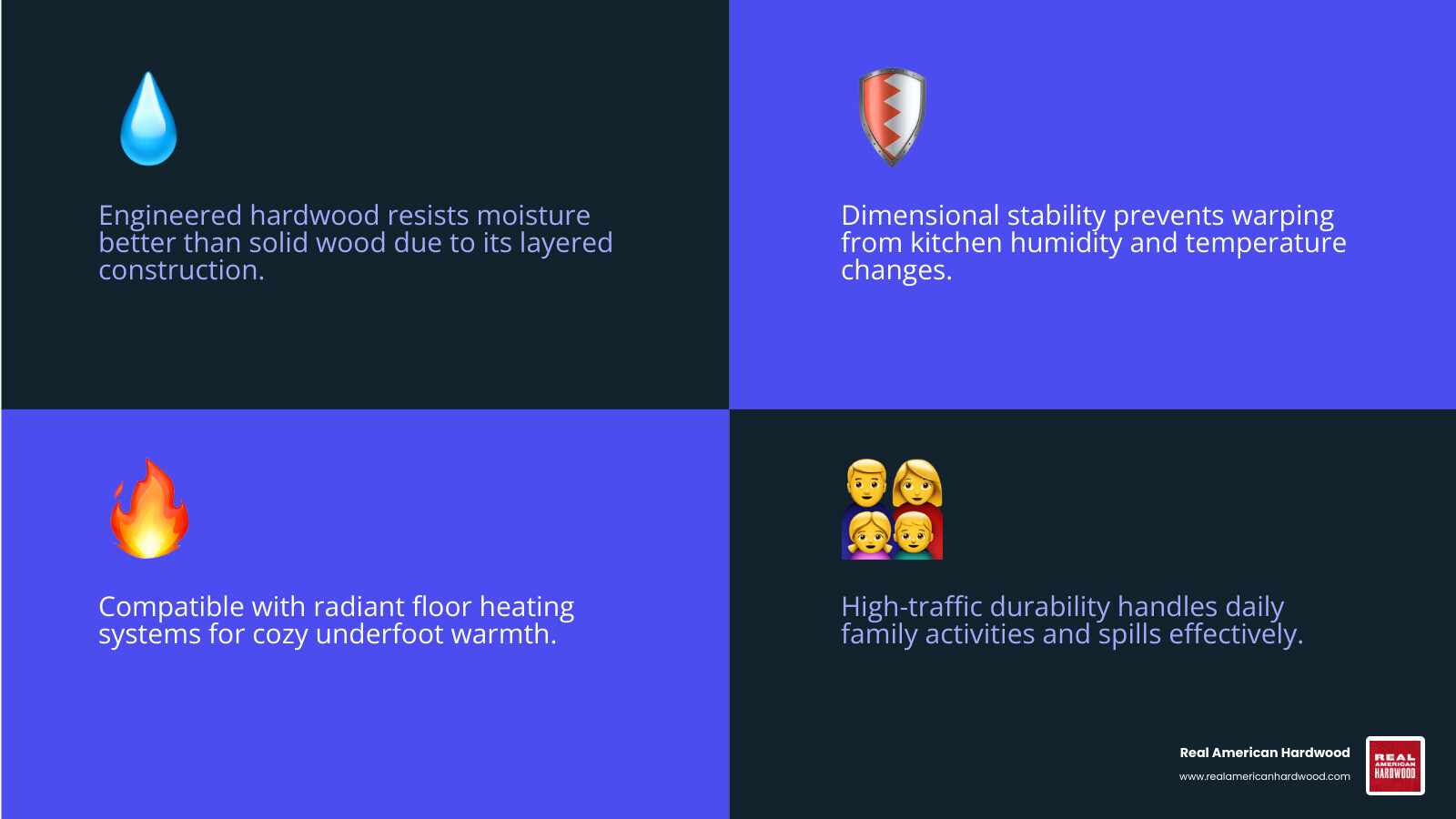
Yes — engineered hardwood is well-suited for kitchens. It handles spills, heat, and heavy foot traffic, while still delivering the authentic wood character that vinyl and tile simply cannot match.
Kitchens are the heart of the home. They see more spills, foot traffic, and temperature swings than almost any other room. That means your flooring has to work hard — and look good doing it. While solid hardwood can be used in the kitchen, it is not always the first choice due to the presence of water. Homeowners frequently choose it for its natural beauty, warmth, and the fact that it is softer and more comfortable to stand on for long periods compared to tile, As beautiful as real hardwood is, some experts recommend engineered hardwood's layered construction, as detailed by Wikipedia.
Understanding Engineered Hardwood vs. Solid Wood
When we talk about hardwood, many people immediately think of a solid plank of wood cut straight from a tree. While Hardwood Timber Flooring is a classic choice, it isn't always the best athlete for the "Kitchen Olympics." To understand why, we have to look under the surface.
The Anatomy of the Plank
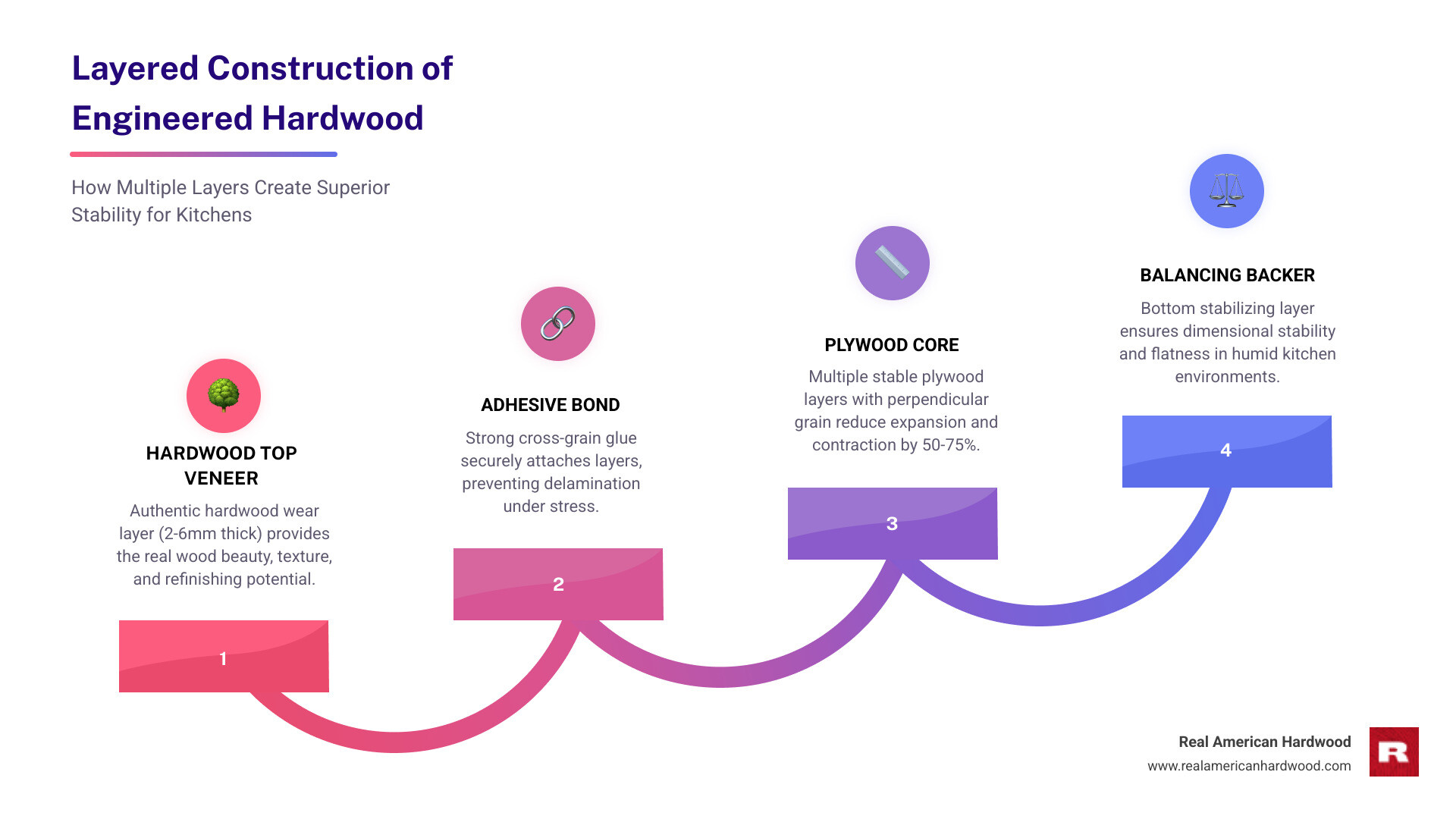
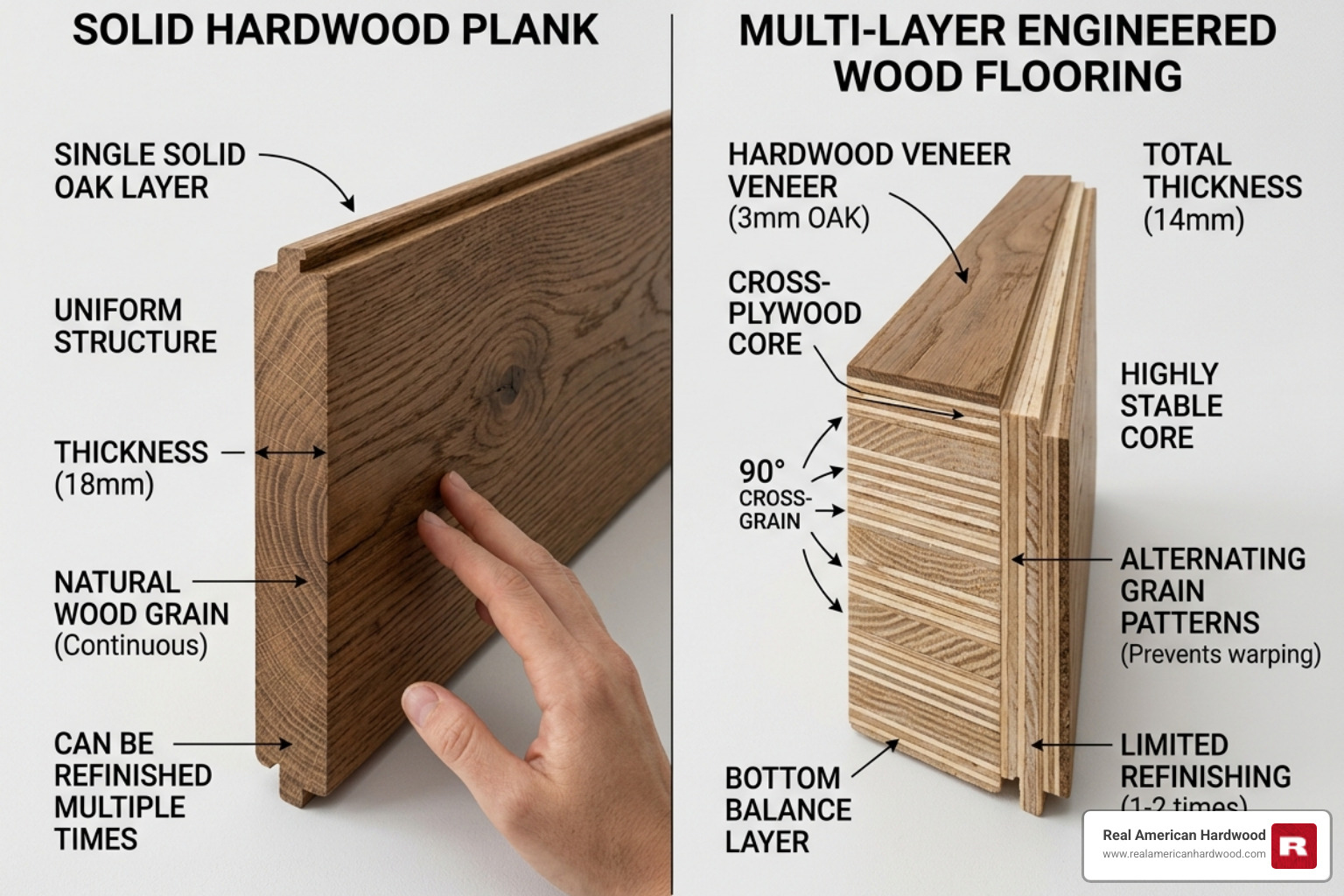
Solid hardwood is a single piece of wood from top to bottom. Engineered hardwood, however, is a marvel of modern design. It consists of a top layer of genuine hardwood veneer—the same species you love, like Oak or Hickory—bonded over a high-quality core. This core is usually made of multiple layers of plywood or high-density fiberboard (HDF) stacked in a cross-grain configuration.
Dimensional Stability
This "sandwich" construction is the secret to its success. Because the layers run in different directions, they counteract the natural tendency of wood to expand and contract when the humidity changes. In a kitchen, where you have boiling pots of pasta creating steam one minute and the dishwasher running the next, this dimensional stability is vital. Engineered Timber Flooring is far less likely to gap or cup than solid planks.
Radiant Heat Compatibility
In April 2026, many modern kitchen remodels include radiant floor heating. Solid wood often struggles with the direct heat, which can cause it to dry out and shrink. Because engineered wood is so stable, it is often the preferred partner for radiant heat systems, keeping your toes warm while the floor stays perfectly flat.
Why Engineered Hardwood Flooring for Kitchen Use is the Superior Choice
Choosing engineered hardwood flooring for kitchen use isn't just about following a trend; it's about practical performance. We often see families who want the seamless look of wood flowing from the living room directly into the kitchen. Engineered wood makes this possible without the fear of a single spilled glass of water ruining the entire floor.
Moisture Protection
Let’s be honest: kitchens are wet. Between the "sloshy" pet bowls, the occasional dishwasher leak, and the inevitable dropped ice cube, your floor needs to be resilient. Engineered wood provides a higher level of moisture protection than traditional wood. Many products now feature advanced coatings, such as aluminum oxide finishes, which act as a shield against surface moisture and scratches. To see how this can change your space, check out our guide on Transforming Your Kitchen.
High-Traffic Durability
The kitchen is arguably the highest-traffic area in any home. Engineered floors are built to withstand the "pitter-patter" of kids, the claws of pets, and the heavy footfall of a dinner party. Modern manufacturing processes have even led to "densified" hardwoods that are up to six times more dent-resistant than typical wood, making them perfect for those who tend to drop heavy cast-iron pans.
Is Engineered Hardwood Flooring for Kitchen Areas Truly Waterproof?
This is the big question. Traditionally, we called wood "water-resistant." However, as of 2026, the industry has made massive leaps. Some premium engineered products now offer 100% waterproof protection. These products often use a specialized core and a proprietary locking system that prevents water from seeping between the planks.
While most engineered wood is highly water-resistant (meaning it can handle a spill if wiped up promptly), these newer waterproof versions offer peace of mind for those "oops" moments that aren't discovered until hours later.
The Aesthetic Appeal of Engineered Hardwood Flooring for Kitchen Designs
You don't have to settle for a "fake" look to get durability. Because the top layer is real wood, you get the authentic grain patterns and character marks that only nature can provide.
- Species Variety: Whether you want the classic grain of White Oak, the rustic charm of Hickory, or the smooth elegance of Maple, there is a species for you. You can explore the Perfect Hardwood Species for Your Kitchen to find your match.
- Textures and Finishes: Wire-brushed textures are incredibly popular in 2026 because they help hide the tiny scratches and crumbs that come with daily kitchen life. Low-gloss or matte finishes are also a favorite, as they don't show footprints as easily as high-shine floors.
Comparing Kitchen Flooring: Engineered Wood vs. Tile and Vinyl
When planning a remodel, you’re likely looking at three main contenders: engineered wood, porcelain tile, and luxury vinyl plank (LVP). Here is how they stack up:
Underfoot comfort
- Engineered hardwood: warm and more forgiving underfoot
- Porcelain tile: cold and hard
- Vinyl (LVP): average comfort
Resale value
- Engineered hardwood: high, because it has a real wood surface
- Porcelain tile: moderate
- Vinyl (LVP): moderate to low
Authenticity
- Engineered hardwood: real hardwood on top
- Porcelain tile: imitates other materials
- Vinyl (LVP): synthetic printed surface
Repairability
- Engineered hardwood: can often be refinished, depending on wear layer
- Porcelain tile: cracked tiles usually need replacement
- Vinyl (LVP): damaged planks usually need replacement
DIY friendliness
- Engineered hardwood: high, especially with click-lock systems
- Porcelain tile: low, since installation needs mortar and grout
- Vinyl (LVP): high
While tile is undeniably waterproof, it is notoriously hard on the back and legs during long sessions of meal prep. It’s also "unforgiving"—if you drop a wine glass on tile, it shatters; on engineered wood, you might just have a spill to wipe up. Vinyl has come a long way, but it still lacks the "soul" and long-term investment value of real American hardwood.
Installation, Maintenance, and Longevity
One of the reasons we love engineered hardwood flooring for kitchen projects is the versatility of installation. Unlike solid wood, which usually must be nailed down to a wooden subfloor, engineered wood can be:
- Floated: Planks click together over an underlayment, requiring no glue or nails.
- Glued-down: Ideal for installation over concrete slabs.
- Stapled: The traditional method for wood subfloors.
Daily Maintenance
Keeping your floors beautiful doesn't require a chemistry degree. For Kitchen TLC, we recommend:
- Sweeping or Vacuuming: Use a vacuum without a beater bar to remove grit that can scratch the finish.
- Microfiber Mops: Use a barely-damp microfiber mop with a pH-neutral cleaner specifically designed for wood.
- Avoid Steam Mops: We strongly advise against steam mops in the kitchen, as the high-pressure moisture can eventually force its way into the wood fibers.
Can Engineered Hardwood be Refinished?
Yes, but with a caveat. The ability to refinish depends on the thickness of the "wear layer" (the top hardwood veneer).
- A thin veneer (1-2mm) might only allow for a "light scuff and recoat."
- A thicker veneer (4mm or more) can be fully sanded and refinished just like solid wood.
A quality engineered floor typically lasts 25–30 years. However, if you choose a product with a substantial wear layer, that lifespan can easily extend to 50 years or more, making it a "lifetime" floor for your home.
Frequently Asked Questions about Kitchen Hardwood
What is the typical cost per square foot?
In 2026, you can expect to pay between $4 and $10 per square foot for quality engineered hardwood. Factors that influence price include the thickness of the plank, the rarity of the wood species, and whether the product has specialized waterproof features. While it may cost more upfront than some laminate options, the added home value and longevity make it a cost-effective choice in the long run.
How do I handle major spills or leaks?
Speed is your friend. If a dishwasher leaks, wipe it up immediately. For added protection, we recommend placing attractive, breathable mats in front of the sink and stove. If you are particularly worried about moisture, look for products that offer a "residential lifetime warranty" on water damage.
Is it suitable for homes with pets and children?
Absolutely. In fact, many engineered products are specifically designed for active households. Look for "wire-brushed" finishes that mask scratches and "densified" cores that resist dents from dropped toys or heavy paws. Antimicrobial coatings are also becoming standard, helping to keep your kitchen floor more hygienic.
Conclusion
Lastly, choosing wood isn't just an aesthetic choice—it's an environmental one. American hardwoods are a truly renewable resource. U.S. forests are growing 2.5 times faster than they are being harvested, and every floor you install in your kitchen acts as a carbon-capture vessel, keeping carbon out of the atmosphere for decades.
Engineered hardwood flooring for kitchen use offers the perfect blend of high-tech performance and natural beauty. It’s stable, durable, and carries a legacy of American craftsmanship that synthetic floors simply can't replicate.
Ready to start your kitchen transformation? Find the Perfect Hardwood Species for Your Kitchen and bring the timeless warmth of real wood into the heart of your home.