

The Best House Interior Wood Design Trends for 2025
Wood Is Back: Why House Interior Wood Design Is the Defining Trend of 2026
House interior wood design is experiencing one of its biggest comebacks in decades — and it's easy to see why.
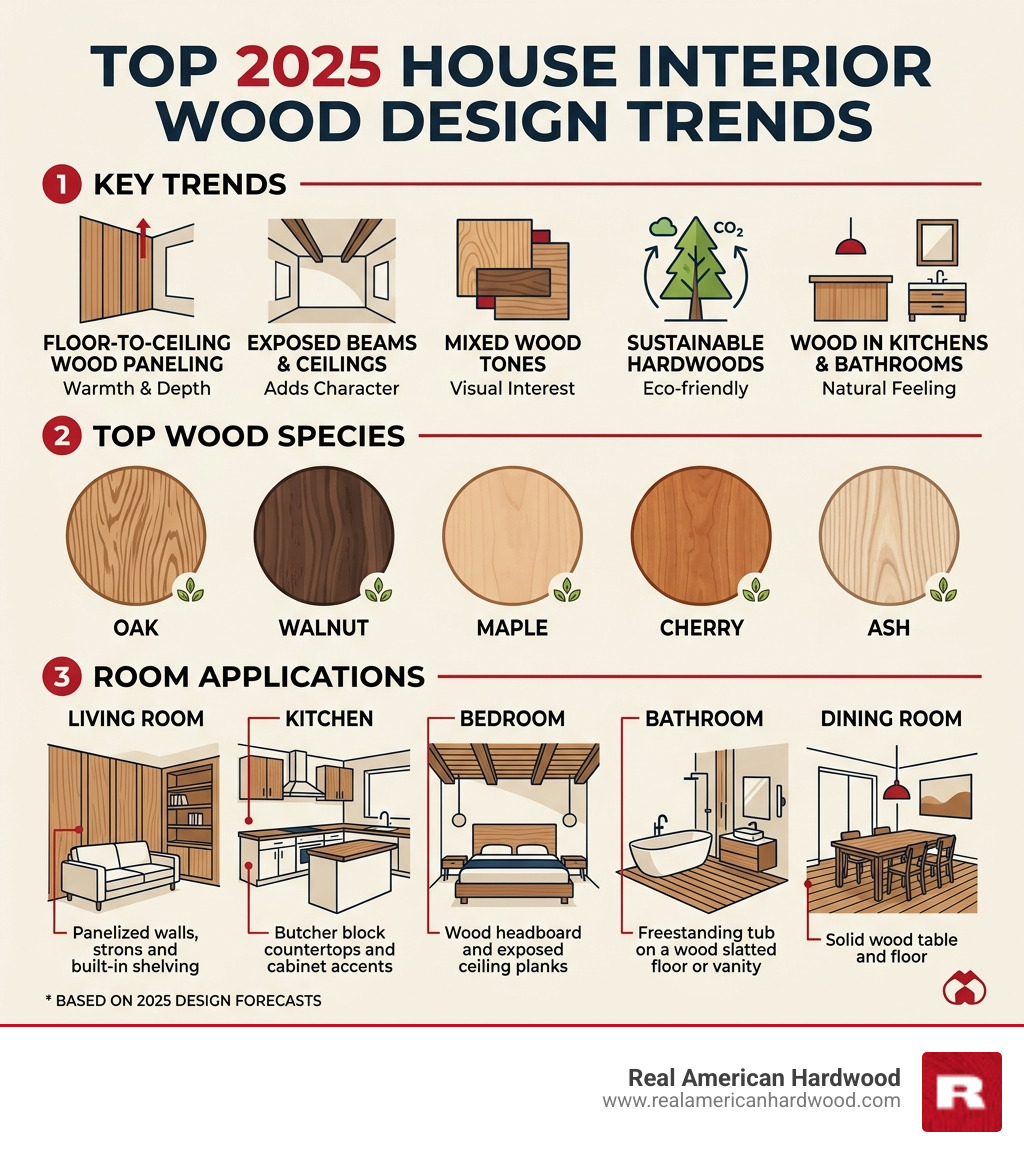
Here's a quick look at what's driving the trend and how wood is being used right now:
- Floor-to-ceiling wood paneling: Adds warmth, depth, and rich texture to a room.
- Exposed beams and wood ceilings: Bring character and help open-plan spaces feel more inviting.
- Mixed wood tones: Create layered visual interest without relying on paint.
- Reclaimed and domestic hardwoods: Support a more sustainable approach with carbon-storing materials.
- Wood in kitchens and bathrooms: Extends natural warmth into the spaces used every day.
Designers are moving away from stark white interiors toward layered, character-filled spaces. Wood is leading that shift. It's not just about aesthetics either — research shows that rooms with around 45% wood coverage can actually lower blood pressure and reduce stress.
And unlike non-wood alternatives, real American hardwood captures carbon, lasts for generations, and can be refinished rather than replaced.
I'm Jonathan Geyer, writing on behalf of Real American Hardwood Coalition — a promotional educational trade association run entirely by volunteer board members — where my work focuses on helping homeowners and designers make informed choices in house interior wood design using responsibly sourced American hardwoods. In the sections ahead, I'll walk you through the top trends, species, room-by-room ideas, and practical tips for 2026.
Why House Interior Wood Design is Dominating 2026 Trends
If you look at the homes currently being scouted for major design publications, you’ll notice a common thread: Allover Wood Interiors Are Having a Moment. We are seeing a massive departure from the "millennial gray" and stark white minimalism that defined the last decade. Instead, homeowners are craving "rooted" spaces that feel like they’ve been there for centuries.
The Wellness Connection
A major driver for this resurgence is our collective focus on wellness. After spending so much time indoors over the last few years, we’ve realized that our environment directly impacts our mental state. This is where Why Real Hardwood becomes a design powerhouse. Beyond its beauty, wood is a cornerstone of biophilic design—the practice of connecting human environments to the natural world.
Scientific research has shown that the presence of wood can lower heart rates and reduce stress. Interestingly, studies suggest there is a "sweet spot" for wood in a room: approximately 45% coverage provides the maximum physiological comfort. It’s the architectural equivalent of a warm hug.
From Tudor Roots to 1970s Revival
The history of house interior wood design is long and storied. Wood paneling first became a status symbol during the Tudor period in England, inspired by the comfort of Italian Renaissance residences. While some might still have "baggage" from the flimsy, dark faux-paneling of the 1970s, the 2026 trend is all about authenticity. We are seeing a return to 18 Luxurious Wooden Interior Design Ideas that highlight real grain, varied textures, and the Advantages of Hardwood such as acoustic comfort and natural insulation.
Essential Hardwood Species and Material Types for Modern Homes
Choosing the right species is the first step in any house interior wood design project. Each tree tells a different story through its grain and color. Our Hardwood Species Guide is a great place to start, but here are the heavy hitters for 2026:
- White Oak: Currently the "gold standard" for modern interiors. Its neutral, wheat-colored tone and tight grain make it incredibly versatile for everything from flooring to custom cabinetry.
- Black Walnut: For those seeking luxury and drama. It offers deep, chocolatey tones that look stunning in libraries or as statement furniture.
- Maple: Known for its strength and light, creamy color. It’s perfect for high-traffic areas or minimalist "Scandi" designs.
- Cherry: Offers a warm, reddish hue that deepens beautifully over time, adding a sense of history to a new build.
Understanding Your Options: Solid vs. Engineered
When specifying Domestic Hardwood Lumber, it's important to know which format fits your lifestyle and climate.
Composition
- Solid American Hardwood: One solid piece of wood all the way through
- Engineered Timber Flooring: A real hardwood top layer over a more stable core
Longevity
- Solid American Hardwood: Can be sanded and refinished many times
- Engineered Timber Flooring: Can usually be refinished 1-3 times, depending on veneer thickness
Stability
- Solid American Hardwood: More likely to expand and contract with changes in humidity
- Engineered Timber Flooring: More dimensionally stable, making it a strong fit for basements or homes with radiant heat
Authenticity
- Solid American Hardwood: The classic choice with natural character throughout
- Engineered Timber Flooring: Delivers a real wood look and feel with more installation flexibility
While there are many alternatives on the market, they simply don't offer the same value as authentic wood. In the battle of Hardwood vs. Lookalikes, real wood wins on sustainability, tactile warmth, and long-term ROI. Plus, real wood is a renewable resource from forests that grow 2.5 times faster than they are harvested!
Innovative Ways to Use Wood in Every Room
Gone are the days when wood was reserved just for the floor. In 2026, we are seeing Wooden Wall Paneling and Hardwood Ceilings taking center stage.

Elevating the Kitchen with House Interior Wood Design
The kitchen is no longer a "laboratory" of cold white surfaces. Today, it’s the heart of the home, and Incorporating Hardwood in Home Interiors here is about balance.
- Mixed Cabinetry: Try pairing painted upper cabinets with natural wood lowers to ground the space.
- The Statement Hood: A wood-clad range hood serves as a stunning focal point, especially when the grain is aligned vertically to draw the eye up.
- Butcher Block Islands: These provide a functional, warm surface that invites people to gather. When Choosing the Right Hardwood for Your Home for a kitchen, consider harder species like Maple or Hickory.
Creating Sanctuary with Bedroom House Interior Wood Design
Your bedroom should be a place of rest. Using wood here taps into that stress-reducing power we mentioned earlier.
- Slatted Headboards: Vertical wood slats add texture and a modern architectural feel.
- Wabi-Sabi Aesthetics: This Japanese-inspired style celebrates the "perfectly imperfect." Look for wood with visible knots and natural grain variations.
- Exposed Joists: If you're Creating a Rustic Hardwood Home, leaving ceiling beams exposed adds instant history and scale to the room.
Beyond the Basics: Foyers and Bathrooms
Don't overlook the smaller spaces. A foyer with custom wood paneling creates a grand first impression, while Custom Woodwork and Furniture like floating shelves or a built-in mudroom cubby can turn a chaotic entry into an organized, beautiful transition zone. Even bathrooms are getting the wood treatment, with walnut vanities and teak accents providing a spa-like atmosphere.
Styling and Maintenance: Finishes, Tones, and Sustainability
A common fear in house interior wood design is that it will look too "heavy" or dated. The secret to a modern look lies in the finish and how you mix your tones.
Matte vs. Glossy
For 2026, the trend is overwhelmingly toward matte or "low-luster" finishes. A matte finish allows the natural texture and grain of the wood to shine through without the plastic-like glare of high-gloss coatings. This is particularly effective for Elevating Design with Hardwood Accents like mantels or picture rails.
Mixing Wood Tones Like a Pro
You don't have to match your floor to your table! In fact, you shouldn't. Mixing wood tones creates a "collected over time" look. A good rule of thumb is to keep the undertones (warm vs. cool) consistent. If your floors are a cool-toned White Oak, try a dark, ebonized walnut for an accent piece to create sophisticated contrast. You can find inspiration for this in 75 Wood Wall Living Room Ideas.
Sustainability and the Hardwood Lifestyle
Choosing real wood is a commitment to a Hardwood Lifestyle—one that values quality over disposability. At events like High Point Market (HPMKT), we see a growing demand for "responsible luxury." This means:
- Low-VOC Oils: These finishes are better for indoor air quality and are easy to "spot repair" if a scratch occurs.
- Sandblasting: This technique creates a weathered, distressed look that is perfect for high-traffic homes where a few extra "character marks" won't hurt.
- Ebonizing: Using natural reactions to turn domestic woods deep black, providing a sustainable alternative to rare, endangered exotic species.
Frequently Asked Questions about Wood Interiors
How do I balance different wood tones in one room?
The key is to pick a "dominant" wood tone for the largest surface (usually the floor) and then use 1-2 accent tones for furniture or cabinetry. Ensure they share a similar undertone. If you’re stuck, a white oak floor acts as a perfect neutral base for almost any other wood species.
Is wood paneling high maintenance for modern families?
Not if you use real hardwood! Unlike drywall, which dings and cracks, solid wood is incredibly durable. Most modern finishes require nothing more than a damp cloth for cleaning. If a piece of real wood gets a deep scratch, it can be sanded and refinished.
What is the most sustainable wood for interior design?
Domestic American hardwoods are among the most sustainable materials on the planet. Because our forests are managed so carefully, we are growing significantly more wood than we harvest. Furthermore, wood products act as carbon sinks, keeping CO2 out of the atmosphere for as long as the wood exists in your home.
Conclusion
At Real American Hardwood, we believe that your home should be a reflection of the natural world’s beauty and resilience. As a promotional educational trade association, our volunteer board members are dedicated to sharing the truth about American forestry.
When you choose house interior wood design featuring real American hardwood, you aren't just following a trend—you’re making a choice for the planet. With a 2.5x growth rate compared to harvest and the incredible ability to capture carbon, American hardwood is the only building material that actually gets better with age.
Ready to start your journey? Build Your World with the warmth, strength, and soul of real American hardwood.