

Sustainable Oak and Hickory--Two Popular Hardwoods
Why Sustainable Wood Products Made in the U.S. Should Be Your First Choice for Building
Sustainable wood products made in the USA is a broad category, but here's a quick guide to help you find what you need:
- Premium domestic hardwood for flooring or furniture: Oak, Hickory, Walnut, Maple
- FSC-certified plywood and panels: Domestic hardwood plywood from U.S. mill networks
- Salvaged or reclaimed wood: Urban salvage lumber, reclaimed barnwood
American hardwood forests are genuinely growing faster than we're harvesting them. In the Appalachian region alone, forests are growing 2.4 times the combined rate of harvest and mortality—meaning choosing domestic hardwood like oak or hickory isn't just a style decision, it's a climate decision.
And the numbers back it up. A single board foot of hardwood can sequester an average of 5.23 lbs of CO₂—roughly the same carbon emitted by charging 289 smartphones.
The challenge most eco-conscious homeowners and designers face isn't a lack of options—it's knowing which products are genuinely sustainable, which certifications matter, and where American hardwood fits into the picture.
That's exactly what this guide covers.
Sustainability starts with how wood is sourced. That means you should look for hardwoods backed by strong forest-management standards and clear domestic supply chains. In the sections below, we explain key sourcing practices, including why FSC (Forest Stewardship Council) or SFI (Sustainable Forestry Initiative) certifications matter. In a nutshell, they help verify responsible forestry, support traceability, and give builders, designers, and homeowners confidence that Real American Hardwood is sourced from well managed forests.
What Defines Sustainable Wood Products?
When we talk about sustainable wood products, we aren't just talking about a label slapped on a piece of lumber. We are talking about a rigorous, science-backed approach to forest management that ensures our woodlands remain healthy for generations. In the United States, sustainability is woven into the very fabric of our timber industry, from the way we manage private woodlots to the high-tech tracking used in modern sawmills.
True sustainability means that the rate of harvest never exceeds the rate of regrowth. It also encompasses protecting biodiversity, maintaining clean water cycles, and ensuring that the soil remains nutrient-rich. For us, sustainability is not a destination; it's a continuous process of improvement and stewardship.
Sourcing Standards for Sustainable Wood Products
The gold standard for sourcing in the U.S. often begins in the Appalachian region. This isn't just because the wood is beautiful (though it certainly is), but because the data supports its incredible resilience. According to U.S. Forest Service data, Appalachian hardwoods are growing at 2.4 times the rate of harvest and natural mortality combined. This means for every tree harvested, more than two are growing in its place.
This makes Hardwood: An Age-Old Sustainable Choice for anyone looking to build with a conscience. When you source domestically, you are also supporting a network of family-owned forests. In fact, a significant portion of American hardwood comes from small landowners who treat their forests as a legacy. To understand the depth of this commitment, see how these types of legacies are Carved In Wood.
Certifications and Traceability in the Domestic Supply Chain
How do you know the board you're holding is actually "green?" We rely on several key certifications and traceability measures:
- FSC (Forest Stewardship Council): This is one of the most recognized global certifications, ensuring that the wood comes from responsibly managed forests that provide environmental, social, and economic benefits.
- SFI (Sustainable Forestry Initiative): A North American standard that focuses on sustainable forest management, including protecting water quality and wildlife habitat.
- LEED Standards: Many American-made wood products contribute points toward LEED certification for green buildings, particularly when they are sourced locally and are formaldehyde-free.
- Regional Verifications: Programs like "Certified Appalachian Sustainable" use third-party audits to verify that the timber is both legal and sustainably harvested based on regional growth data.
Traceability is the "secret sauce" of the modern supply chain. Many of U.S. forest product companies utilize digital tracking to follow a log from the forest floor to the final kiln-dried board. This ensures that every step of the process meets our high standards for ethical production.
Environmental and Economic Benefits of Choosing Sustainable Wood Products
Choosing sustainable wood products isn't just about what happens in the woods; it’s about the impact on our atmosphere and our local economies. Wood is nature's ultimate carbon capture technology. Unlike steel or concrete, which require massive amounts of energy (and produces carbon emissions) to produce, wood actually stores carbon for the duration of its life.
Carbon Sequestration and Climate Impact
Let's look at the hard numbers. We know that The Power of Hardwood lies in its ability to lock away CO2.
When you choose Why Real Hardwood over synthetic lookalikes, you are actively choosing a material that helps mitigate climate change. This is why we advocate for Advantages of Hardwood in every building project.
Stewards of the Resource-Zero Waste
The modern American wood industry is a model for the "circular economy." We don't like to let anything go to waste. When we harvest a tree, every part is used.
- Saw dust can be used for animal bedding or to manufacturer heating pellets.
- Bark can be used for landscaping mulch.
- Tree tops can be left in the woods to provide natural protection to seedlings from deer browsing.
- Small diameter logs/limbs can be made into pulp for paper products.
- Low grade lumber can be used for pallets.
- High grade lumber can be used for beautiful wood products.
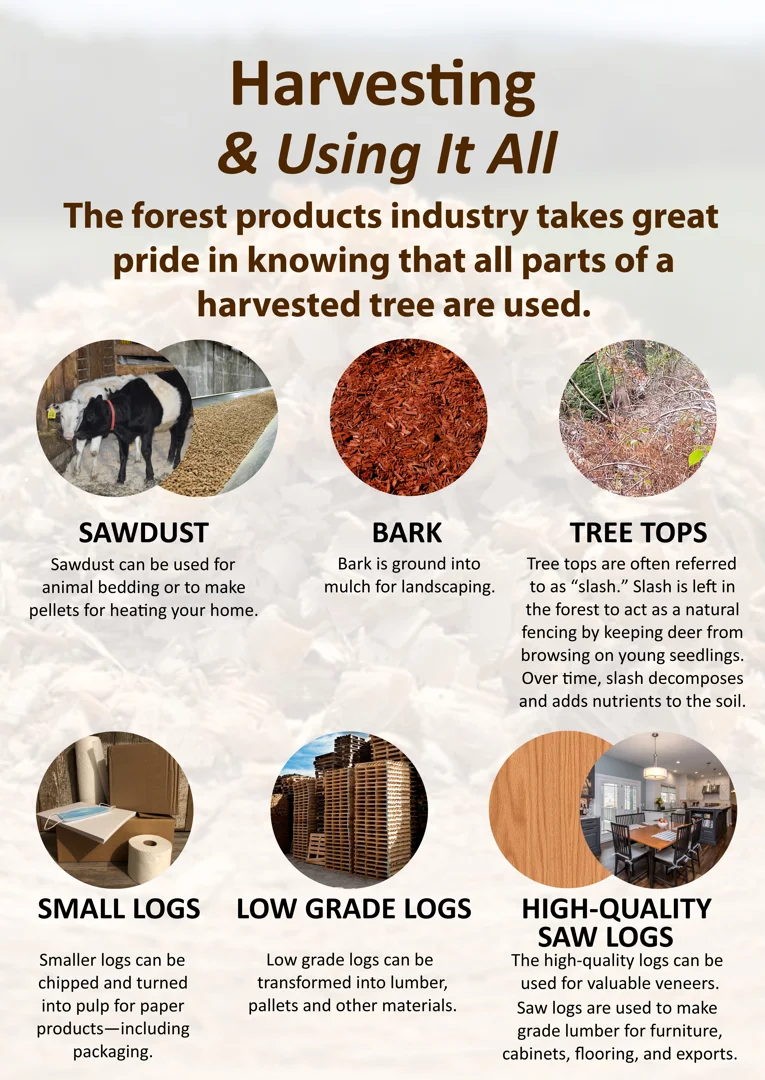
This commitment to Telling Our Industry's Story helps consumers understand that when they buy American wood, they are participating in a system that values every fiber of the tree.
Innovative Sourcing and Manufacturing Processes
The world of sustainable wood products is evolving rapidly. We are moving beyond traditional logging into high-tech and highly ethical territory.
Innovations in Wood Products
One of the most promising innovations in wood products is finding higher-value uses for low-grade material. Manufacturers can turn small logs, bark, and other byproducts into useful outputs like biochar, which stores carbon and can improve soils. Innovative producers can also convert certain low-value wood feedstocks into transportation fuels such as gasoline. That kind of innovation helps sustainable American hardwood go further by extending the value of every tree, and supporting a more circular economy.
High-Performance Wood Solutions
We are also finding new ways to make wood better.
- Thermal Modification: This is a chemical-free, three-phase process using heat and steam. By "baking" the wood in an oxygen-deprived environment, we change its cellular structure. The result? Wood that is hydrophobic (repels water), resistant to rot and insects, and incredibly stable. It’s the perfect solution for exterior siding and decking without the need for toxic preservatives.
- Advanced Drying: Modern kilns allow us to See the Value of Hardwood by ensuring every board is dried to the perfect moisture content, preventing the warping and cupping often seen in lower-quality imports.
This Hardwood Industry Overview shows that American manufacturers are leading the way in both sustainability and performance.
Performance and Aesthetics of Sustainable Wood Products
Let's be honest: while we all want to save the planet, we also want our homes to look stunning. Luckily, sustainable wood products offer an aesthetic appeal that synthetic materials simply cannot replicate.
Premium Hardwood Species and Their Applications
When you look at our Hardwood Species Guide, two names often stand at the top of the list for durability and style: Oak and Hickory.
Red Oak: Known for its classic grain patterns and warmth, Red Oak is a staple of American design. It’s easy to stain and incredibly hard-wearing. In our American Hardwoods: Red Oak Case Study, you can see how this species was used to create a striking acoustic environment that is as functional as it is beautiful.
Hickory: If you need something that can stand up to a busy household (pets, kids, and heavy boots), Hickory is your best friend. It is one of the hardest domestic woods available. Our American Hardwoods: Hickory Case Study highlights its use in high-traffic areas where durability was the number one priority.
Choosing between them often comes down to the "vibe" of your home. If you're unsure, we have a guide for Choosing the Right Hardwood for Your Home to help you navigate the colors, grains, and hardness levels.
Sustainable Plywood and Engineered Solutions
Not every project requires solid boards. Sometimes, you need the versatility of plywood or engineered flooring. American manufacturers have revolutionized this space.
- Formaldehyde-Free Plywood: Companies like Columbia Forest Products operate networked plants across the U.S. and Canada, producing PureBond plywood. This uses a soy-based adhesive rather than the toxic urea-formaldehyde resins found in many imports.
- Engineered Timber: Engineered Timber Flooring is an excellent choice for basements or over concrete slabs. It provides the look of real wood with increased stability in high-moisture environments.
When you compare these to the "lookalikes," the choice is clear. Check out our Hardwood vs. Lookalikes breakdown to see why real wood wins every time in terms of longevity and indoor air quality.
Frequently Asked Questions about Sustainable Wood
What is the most sustainable wood to build with in the USA?
While many species are sustainable, Appalachian hardwoods (like Oak, Maple, and Hickory) are standouts because their growth rate significantly exceeds their harvest rate. Additionally, salvaged urban wood is considered highly sustainable as it upcycles material that would otherwise be wasted.
How does wood compare to plastic composites in carbon footprint?
There really is no contest. Real wood is a carbon sink—it stores CO2. Plastic composites, on the other hand, are often made from petroleum products and require high energy to manufacture.
Are American hardwoods truly renewable?
Yes! Unlike fossil fuels or minerals, trees grow back. Because of the strict forest management practices in the U.S., our hardwood forest acreage has actually increased over the last 50 years. We are growing more wood than we use, making it one of the few truly renewable building materials on the planet.
Conclusion
Building a beautiful home shouldn't come at the expense of the environment. By choosing sustainable wood products made in the USA, you are supporting a legacy of forest stewardship, reducing your carbon footprint, and bringing the timeless beauty of the American wilderness into your living space.
Whether it’s the rugged durability of hickory, the classic elegance of red oak, or the innovative performance of thermally modified hardwood, real wood offers a value that synthetics just can't touch.
If you're ready to start your next project, check out our Top 5 Reasons to Prioritize Hardwood or visit the Real American Hardwood Homepage for more inspiration. When you choose real wood, you aren't just building for today—you're building for a sustainable tomorrow.
Ready to see the difference for yourself? Dive into our comparison of Hardwood vs. Lookalikes and discover why there is no substitute for the real thing.