

What Is FAS Grade Hardwood Lumber? The Highest NHLA Standard Explained
What Is FAS Grade Hardwood Lumber? The Highest NHLA Standard Explained
FAS, or Firsts and Seconds, is the highest grade of hardwood lumber defined by the National Hardwood Lumber Association (NHLA). An FAS board must measure a minimum of 6 inches wide by 8 feet long and yield no less than 83.3% clear wood from both faces. It is the standard for high-quality furniture, interior joinery, and solid wood mouldings.
How Does the NHLA Grading System Work?
The NHLA grading system has governed commercially traded American hardwood lumber for over 100 years, with more than 2,000 member organizations worldwide. Grades are assigned by licensed graders who assess the percentage of clear, defect-free cuttings a board can yield, not its cosmetic appearance alone.
- A grader examines the poorer face of the board.
- Cuttings are measured as the largest rectangular sections free of visible defects.
- The clear cutting percentage is calculated against the board's total surface area.
- A grade is assigned based on the minimum percentage achieved and the board's minimum dimensions.
This yield-based system was developed for the furniture trade, where clear sections are cut from larger boards. A lower-grade board can produce the same quality clear wood as an FAS board, just in shorter or narrower pieces, which is why Common grades are not inferior wood.
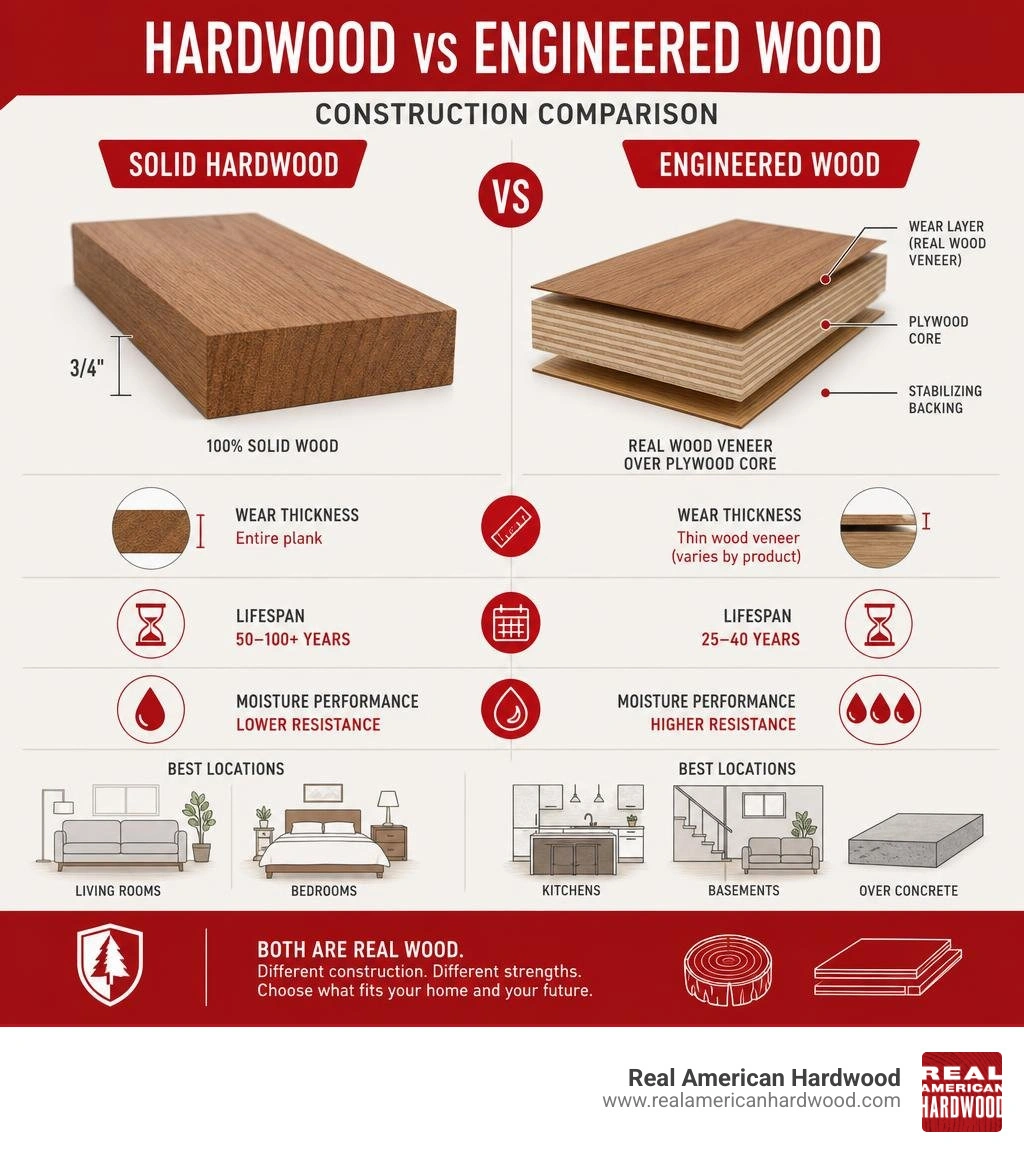
Understanding these standards is also helpful when comparing Solid Hardwood vs. Engineered Hardwood | Bruce Wood Flooring or selecting materials like Engineered Timber Flooring.
How Do the Grades Compare?
| Grade | Min. Clear Yield | Min. Board Size | Typical Use |
|---|---|---|---|
| FAS | 83.3% | 6" x 8' | Furniture, fine joinery, mouldings |
| FAS One Face (F1F) | 83.3% (better face) | 6" x 8' | Shipped with FAS; common in cabinetry |
| Selects | 83.3% (better face) | 4" x 6' | Flooring, furniture; common in northern markets |
| No. 1 Common | 66.7% | 3" x 4' | Cabinet doors, furniture parts; the cabinet grade |
| No. 2A Common | 50% | 3" x 4' | Hardwood flooring standard; the economy grade |
| No. 2B Common | 50% (sound, not clear) | 3" x 4' | Utility applications |

Whether you are selecting lumber for Durable Wood Flooring or comparing options in Hardwood vs engineered wood: Price, quality, and durability explained , knowing the grade ensures you get the right look. For a comprehensive overview of how species and grades interact, refer to the Domestic Hardwood Species Complete Guide.
What Is FAS One Face and When Is It Specified?
FAS One Face (F1F) designates lumber where the better face meets FAS standards and the poorer face meets No. 1 Common requirements. F1F is always shipped and sold as part of FAS lots. It is commonly specified in cabinetry and interior applications where only one face is visible after installation, making it a practical and economical choice when both faces do not need to be clear.
Which Species Are Commonly Available in FAS Grade?
Black walnut, American cherry, hard maple, red oak, and white oak are most frequently graded and traded at FAS. Hickory and ash are available in FAS but the grade is less common due to the natural character markings those species carry. Tulipwood and soft maple are typically traded at No. 1 Common or Selects for most interior applications.
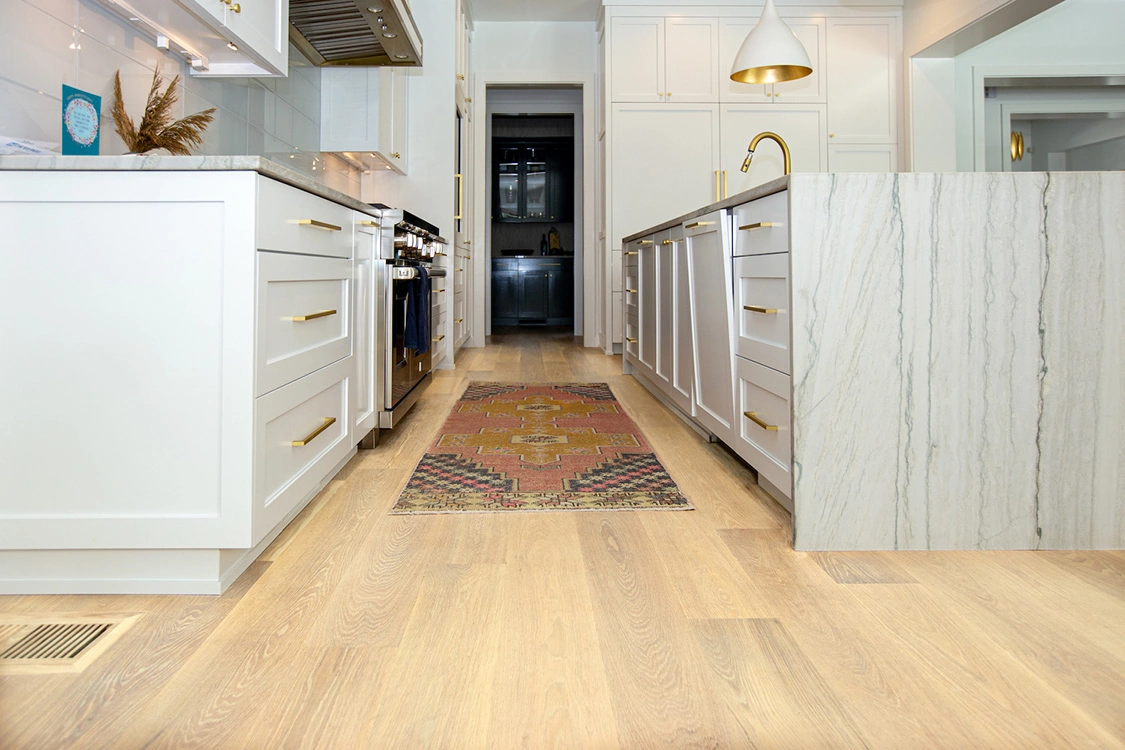
These grading choices are highly relevant when selecting materials like Engineered Hardwood Flooring for Kitchen spaces or planning a project using a Solid vs. Engineered Hardwood Flooring: A Richmond Homeowner's Guide .
What Applications Require FAS Grade Lumber?
FAS is specified when long, wide, clear panels are needed without the labor cost of finger-jointing or edge-gluing shorter pieces. Standard applications include solid-wood furniture faces and frames, long-run moulding and millwork profiles, interior stair components, and architectural joinery where grain continuity across a full panel length is visible and structurally required.
For most cabinet box construction and paint-grade applications, No. 1 Common provides equivalent finished quality at lower material cost, since the assembly conceals short clear cuttings within the frame.
Understanding the differences between species and grades is also essential when comparing Hardwood vs Softwood Trees for structural or decorative use.
Frequently Asked Questions
What does FAS stand for in lumber?
FAS stands for Firsts and Seconds. It is the top classification in the NHLA grading system, defined by a minimum 83.3% clear wood yield and minimum board dimensions of 6 inches by 8 feet.
Is FAS grade necessary for kitchen cabinets?
Not always. No. 1 Common, the cabinet grade, is the industry standard for face-frame and door construction. It produces the same quality clear cuttings as FAS, simply in shorter sections. FAS is specified when full-length clear panels are required without joinery.
What is the difference between FAS and Select grade?
Both require 83.3% clear yield on the better face. Selects allow smaller minimum board dimensions (4 inches by 6 feet vs. 6 inches by 8 feet for FAS) and are more common in northern U.S. markets. In practice, Selects and F1F are functionally similar for most interior applications.
How is a lumber grade determined?
A licensed NHLA grader measures the poorer face of each board and calculates what percentage of the board surface can be cut into clear, defect-free rectangular sections above a minimum size. That percentage determines the grade assigned.
Conclusion
What grade of hardwood lumber do you typically specify? FAS for long clear panels, No. 1 Common for cabinet production, or something in between? Share what you are working with and what factors drive your grade selection.
To learn more about selecting genuine, sustainable materials for your next project, read the guide on Hardwood vs Lookalikes.